Missouri Baiting and Feeding Rules
It's easy to get confused out there, isn't it? One minute you think you're doing everything right, the next you're hearing whispers about baiting rules and suddenly feel like you're walking on eggshells. For anyone deer hunting in Missouri, understanding the Missouri Department of Conservation's (MDC) baiting and feeding regulations isn't just a suggestion, it's absolutely crucial. This comprehensive guide will break down exactly what's allowed, what's strictly forbidden, and why these rules are so important, helping you navigate the woods confidently and legally.
Understanding the Basics of Missouri's Baiting and Feeding Rules
Let's face it, the concept of baiting and feeding can feel like a minefield. What seems like a simple act of helping wildlife can quickly become a serious violation if you're not careful. Missouri's regulations are designed to maintain fair chase principles and, increasingly, to protect the health of our deer herd. Ignoring these rules can lead to hefty fines and even loss of hunting privileges, so taking the time to truly understand them is an investment in your hunting future.
Defining "Bait" and "Feeding" in Missouri Hunting Contexts
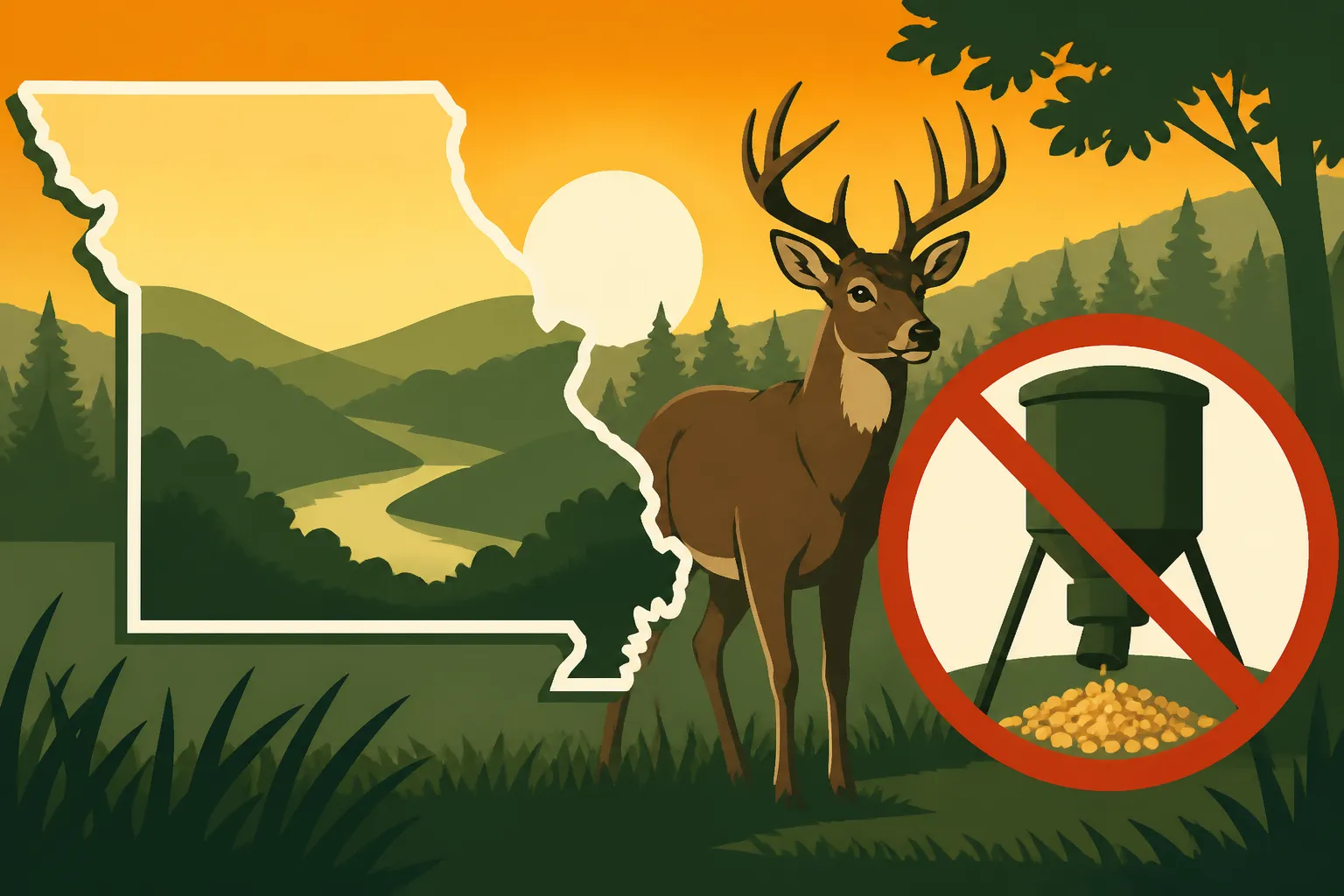
The Missouri Department of Conservation (MDC) is pretty clear about what constitutes baiting, and it's broader than many people realize. When we talk about "bait" in Missouri, we're referring to any material that's directly or indirectly placed to attract wildlife to hunt. This isn't just corn or apples. It includes grain, salt, minerals, and other attractants. The key here is the placement and the intent to attract for hunting purposes. If you're putting out minerals for deer or even a salt lick, and you intend to hunt over or near that spot, you are engaging in baiting. It doesn't matter if it's a little pile or a huge feeder; the act of placing attractants for hunting is the issue.
"Feeding" can sometimes be a separate issue, particularly when it comes to chronic wasting disease (CWD). While not all feeding immediately constitutes illegal baiting for hunting, widespread feeding can concentrate deer and other wildlife, which has its own set of problems. In essence, if you place any food or mineral product where deer or other game animals can access it, and you're hunting in that area, you need to be extremely cautious. The rules are not just about what you put out, but also about what you don't remove before hunting.
Why These Rules Exist: Protecting Deer and Promoting Fair Chase
At its core, Missouri's baiting and feeding rules serve two primary purposes. First, and perhaps most historically, they uphold the principle of "fair chase." This ethical standard dictates that hunters should pursue game in a manner that doesn't provide them an unfair advantage. When deer are habituated to a stationary food source, they become predictable, making the hunt less challenging and more akin to shooting fish in a barrel. The MDC wants hunters to engage in active scouting, understanding deer patterns, and employing skill, rather than relying on an artificial attractant.
More recently, a critical reason for these regulations, particularly those concerning deer, is the fight against Chronic Wasting Disease (CWD). CWD is a fatal neurological disease that affects deer, elk, and moose. It's spread through direct animal-to-animal contact and indirectly through contaminated environments, often via saliva, urine, and feces. When deer congregate at baiting or feeding sites, the risk of disease transmission skyrockets. One sick deer visiting a corn pile can leave behind enough infectious prions to infect many others. The MDC has made significant efforts to control the spread of this disease, including comprehensive CWD testing for hunters, and reducing deer concentrations through baiting bans is a crucial part of that strategy. You can read more about Chronic Wasting Disease in Missouri Deer to understand the full scope of this threat.
The Penalties for Violating Baiting and Feeding Regulations
Let's not sugarcoat it: violating Missouri's baiting and feeding regulations can have serious consequences. These aren't just minor infractions; they are viewed as significant violations of wildlife code. A hunter caught baiting can face steep fines, often starting in the hundreds of dollars, potentially reaching thousands depending on the severity and any previous offenses. Beyond the monetary penalties, a conviction can lead to the loss of hunting privileges, not just in Missouri but in many other states as well through the Interstate Wildlife Violator Compact.
Imagine having your hunting season abruptly ended, your permits revoked, and facing a ban that could last for years. It's a harsh reality that can be easily avoided by understanding and respecting the rules. Conservation agents take these violations very seriously because they impact the integrity of hunting and the health of the entire deer herd. It's simply not worth the risk, especially when there are so many ethical and effective ways to pursue game in Missouri. If you ever suspect illegal activity, knowing how to approach Reporting a Poacher in Missouri is an important part of protecting our shared resources.
Specific Scenarios and Common Questions About Baiting
The nuances of baiting and feeding rules often lead to confusion. It's not always as simple as "corn equals bad." There are many scenarios where hunters wonder if their actions cross the line. Let's dig into some of these common questions and clarify what's permissible and what isn't under Missouri law.
Mineral Sites, Food Plots, and Attractants: What's Allowed and What's Not
This is where many hunters get tripped up.
- Mineral Sites: While mineral supplements or blocks are often marketed to improve deer health, placing them to attract deer for hunting is considered baiting. If you're putting out a mineral block, even one that claims to be a supplement, and you intend to hunt the area, it's a violation. The issue isn't the mineral itself, but the act of attracting deer for harvest. The MDC advises that if you plan to hunt an area, it should be "clean" of any such attractants for at least 10 days before your hunt.
- Food Plots: This is a big one. Food plots are legal. Planting crops specifically for wildlife, such as clover, brassicas, winter wheat, or soybeans, is a widely accepted and encouraged wildlife management practice. These are considered natural forage once they grow. The key distinction is that food plots grow naturally from the ground, providing sustained nutrition over time, rather than being dumped piles of concentrated feed. They promote healthy deer movement and foraging behavior.
- Standing or Harvested Crops: If you're hunting near a farmer's standing corn field, that's perfectly legal. The corn wasn't put there for the purpose of attracting deer to hunt, it was planted for agricultural harvest. The same goes for fields of unharvested soybeans. You can absolutely hunt the edges of these fields, as deer naturally gravitate to these food sources. Similarly, hunting a harvested soybean field where some beans might have been dropped is also legal, as these are considered residual crops, not bait. For more on these tactics, check out Hunting Standing Corn Before Harvest or understand What Changes After the Beans Come Off.
- Processed Attractants: Things like deer scents, synthetic lures, and even certain types of deer calls that don't involve actual food are generally permissible. However, always double-check specific product labels and MDC regulations, as some products might contain food-based attractants or could be misinterpreted.
Managing Your Property: When Does Feeding for Wildlife Become Baiting for Hunters?
Many landowners enjoy seeing deer on their property and want to supplement their diet, especially in lean winter months. This is where the distinction gets tricky. If you're a landowner and you simply want to provide food for wildlife outside of hunting season, that might be permitted. However, the moment you, or anyone you allow to hunt on your property, intends to hunt deer that have been attracted to that food source, it becomes illegal baiting.
The rule often states that you cannot hunt over bait, and no bait can be "present" while hunting. The MDC clarifies that an area is considered baited for 10 days after all bait has been completely removed. This "10-day rule" is critical. So, if you've been feeding deer, you must completely remove all feed and then wait for a full 10 days to pass before hunting that area. This waiting period is designed to allow deer patterns to normalize and remove the artificial attraction. This rule applies even if the feed was originally placed for purposes other than hunting, such as supplemental feeding for general wildlife viewing.
The CWD Aspect: How Baiting Can Affect Disease Transmission
We've touched on CWD, but it bears repeating: baiting and feeding sites are super-spreaders for this deadly disease. Imagine a buffet line where every patron has a cold. If they all eat from the same trough, the chances of transmission are incredibly high. CWD works similarly. When deer gather shoulder-to-shoulder at a bait pile, they swap saliva, urine, and feces. If just one deer carries CWD prions, those prions can contaminate the soil and vegetation around the bait site for years, even decades, making it a persistent hotspot for infection.
This is why, beyond the fair chase aspect, the MDC is so vigilant about baiting. It's not just about one hunter getting an "easy" deer; it's about protecting the long-term health and sustainability of Missouri's entire deer herd. Every hunter has a responsibility to understand and comply with regulations that aim to mitigate CWD, especially since the disease continues to appear in new counties. Keeping deer spread out and behaving naturally is one of our best defenses. Learn more about Missouri CWD Rule Changes for 2026 for the latest updates.
Navigating Exceptions and Permitted Activities
While Missouri's baiting rules are strict, there are some specific situations and activities that are clearly defined as not baiting for hunting purposes. Understanding these exceptions is just as important as knowing what's forbidden, as it helps clarify where you can hunt legally and ethically.
Agricultural Practices and Normal Farming Operations
This is probably the most significant exception to the baiting rule. If a field has standing crops like corn, soybeans, or milo that were planted for agricultural purposes and not specifically to attract deer for hunting, it is not considered bait. Farmers are planting these crops for harvest, not for hunters. Therefore, hunting adjacent to or in these fields before or after harvest is perfectly legal and a time-honored tradition in Missouri. Deer naturally feed in these areas, and hunters can position themselves strategically to intercept natural deer movement.
This also extends to normal farming operations like spreading manure or planting cover crops. These activities are part of the agricultural landscape and are not undertaken to provide bait for hunters. You can hunt near these areas without concern, as long as no concentrated bait is present that you or another hunter placed with the intent to attract game.
Feeders for Non-Game Animals or Nuisance Wildlife
Sometimes, people put out feed for non-game animals, like songbirds, or for nuisance wildlife like raccoons or feral hogs. While this might be the initial intent, the critical factor when hunting deer (or other game animals) is whether that feed could also attract deer to your hunting location. If deer are regularly visiting a bird feeder or a feeder intended for hogs, and you are hunting deer in the vicinity, it could still be considered illegal baiting. The MDC takes the stance that if deer are being attracted, and you are hunting, you are in violation.
This means if you have a bird feeder in your yard, and you're planning to hunt deer from a stand nearby, you need to ensure that feeder is completely removed, and the 10-day waiting period has passed. It's about preventing the artificial concentration of deer, regardless of the original intent of the feed. Common sense and cautiousness are your best friends here.
Considerations for Landowners and Leaseholders
Landowners often have more flexibility in terms of land management, but these specific baiting rules apply to them just as strictly as to public land hunters. A landowner cannot place bait to hunt deer on their own property. They are also responsible for ensuring anyone they allow to hunt on their land complies with these rules. This includes friends, family, or individuals who might lease hunting rights.
If you are leasing land, make sure you have a clear understanding with the landowner about any feeding practices they might undertake. It's vital to know if any attractants were ever placed and to respect the 10-day waiting period. Communication is key to staying legal and avoiding uncomfortable situations. Utilizing resources like the Missouri Conservation Atlas or online mapping tools, especially those that help identify property lines and potential food sources like the mapping features found on a GoHunt subscription, can be incredibly helpful for landowners and leaseholders alike to ensure full compliance. Remember, even if you have a Missouri Landowner Permit and Exemptions, the baiting rules still apply.
Practical Advice for Hunters and Land Managers
So, you want to be a successful hunter in Missouri while staying strictly within the rules. It's absolutely possible! It just requires a bit more thought, scouting, and discipline. Embracing ethical hunting practices not only keeps you legal but also makes you a more skilled and knowledgeable hunter.
How to Hunt Legally and Ethically Near Food Sources
The best way to hunt legally near food sources is to focus on natural food sources or agricultural crops. Deer naturally seek out acorns, persimmons, honeysuckle, browse, and, of course, standing corn or soybean fields. Your job as a hunter is to identify these natural food sources and then scout for the travel corridors deer use to get to and from them. This often means finding pinch points, ridge saddles, or thick cover edges that lead to a prime feeding area.
Rather than placing attractants, learn to read the land for signs of natural deer activity. Look for tracks, rubs, scrapes, and droppings. Understand the impact of wind and thermals on deer movement, especially when Reading an Ozark Hollow for Deer Movement. Tools like aerial maps and contour lines can help you predict how deer will travel through the landscape. This approach makes you a better hunter, building skills that baiting simply can't provide.
Here's a quick comparison of allowed vs. disallowed hunting scenarios:
| Scenario | Allowed for Hunting? | Explanation |
|---|---|---|
| Hunting over a food plot | YES | Food plots are planted and grown; considered natural forage. |
| Hunting near standing corn | YES | Agricultural crop, not placed to attract deer for hunting. |
| Hunting near harvested beans | YES | Residual crops are not considered bait. |
| Hunting over a mineral block | NO | Minerals are placed to attract; considered bait. Must wait 10 days after removal. |
| Hunting over a corn pile | NO | Corn is placed to attract; considered bait. Must wait 10 days after removal. |
| Hunting over a bird feeder | NO | If deer are attracted, it's considered bait for deer hunting. Must wait 10 days after removal. |
| Hunting over a natural persimmon drop | YES | Naturally occurring food source. |
| Hunting a scrape line | YES | Scrapes are natural deer sign, not placed by hunters. |
Ensuring Your Stand is "Clean" Before Hunting
This 10-day rule for removing bait is absolutely critical. If you or someone else has placed any attractant on the property you intend to hunt, you must ensure it is completely removed, and then you must wait a full 10 days before hunting that specific location. This means no trace of corn, no salt block residue, no mineral supplement dust. Remove it all.
This isn't a suggestion; it's a hard and fast rule. If a conservation agent finds any evidence of bait at your stand site, even if you didn't put it there, you could be cited. It's your responsibility to ensure the area you hunt is clear. This is why thorough Scouting Missouri Public Land Before Season is so important—to identify any potential issues and to give yourself time to rectify them. Even if you come across someone else's bait, you cannot hunt that area for at least 10 days after its removal.
Utilizing Tools like GoHunt for Legal Scouting and Planning
In today's world, technology can be a huge asset for staying compliant. Mapping applications are invaluable. Services like GoHunt, for example, offer detailed aerial and topographic maps that can help you identify natural travel corridors, potential food sources like timber stands or existing crop fields, and even property boundaries. This is especially useful if you're hunting private ground and need to ensure you're not inadvertently hunting over something placed by a neighbor.
You can use these tools to mark potential natural food sources, plot your entry and exit routes, and scout areas that are far from any potential human interference. This proactive approach ensures you're relying on your hunting skills and knowledge of deer behavior, rather than artificial attractants. Using these tools to plan your hunt responsibly is a great way to stay ethical and legal.
Disclaimer
Please remember that hunting regulations can change, and interpretations may vary. This guide is intended for informational purposes only and should not be considered legal advice. Always consult the most current Missouri Department of Conservation (MDC) hunting regulations and speak directly with an MDC agent if you have any specific questions or concerns about baiting and feeding rules before heading into the field. Your responsibility as a hunter is to know and follow all applicable laws.