Missouri Light Goose Conservation Order
The crisp air of waterfowl season fading away can feel like a real punch to the gut for us avid hunters, especially when you know there are still thousands of birds out there. But for those dedicated to chasing light geese, the end of the regular season isn't the final curtain call; it's just the prelude to one of the most exciting and unique hunting opportunities Missouri offers: the Light Goose Conservation Order. This guide will walk you through everything you need to know to participate in this high-volume, action-packed spring season.
Understanding the Missouri Light Goose Conservation Order
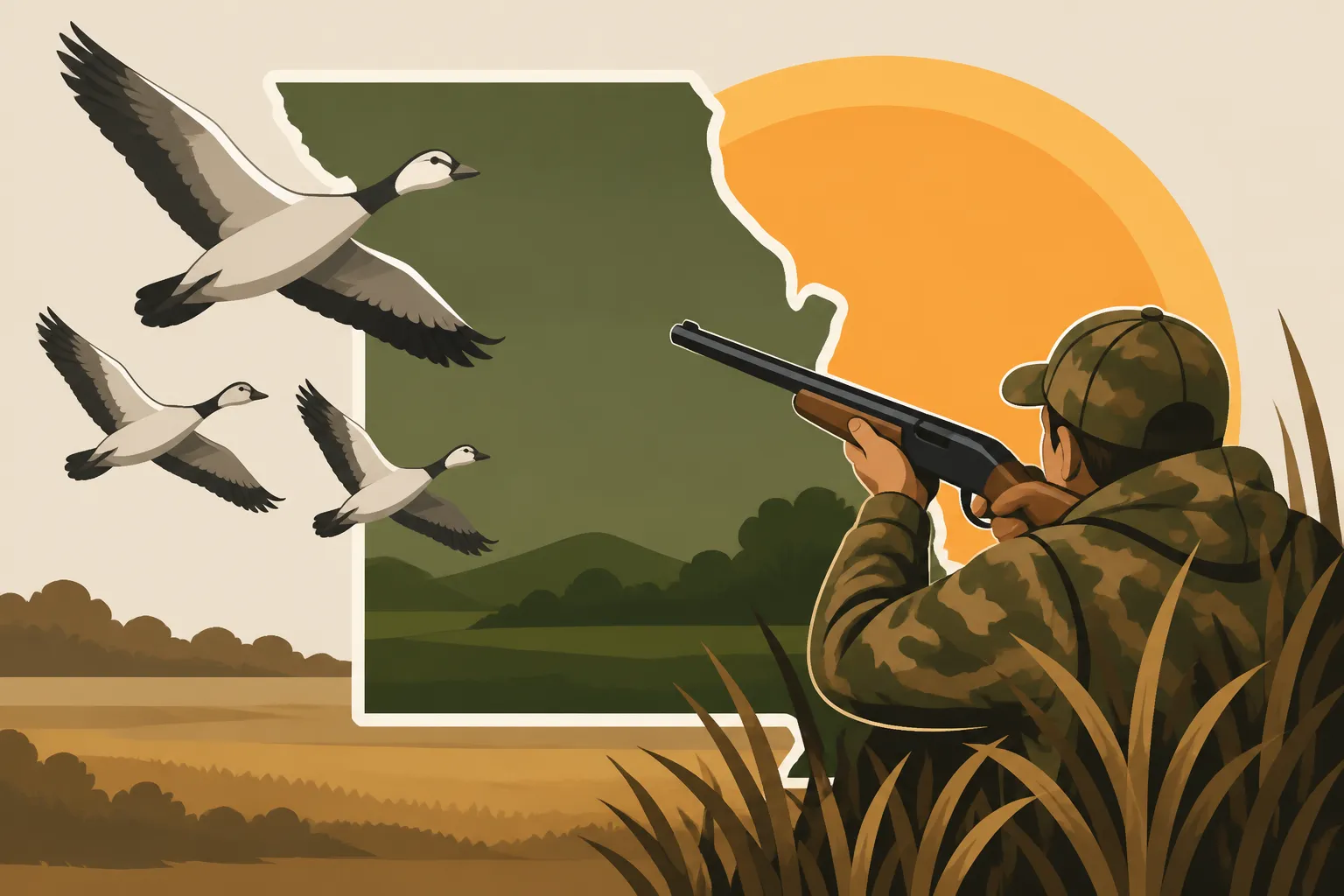
When you hear "conservation order," it might sound a bit official and dry, but for hunters, it represents an incredible opportunity to extend the season and contribute directly to wildlife management. The Missouri Light Goose Conservation Order is a special hunt authorized by the U.S. Fish and Wildlife Service, and implemented by the Missouri Department of Conservation (MDC), specifically designed to address the dramatic overpopulation of certain light goose species. We're talking about Lesser Snow Geese, Ross's Geese, and the occasional Blue Goose, which is actually just a color phase of the Snow Goose.
These birds have seen their populations explode to unsustainable levels, particularly over the last few decades. The problem isn't just that there are a lot of them; it's what they're doing to their fragile arctic breeding grounds. Imagine vast, delicate tundra ecosystems being utterly denuded by millions of hungry geese grubbing for roots and tubers. This intense foraging literally rips up vegetation, exposing the permafrost and destroying the very habitat needed by other wildlife, and even future generations of geese. It's a dire situation, and traditional hunting seasons and bag limits simply aren't enough to curb their numbers effectively. That's why this special conservation measure was put in place – to give hunters a chance to help manage this ecological crisis while enjoying some phenomenal hunting.
Why the Conservation Order Exists
The core reason behind the Conservation Order is a biological imperative to protect critical nesting habitats in the Arctic. Scientists recognized that without drastic measures, the light goose populations would continue to grow unchecked, leading to widespread destruction of their own breeding grounds. This isn't just about thinning the herd; it's about trying to prevent a long-term ecological disaster that impacts numerous species, not just the geese.
It's a tricky balance, because these geese are incredibly resilient. They adapt, they reproduce prolifically, and they learn quickly. Regular hunting pressure, with its limited bag numbers and traditional methods, just wasn't making a dent. The Conservation Order allows for a much more aggressive approach, recognizing that extraordinary circumstances call for extraordinary solutions. It’s a testament to the idea that hunting can be a vital tool in modern conservation, not just a recreational activity.
Species Included in the Conservation Order
The Missouri Light Goose Conservation Order specifically targets Lesser Snow Geese, Ross's Geese, and Blue Geese. It’s important to remember that during this period, you are generally not targeting other goose species, like Canada Geese, or any ducks. Those seasons are typically closed by the time the Conservation Order really kicks into high gear.
Sometimes, it can be a little tricky to tell the difference between a Snow Goose and a Ross's Goose, especially at a distance or in low light. Ross's Geese are typically smaller, with a shorter neck and a smaller bill that lacks the "grinning patch" often seen on Snow Geese. Their heads also tend to be rounder. However, for the purpose of the Conservation Order, both are fair game under the relaxed regulations, so there's less pressure on positive identification beyond distinguishing them from larger, darker geese. Focus on the white bodies, black wing tips, and the overall "light goose" appearance.
Navigating the Rules and Regulations for Light Geese
Hunting during the Light Goose Conservation Order is a completely different beast compared to your typical duck or goose hunt. The rules are intentionally more liberal to encourage higher harvest rates, but it's crucial to understand these distinctions to stay legal and ethical. Many hunters, especially those new to this specific season, are often surprised by just how much is different. It’s a paradigm shift, and honestly, it’s part of what makes it so much fun.
First and foremost, you'll still need the proper permits. This includes a valid Missouri hunting permit that covers migratory birds, your federal duck stamp, and you must register with the Harvest Information Program (HIP). You can often manage these through the MDC website or even apps like GoHunt, which can help keep track of your permits and regulations. Make sure everything is current before you even think about heading afield. For a comprehensive look at what you need, check out our guide on Missouri Federal Duck Stamp Requirement and Missouri HIP Registration for Migratory Birds.
Key Differences from Regular Waterfowl Season
The biggest changes during the Conservation Order revolve around methods. Here’s a breakdown of what makes it unique:
- Unplugged Shotguns: That's right, during the Conservation Order, you can use a shotgun with an extended magazine tube. This means you're no longer limited to the three-shell capacity (one in the chamber, two in the magazine) required during regular seasons. Hunters often use extensions that allow for 5, 7, or even 10 shells. This capability dramatically increases your firepower, which is often needed when hundreds of geese commit to your spread all at once.
- Electronic Calls: Normally strictly forbidden for migratory bird hunting, electronic calls are fully permitted for light geese during the Conservation Order. These high-fidelity, high-volume calls are absolutely essential for drawing in large flocks from a distance. They can mimic the sounds of hundreds or even thousands of geese, creating an irresistible attraction for weary migrants.
- Extended Shooting Hours: Unlike the regular season's "30 minutes before sunrise to sunset" rule, the Conservation Order often allows hunting from 30 minutes before sunrise until 30 minutes after sunset. This extra hour in the evening can be surprisingly productive, as geese make their final flights back to roosting areas.
- No Daily Bag or Possession Limits: This is perhaps the most significant difference. There are literally no limits on the number of light geese you can harvest. If you have a banner day and shoot fifty, or even a hundred, light geese, you are legally entitled to possess them. This rule truly underscores the conservation urgency behind the order, as the goal is to reduce numbers as much as possible.
It's vital to check the current year's Missouri Goose and Snow Goose Seasons dates and specific regulations annually, as they can have minor adjustments. The MDC website is your best friend for up-to-the-minute information.
Where and When to Hunt
The Light Goose Conservation Order typically runs from late winter through early spring, often beginning in February and extending into March, sometimes even early April. These dates strategically align with the major northward migration of light geese through Missouri. During this time, the geese are pushing hard to get back to their breeding grounds, and Missouri sits right in the heart of a major migration corridor on the Mississippi Flyway. For more on this, check out our article on Missouri Waterfowl on the Mississippi Flyway.
You'll find light geese primarily in agricultural areas, particularly those with vast harvested crop fields – think corn and soybean fields. North Missouri farm country is especially renowned for its light goose concentrations. These birds will feed heavily, gorging themselves on leftover grain to fuel their long journey. Look for large tracts of private land, but also don't overlook certain public areas, especially those designated as open to the Conservation Order. While dedicated managed wetland areas might be focused on ducks during the regular season, some may open up to goose hunting during this period, though it’s less common for the large-scale light goose spreads.
A valuable tool for scouting and understanding land access is a mapping app like GoHunt, which often has property line overlays to help you identify public versus private ground. This is especially useful in the vast fields of North Missouri where the birds often congregate.
Essential Tactics for Light Goose Success
Successfully hunting light geese during the Conservation Order is a commitment. It's not a casual morning in a blind; it's an intense, often physically demanding, endeavor that requires significant preparation and specific strategies. If you've never done it before, it can be a bit of a shock, but once you experience a "tornado" of geese descending into your spread, you'll be hooked.
The sheer numbers of birds you're dealing with mean you have to think big. Forget your dozen duck decoys; we're talking hundreds, often thousands, of decoys. These birds are looking for safety in numbers, and they won't commit to a tiny spread. They want to see a massive group of their brethren feeding happily on the ground.
Scouting and Decoy Strategies
Scouting is paramount. You simply cannot expect to consistently kill light geese without putting in the legwork to find where they're feeding. These birds will move daily, sometimes covering many miles between roosting and feeding areas. You need to locate the specific fields they are using and gain permission to hunt them. This often means driving rural roads at dawn and dusk, looking for massive white smudges in distant fields. Once you find them, watch them to discern their flight patterns and entry/exit points. Our guide on Reading Roost-to-Field Flight Lines offers excellent advice that applies perfectly here.
When it comes to decoys, think volume. Most serious conservation order hunters employ spreads ranging from 500 to 2,000 decoys, sometimes even more! The goal is to replicate a huge feeding flock.
- Sillosocks: These are lightweight, wind-activated decoys that are easy to transport and set up in large numbers. They offer great motion, which is crucial.
- Full-body decoys: While more expensive and harder to transport, a scattering of full-bodies adds realism, especially closer to your blind.
- White rags/shells: The most budget-friendly option, these can create the illusion of a massive flock from a distance.
Arrange your decoys in a general "U" or "J" shape, with the open end facing downwind towards your blind. The geese will naturally want to land into the wind, so this setup funnels them right into your shooting zone. Leave a large landing hole directly in front of your blinds. Motion decoys, like "flappers" or rotary machines, can also add crucial realism to your spread.
Calling and Concealment
Electronic calls are a non-negotiable tool for the Conservation Order. These powerful sound systems can project the cacophony of a large goose flock for miles, drawing in distant birds. You’ll typically use recordings of feed calls, clucks, and murmurs, increasing volume as birds approach and then toning it down to entice them into the kill hole. Experiment with different sound files and volumes to see what works best on a given day.
Concealment is just as critical as your decoys and calling. Light geese are notoriously wary, and they've seen every trick in the book.
- Layout Blinds: These low-profile blinds are the standard for field hunting light geese. They allow you to lie flat, nearly invisible in the stubble, and pop up quickly when the birds are overhead.
- Brushing In: Simply setting out a layout blind isn't enough. You must brush it in meticulously with local vegetation – cornstalks, soybean stubble, whatever is in the field. The goal is to make it disappear completely into the natural surroundings. Our article on Layout Blinds in Harvested Fields provides excellent, detailed tips for this.
- Camouflage: Wear good quality camouflage that matches the field environment. A full face mask and gloves are essential to hide any exposed skin.
Weather plays a huge role in light goose hunting. Cold, windy, overcast days are often the best, as the birds tend to fly lower and commit more readily. A fresh snowfall can also concentrate birds and make them more visible against the white landscape. Conversely, bluebird days with no wind can be incredibly challenging. Our discussion on Snow Goose Tactics in Spring goes into more depth on these environmental considerations.
The Conservation Impact and the Hunting Opportunity
Participating in the Missouri Light Goose Conservation Order is more than just a hunt; it's an active role in ecological management. When you step into that field, shotgun unplugged and e-caller blaring, you're not just pursuing sport; you're helping address a very real, very pressing environmental issue. This aspect adds a layer of meaning to every bird you harvest.
It’s also an incredibly unique hunting experience. The sheer volume of birds, the fast-paced action, and the camaraderie of hunting with a large group make for unforgettable days afield. Few other hunting scenarios offer the chance to see thousands of birds at once, or the thrill of multiple geese falling from the sky on a single pass.
The Biological Imperative
The science is clear: the central flyway light goose population is too large for its arctic breeding grounds to sustain. The geese are literally eating themselves out of house and home, causing irreversible damage to the fragile ecosystem. Without the conservation order, this destruction would only intensify, leading to a potential crash in future goose populations and widespread habitat degradation for other species.
So, while you might be focused on hitting your targets, remember that each bird harvested contributes to alleviating pressure on those northern nesting areas. It’s a direct, tangible way for hunters to be on the front lines of conservation, showcasing how regulated hunting can be a force for good in maintaining ecological balance.
A Unique Hunting Experience
For many hunters, the Light Goose Conservation Order offers a different kind of thrill. It’s less about the quiet patience of a deer stand and more about high-energy, high-volume action. It's often a social hunt, bringing together friends or even multiple hunting parties to manage the massive decoy spreads and calling needed for success.
If you’re not equipped with hundreds of decoys and electronic calls, don't fret. Many professional outfitters specialize in conservation order light goose hunts in Missouri, especially in the prime areas of north Missouri. These outfitters have the gear, the knowledge, and often the private land access already secured. This can be a fantastic way to experience the hunt without the massive initial investment in equipment. Some also choose to join forces with other hunters, pooling resources to create the necessary scale.
Remember, even with the relaxed limits, ethical hunting practices are paramount. Aim for clean kills, retrieve every bird, and utilize the meat. Snow geese are excellent table fare, and there are many delicious recipes for them. Don't let any go to waste! The conservation order provides an unmatched opportunity to stock your freezer and participate in a crucial conservation effort all at once. For those interested in waterfowl hunting in general, exploring further resources like Missouri Waterfowl Seasons and Duck Zones can provide a broader context for how this special season fits into the state’s overall management plan.
| Feature | Regular Waterfowl Season | Light Goose Conservation Order |
|---|---|---|
| Target Species | Ducks, Dark Geese, Light Geese (w/ limits) | Lesser Snow, Ross's, Blue Geese only |
| Shotgun Capacity | Plug required (3-shell max) | No plug required (unlimited capacity) |
| Electronic Calls | Prohibited | Permitted |
| Shooting Hours | 30 min before sunrise to sunset | 30 min before sunrise to 30 min after sunset |
| Bag/Possession Limits | Strict daily/possession limits | No limits |
| Federal Duck Stamp | Required | Required |
| HIP Registration | Required | Required |
| Typical Season Dates | Fall/Winter | Late Winter/Early Spring (Feb-Apr) |
| Conservation Purpose | Recreational harvest management | Population reduction for ecological health |
Disclaimer
Please remember that hunting regulations and seasons, including those for the Missouri Light Goose Conservation Order, can change. Always consult the most current regulations published by the Missouri Department of Conservation before heading afield. This guide is for informational purposes only and should not be considered a substitute for official legal documents.