Current River and Eleven Point Country
For many Missouri hunters, the call of the Current River and Eleven Point country conjures images of rugged, sprawling Ozark timber—a beautiful but undeniably challenging landscape to hunt. If you've ever found yourself staring at a topographic map, wondering how to even begin to unlock the secrets of those deep hollows and steep ridges, this guide is for you. We're going to dive deep into how to scout, access, and successfully hunt these unique, wild corners of our state.
Understanding the Unique Ozark Terrain of Current River and Eleven Point
Hunting the Current River and Eleven Point regions isn't like chasing deer in the farm fields of northern Missouri. It's a whole different beast, defined by a landscape that demands respect, grit, and a very different approach. You can't just expect to roll up, jump out of the truck, and fill a tag without putting in the legwork to understand this incredible, often unforgiving, environment.
The Rugged Landscape and Its Challenges for Hunters
Let's be honest: these aren't easy places to walk. The terrain is relentlessly steep, characterized by deep hollows that seem to swallow sound and light, and ridges that climb forever. You'll encounter rocky outcrops, sheer bluffs, and thick underbrush that can make a simple 100-yard walk feel like a marathon. It’s enough to make even the most seasoned flatlander hunter question their life choices after a few hours of climbing. This ruggedness means deer and turkeys often utilize the terrain to their advantage, slipping silently through draws and over saddles that offer natural cover and easy movement.
The sheer scale of the timber can be overwhelming. There are vast expanses of uninterrupted forest, often with limited vehicle access, which presents both a challenge and an opportunity. While it might be tougher to get in, it also means these areas see less pressure than some of our more accessible public lands. Finding those hidden pockets where deer feel safe often means earning it with sweat equity. Expect to burn some serious boot leather, but also anticipate the reward of encountering truly wild game that hasn't seen a human in weeks.
Water Features and Their Influence on Wildlife Movement
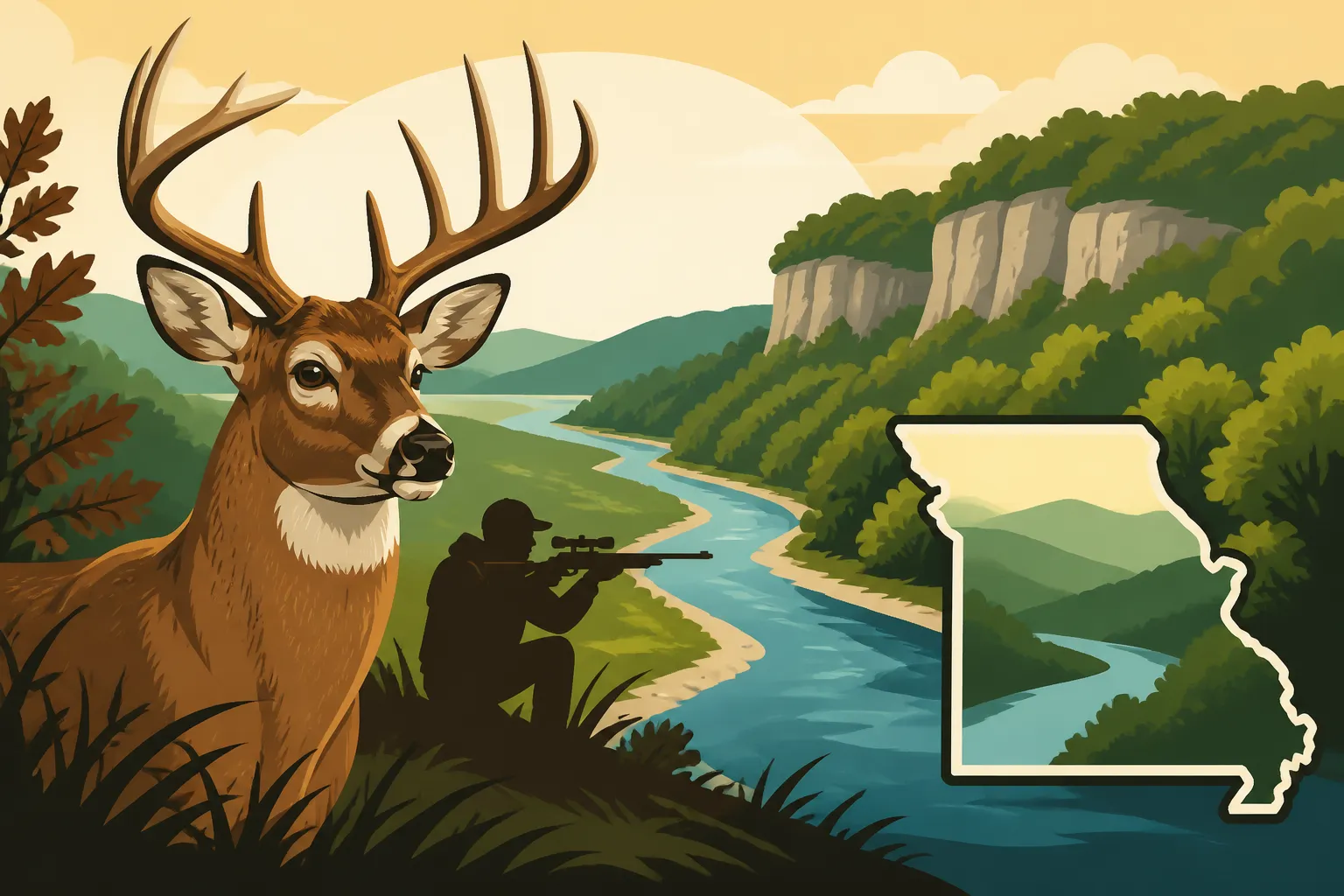
The very names "Current River" and "Eleven Point" tell you a lot about the importance of water here. These aren't just pretty features; the rivers and their countless feeder creeks are vital arteries for wildlife. Deer and turkeys often use creek bottoms as natural travel corridors, moving between bedding areas on high ridges and food sources in more secluded hollows. The clear, cold, spring-fed waters also provide crucial hydration, especially during those early archery seasons when the weather can still be uncomfortably warm.
You'll find that these water features create natural pinch points and funnels. A steep bluff dropping into a river might force deer to follow a narrow bench along the bank, or a creek crossing might concentrate tracks in a specific spot. Learning to "read" these aquatic features and how they influence game movement is a game-changer in the Ozarks. Identifying where deer cross a creek, or where a gobbler might pitch down from his roost to drink before heading to a strutting ridge, can drastically improve your chances. It’s all about understanding how the animals use these watery highways and barriers to their advantage, and then positioning yourself accordingly.
Timber Types and Food Sources in the Deep Ozarks
Unlike the agricultural landscapes to the north, the Current River and Eleven Point country are dominated by vast oak-hickory forests. This means mast crops—acorns, hickory nuts—are the primary draw for deer and turkeys, particularly in the fall. During a good mast year, you'll find deer concentrated in areas with abundant white oak acorns, which they absolutely love. In a poor mast year, however, they'll shift their focus to browse—tender new growth, forbs, and any available soft mast like wild grapes or persimmons.
Understanding the cycle of these food sources is paramount. A ridge covered in barren red oaks might be a ghost town, while a nearby hollow with a stand of producing white oaks could be crawling with deer. Spring brings new green growth for turkeys, while summer offers berries and insects. In the deep Ozarks, there are fewer food plots or standing crop fields to rely on, so you become a true "woodsman," learning to identify natural food sources and track how game animals exploit them throughout the seasons. This connection to the natural cycles of the forest is one of the most rewarding aspects of hunting in this part of Missouri.
Key Game Species and Their Habits in This Region
While the Ozarks are famous for their rugged beauty, they're also home to a thriving population of game animals. However, these animals behave a little differently here than their counterparts in other parts of the state, largely shaped by the unique environment they call home. It's important to adjust your expectations and tactics accordingly when you're targeting deer or turkeys in this terrain.
White-tailed Deer: Adapting to the Big Timber
Deer in the Current River and Eleven Point regions are often perceived as being smaller-bodied than their counterparts in the rich agricultural areas of northern Missouri. This isn't necessarily a sign of an unhealthy herd, but rather an adaptation to a less food-rich environment. They rely heavily on natural browse and the seasonal mast crops from the oak and hickory trees. Their movement patterns are also dictated by the terrain; instead of crossing wide-open fields, they navigate through hollows, along benches, and over saddles, often utilizing thickets for bedding cover. If you want to learn more about this specific kind of hunting, check out Deer Hunting the Missouri Ozarks.
Hunting these deep-woods deer requires patience and an intimate understanding of thermals and wind currents, which we'll discuss later. You'll often find them tucked into unexpected pockets of thick cover on steep hillsides or along secluded creek bottoms. Don't expect to see dozens of deer; instead, focus on finding areas with fresh sign – rubs, scrapes, and tracks – and understand that the deer you do encounter here are truly wild and often more challenging to harvest. Their home ranges might be smaller, but they know every rock and tree.
Wild Turkeys: Roosting and Roaming the Hollows
Missouri's wild turkey population is strong in the Ozarks, and the Current River and Eleven Point areas offer fantastic spring turkey hunting. Turkeys here thrive on the steep, timbered landscapes, often roosting high on ridges overlooking deep hollows. In the mornings, you might hear them gobble from the roost, and then watch them pitch down into the hollows to begin their day of feeding and strutting. They use those open ridge tops for strut zones and travel, but will often retreat to the security of the draws.
Calling tactics in this terrain can be a bit different. Your yelps and clucks might carry further in the open timber, but the topography can also make it incredibly difficult to pinpoint a gobbler or get him to commit. Sometimes, a subtle approach, using terrain features to close the distance, is far more effective than aggressive calling. You might find success with a run-and-gun approach, covering ground and trying to locate birds, or by setting up strategically on a known travel route between a roost and a feeding area. For more detailed insights, take a look at Spring Turkey Calling in Missouri Timber and Run-and-Gun Turkey Tactics in the Missouri Ozarks.
Other Opportunities: Small Game and Furbearers
While deer and turkey often get most of the attention, the Current River and Eleven Point regions also offer excellent opportunities for small game and furbearers. Squirrels absolutely thrive in the oak-hickory forests, making for fantastic early season hunting when the leaves are still thick but the woods are alive. Rabbits can be found in brushy clearings and along logging road edges, providing fast-paced action. For more on these, see Squirrel and Rabbit Hunting in Missouri.
Furthermore, the rugged and less-populated nature of these areas supports a healthy population of predators and furbearers like coyotes, bobcats, and raccoons. For hunters interested in predator calling or trapping, these areas can be incredibly productive, offering a chance to pursue species that are often harder to find in more developed landscapes. Whether you're calling coyotes in the winter or running traps, the deep woods offer an authentic experience. If you're considering this, check out Predator and Furbearer Hunting in Missouri.
Scouting and Accessing Remote Hunting Spots
Successfully hunting the Current River and Eleven Point country starts long before you ever step foot in the woods with your weapon. These areas demand thorough pre-season scouting and a smart approach to access. Without a solid plan, you can quickly find yourself lost, frustrated, and miles from any sign of game.
Leveraging Digital Tools for Pre-Season Scouting
In today's age, digital mapping tools are an absolute game-changer for scouting these remote Ozark lands. Forget the days of poring over paper maps (though a paper backup is still a good idea!). Satellite imagery and topographic maps available through apps like onX Hunt allow you to virtually explore hundreds of acres from your couch. You can identify steep hollows, subtle ridge saddles, potential bedding thickets, and even old logging roads that might serve as access routes. Look for changes in timber type, drainage features, and any breaks in the uniform forest canopy that might indicate a clearing or old field.
I always recommend spending hours on onX Hunt or similar apps before a trip. Pin potential hunting spots, mark likely travel corridors, and identify safe parking areas. These tools also allow you to see public vs. private land boundaries, which is crucial when hunting large expanses of Mark Twain National Forest or Conservation Areas. Use the contour lines to get a feel for the elevation changes – a tightly packed group of lines means a very steep climb! This initial digital reconnaissance will save you countless hours of unproductive walking once you're on the ground.
Boots-on-the-Ground Scouting Strategies
While digital scouting is invaluable, there's absolutely no substitute for putting boots on the ground. Once you've identified promising areas from your maps, it's time to hike in and verify what you've seen. Focus on searching for key signs: fresh deer tracks in creek beds, rub lines along ridge fingers, and scrape activity. Pay close attention to subtle terrain features like benches on steep hillsides, which deer often use as travel routes or feeding areas, or saddles between two ridge tops, which act as natural funnels. To learn more about this, read Scouting Missouri Public Land Before Season.
During your ground scouting, be sure to walk slowly and deliberately, just as you would when still-hunting. Take note of prevailing winds, thermal currents (especially in hollows), and potential ambush points. Look for natural barriers like rock bluffs or thick cedar thickets that might concentrate deer movement. Don't be afraid to explore those "nastier" areas – often, the spots that are hardest for you to get to are the places where deer feel most secure. The more time you spend in these woods before the season, the better your chances of finding that perfect setup.
Navigating Access Points and Public Land Boundaries
Accessing remote areas along the Current River and Eleven Point can be a significant hurdle. Many areas within the Mark Twain National Forest or Missouri Conservation Areas have limited vehicle access, often relying on gravel roads that might not be maintained, or simply no roads at all. This means you'll frequently be walking a considerable distance from the nearest public access point, which is why understanding your maps (and having a backup) is so critical. For a broader look at public hunting lands, consider Public Hunting Land in Missouri.
It's absolutely essential to confirm property lines. While onX Hunt is excellent for this, always be aware of your surroundings and any posted signs. Trespassing, even accidentally, is a serious offense. Remember that some sections might be private land surrounded by public. Plan your entry and exit routes carefully, especially if you're venturing deep into the timber. Having a reliable GPS or phone app (with downloaded offline maps!) is not just a convenience, it's a safety necessity to ensure you know where you are at all times and can navigate back to your vehicle, even in unfamiliar terrain or low light.
Effective Hunting Tactics for Current River and Eleven Point
Hunting in the deep Ozarks demands a strategic mindset and a willingness to adapt. The tactics that work in flat farm country won't always cut it here. Success often comes down to understanding the terrain, the animals, and how they interact with each other.
Still-Hunting and Stand Placement in Steep Terrain
In the Current River and Eleven Point country, often the most effective way to hunt is to still-hunt—moving incredibly slowly and deliberately, observing more than you walk. You're constantly scanning, stopping, and listening, using the terrain to break up your silhouette. This method allows you to cover ground while remaining stealthy, increasing your chances of spotting a deer before it spots you. When you're still-hunting, make sure to move into the wind or with a crosswind, always paying attention to your scent. For more on this, check out Still-Hunting a Missouri Ozark Hollow.
When it comes to stand placement, focus on natural funnels and travel corridors created by the topography. Ridge saddles, where a ridge dips down between two higher points, are classic deer crossings. Benches—flat areas on steep hillsides—also act as natural highways. Look for old logging roads or deer trails that parallel contour lines, offering easier travel. Setting up overlooking a deep hollow where deer might be feeding or traveling between bedding areas can also be very productive. Just remember, these spots are often high-traffic, but that also means you need to be extra cautious with your entry and exit to avoid blowing out the area. For specific advice, look at Hanging a Stand on a Ridge Saddle and Setting Up on a Bench Above a Creek.
Calling Strategies for Deer and Turkeys
Calling deer in the Ozarks can be effective, but often requires a more subtle approach than in open country. Aggressive rattling, while sometimes useful, might not carry as far in the dense timber and could easily scare off a wary Ozark buck. Instead, focus on soft grunts and doe bleats, especially during the pre-rut and rut phases. These calls mimic natural deer sounds and can pique a curious buck's interest without alarming him. Pay attention to how the sound carries in the hollows and over ridges; less can often be more. Rattling and Grunting in the Rut has good insights for this.
For turkeys, calling is central to the hunt, but again, terrain plays a huge role. Locator calls (owl hoots, crow calls) are great for getting a gobbler to sound off on the roost. Once he's on the ground, soft tree yelps, clucks, and purrs can be incredibly effective. Sometimes, a gobbler might hang up across a deep hollow, unwilling to cross. In these situations, patience is key, or a strategic repositioning might be necessary. Don't be afraid to try a "run-and-gun" approach, moving through the timber and calling, especially if birds aren't responding from a stationary setup. Your approach to the bird's location is critical.
Understanding Wind and Thermals in the Ozarks
This is perhaps one of the most critical, yet often overlooked, aspects of hunting the Current River and Eleven Point country: understanding wind and thermals. In flat terrain, wind direction is straightforward. In steep Ozark topography, it's a dynamic, ever-changing puzzle. Warm air rises and cool air falls, creating thermal currents that can completely change your wind advantage, especially in the mornings and evenings. As the sun rises and warms the hollows, thermals will pull your scent up the hillsides. In the evening, as the air cools, your scent will be pulled down into the hollows.
This means you can have a perfect prevailing wind, but a thermal current could still carry your scent directly to game animals. You need to scout with this in mind, planning your entry and exit routes to take advantage of these shifts. A morning hunt might require you to be on a ridge top, letting your scent rise. An evening hunt might necessitate setting up lower, allowing your scent to fall away from bedding areas. A deep understanding of these micro-climates and how they affect scent is paramount to consistently successful hunting in the Ozarks. For a deeper dive into this, read Wind and Thermals in Ozark Hills.
| Feature / Location | North Missouri (Farm Country) | Current River / Eleven Point (Ozarks) |
|---|---|---|
| Terrain | Flat to gently rolling, open fields | Steep, rugged, deep hollows, rocky ridges |
| Dominant Cover | Crop fields, small timber blocks, fencerows | Vast oak-hickory forests, thick cedar glades |
| Primary Food Source | Corn, soybeans, alfalfa, food plots | Acorns, hickory nuts, natural browse, forbs |
| Deer Body Size | Generally larger, heavier | Often smaller, lighter, adapted to browse |
| Access Challenges | Private land permission, limited public land | Remote public land, limited vehicle access, long walks |
| Scouting Focus | Field edges, pinch points between timber blocks | Ridge saddles, benches, creek bottoms, mast crops |
| Movement Patterns | Crossing open fields, fencerow travel | Using hollows, ridgelines, terrain for cover |
| Wind/Thermals Impact | Fairly consistent wind direction | Dynamic thermals, scent rising/falling in hollows |
| Recommended Gear | Less emphasis on traction, comfortable stand | Rugged boots, navigation tools, layered clothing |
Essential Gear and Preparation for Rugged Ozark Hunts
Hunting the Current River and Eleven Point country isn't a walk in the park. The challenging terrain and unpredictable weather demand a higher level of preparation and the right gear to ensure both success and safety. Skimping on essentials here can turn an exciting hunt into a miserable, or even dangerous, ordeal.
Footwear and Clothing for Demanding Terrain and Weather
Your feet are your most important tool in the Ozarks. Invest in high-quality, waterproof hunting boots with excellent ankle support and aggressive traction. You'll be climbing steep, rocky hillsides, crossing slick creek beds, and navigating uneven ground. A twisted ankle deep in a hollow can be a serious problem. Brands like LaCrosse, Kenetrek, or Irish Setter offer solid options that can withstand the abuse of Ozark terrain. This is one area where you absolutely should not cut corners. For more on what to wear on your feet, read Boots and Packs for Ozark Country.
Layered clothing is also critical. Missouri weather, especially in the fall and winter, can be incredibly unpredictable. You might start a morning hunt in freezing temperatures, only for it to warm up significantly by midday as you hike up and down hills. Having a moisture-wicking base layer, insulating mid-layers, and a waterproof/windproof outer shell allows you to adjust to changing conditions and activity levels. Don't forget quality rain gear; an Ozark downpour can come out of nowhere and soak you to the bone if you're unprepared.
Navigation and Safety Tools
When you're deep in the Mark Twain National Forest or a sprawling Conservation Area, getting turned around is a real possibility. Your smartphone, while useful, is not enough. Always carry a dedicated GPS unit or at the very least, have a mapping app like onX Hunt or GoHunt with offline maps downloaded. Combine this with a physical compass and paper map (waterproof, of course) as a backup. Knowing how to use them is just as important as having them. Mark your truck, your stand locations, and any significant terrain features.
Beyond navigation, personal safety is paramount. A small, but well-stocked, first-aid kit is non-negotiable. Include basics for cuts, blisters, and pain relief, along with any personal medications. Carry a headlamp with extra batteries, a fire-starting kit, a knife, and a whistle. A portable water filter or purification tablets are also smart additions, especially if you plan to be out for an extended period. Tell someone exactly where you're going and when you expect to return. For additional tips, read First Aid Kits for Remote Ozark Ground.
Meat Care in Remote and Potentially Warm Conditions
If you're fortunate enough to harvest a deer in this rugged country, getting the meat cared for quickly can be a significant challenge, especially during early-season hunts when temperatures can still be warm. Field dressing immediately is crucial to start the cooling process. Consider the "gutless method" if you're a long way from a vehicle, as it allows you to quarter the animal and pack out the meat without dragging the entire carcass. This can save immense effort and time on steep, rocky ground. For more on preparing your harvest, see Field Dressing and Cooling in Early-Season Heat.
Game bags are essential for protecting the meat from dirt, insects, and debris as you pack it out. If temperatures are warm, having a plan for ice and a cooler as soon as you reach your vehicle is vital. Remember, quality wild game meat starts with proper field care, and in the Current River and Eleven Point areas, this often means working harder and smarter than anywhere else. Having a sturdy frame pack designed for hauling heavy loads will be a blessing if you connect on a deep-woods buck.
Respecting the Resource and Ethical Hunting Practices
Hunting in the Current River and Eleven Point country offers a profound connection to the wild. With that privilege comes a responsibility to respect the land, its wildlife, and fellow hunters. Ethical practices aren't just rules; they're the foundation of sustainable hunting and a positive experience for everyone.
Minimizing Impact and Practicing Leave No Trace
When you venture into these wild, remote areas, it's vital to leave them better than you found them. This means practicing "Leave No Trace" principles. Pack out everything you pack in – and then some, if you find trash left by others. Be mindful of your impact on trails and creek beds. When setting up treestands or ground blinds, choose locations that minimize disturbance to vegetation. If you use screw-in steps or stands, remove them completely at the end of the season.
Think about the long-term health of the ecosystem. Avoid creating unnecessary trails or trampling sensitive areas. The goal is for the next hunter, or simply the next hiker, to experience the same pristine environment you did. This respect for the land is not just a courtesy; it's a critical part of being a responsible steward of Missouri's natural resources.
Understanding Local Regulations and Hunter Etiquette
Before heading out, always double-check the latest Missouri Department of Conservation (MDC) regulations, especially for the specific Conservation Area or National Forest section you plan to hunt. Rules can vary, particularly regarding vehicle access, camping, and permissible weapons. Ignoring these rules can result in fines, permit revocations, and damage to the reputation of all hunters. For an overview of basic rules, check Missouri Conservation Area Rules.
Furthermore, practicing good hunter etiquette is important, especially on public land. These areas can sometimes see other hunters, hikers, or even paddlers on the rivers. Be aware of your surroundings, give other hunters ample space, and always be courteous. If you encounter someone else, a friendly nod or brief conversation is far better than an aggressive confrontation. We're all out there to enjoy the outdoors, and mutual respect goes a long way.
Recovering Game in Challenging Terrain
The rugged topography of the Current River and Eleven Point country can make game recovery incredibly challenging. If you make a shot, give the animal plenty of time to expire, especially if you suspect a marginal hit. Then, be prepared for a difficult tracking job. The rocky ground often makes blood trailing tough, as blood can be absorbed by porous rocks or simply wash away in a sudden shower. Focus on disturbed leaves, broken twigs, and any hair or bone fragments.
Having a good quality headlamp for tracking after dark is essential, as is a partner to help with the search. If you lose the trail, back out and return with fresh eyes in the morning. Attempting to track a wounded animal in the dark, alone, on steep and unfamiliar ground, can lead to dangerous situations. Remember, your responsibility to the animal extends to a full and thorough recovery. If you're tracking in the Ozarks, reading Tracking a Deer in Ozark Rock and Recovering a Deer in Steep Ozark Ground will be very helpful.
Disclaimer
This article is for general informational purposes only and does not constitute professional advice. Laws, prices and regulations vary by location and change over time. Consult a qualified professional for guidance on your specific situation.