Run-and-Gun Turkey Tactics in the Missouri Ozarks
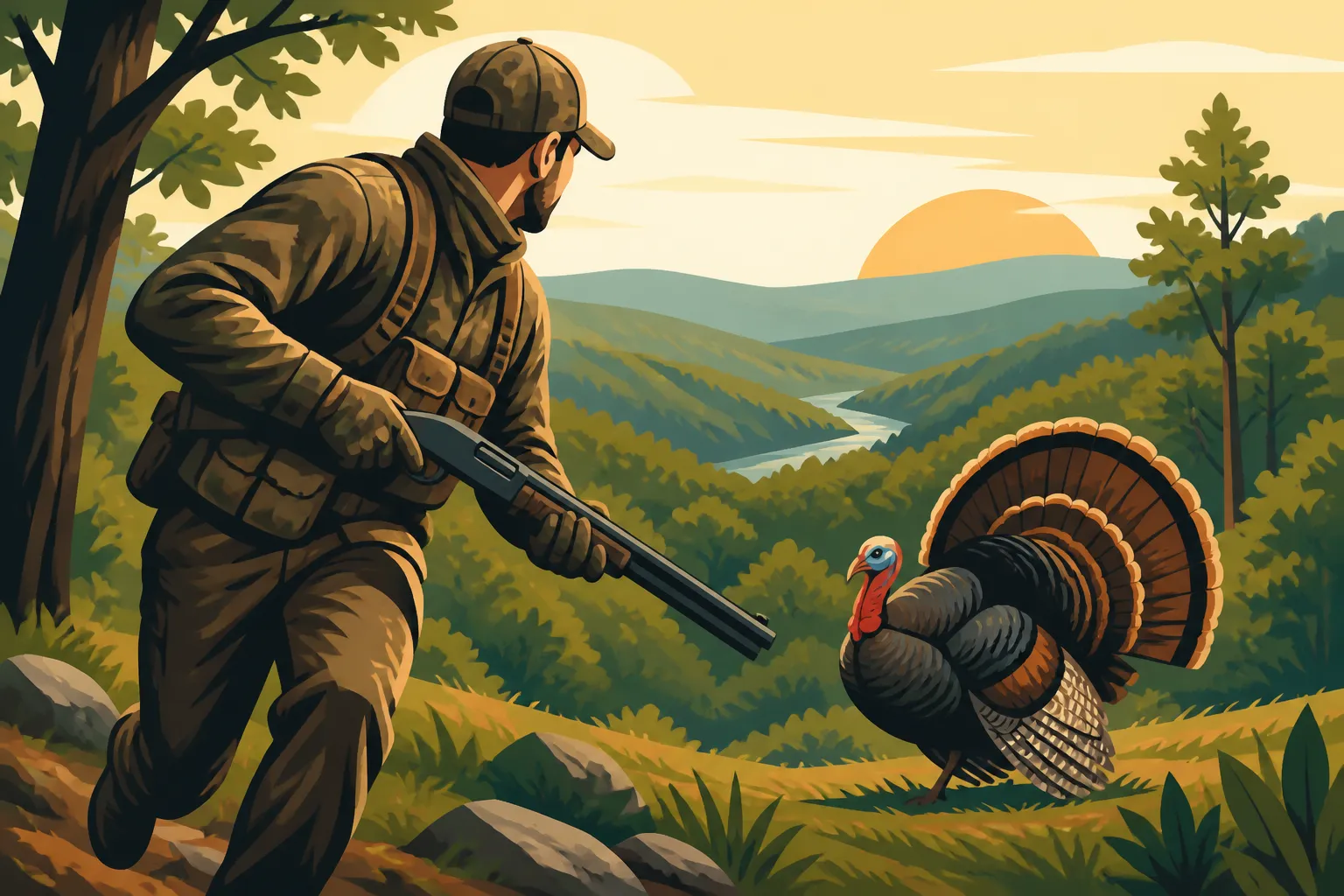
There's nothing quite like the sound of a spring gobbler hammering on the roost in the pre-dawn quiet of the Missouri Ozarks. But for many hunters, that magic moment can quickly turn into frustration when that old tom hangs up, refusing to come the last 50 yards, or worse, slips away silently. If you've found yourself stuck in one spot, calling until your lungs ache with no results, it might be time to embrace the run-and-gun strategy. This guide will walk you through how to effectively cover ground, engage silent gobblers, and seal the deal in the rugged, beautiful, and often challenging terrain of Missouri's Ozark hills.
Understanding the Ozark Landscape for Run-and-Gun
The Ozarks are a beast of their own, far different from the flat crop fields of North Missouri or the river bottoms. This isn't country where you can just plop down and expect a turkey to walk a mile of open ground to you. It's steep, often rocky, and covered in dense timber, which means your strategy needs to be as dynamic as the terrain itself.
Topography and Cover Considerations
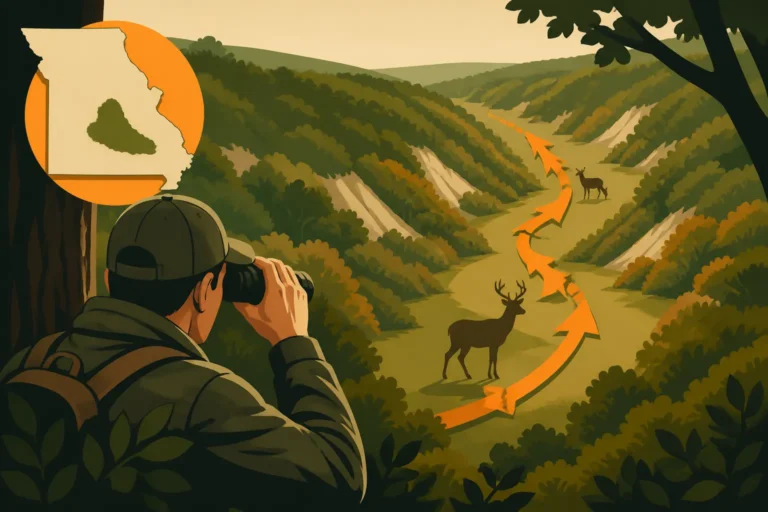
When you're looking at a map of the Ozarks, you'll see a spiderweb of ridges, hollows, and drainages. This broken topography is both a blessing and a curse. On one hand, it can make it tough to get around quietly, especially with all the loose rocks and fallen leaves. On the other hand, these features dictate how turkeys move. They often use the tops of ridges as travel corridors, moving from one feeding area to another, or dropping into hollows to feed on acorns or find water.
Understanding these natural travel lanes is crucial for a run-and-gun approach. Instead of just picking a spot and hoping, you're actively seeking out these bottlenecks and funnels. Think about those long, sweeping benches that run just below a ridge crest – turkeys love to strut and feed along those. Or consider how a hollow might funnel birds towards a creek bottom or a small food plot. Your goal is to identify these high-percentage areas on the fly and position yourself quickly and quietly. The dense timber, predominantly oak and hickory, provides plenty of cover for both you and the birds, so don't be afraid to use it to break up your silhouette as you move. A little bit of elevation can give you a huge advantage in hearing distant gobblers, allowing you to quickly pinpoint their location and plan your approach.
Reading Thermals and Wind in Hilly Terrain
Thermals in the Ozarks are like an invisible river of air, constantly moving and shifting, and they play a massive role in how sound travels and how turkeys might respond to your calls. In the morning, as the sun warms the earth, thermals tend to rise, carrying sound (and your scent, if you're not careful) uphill. This means if you're calling from the bottom of a hollow, your calls will carry up to gobblers on the ridge. Conversely, in the evening, as the air cools, thermals drop, pushing scent and sound downhill.
The wind, of course, adds another layer of complexity. A strong wind can make it incredibly difficult to hear a distant gobble, but it can also mask your movement. You need to be constantly aware of both. A light breeze can actually be your friend, helping to carry your calls further or helping to break up the tell-tale sound of leaves crunching underfoot. But a swirling wind in a deep hollow can be a nightmare, making it impossible to predict how your sound (or scent) will be carried. Many seasoned Ozark hunters prefer to move along ridge lines or benches, where thermals are more predictable and consistent, to maximize their ability to hear and avoid being winded. Pay close attention to the trees; a slight rustle can tell you more about the wind direction than a weather app ever could in this broken country.
Essential Gear for the Mobile Hunter
The beauty of run-and-gun is its emphasis on mobility and minimal gear. You don't want to be bogged down with a heavy pack or an armload of decoys. Every ounce counts when you're climbing those Ozark hills, and every piece of gear should serve a purpose that enhances your ability to move, call, and kill.
Lightweight and Practical Clothing
Comfort and practicality are paramount when you're covering miles of rough terrain. Forget the heavy insulated jackets unless it's an unusually cold spring morning. Instead, focus on layering. Start with a moisture-wicking base layer, add a light fleece or softshell, and top it off with a good quality camouflage outer layer. The goal is to be able to shed or add layers quickly as the day warms up or cools down, or as your exertion level changes from hiking to sitting. Durable brush pants are a non-negotiable in the Ozarks; they'll protect your legs from briars, ticks, and sharp rocks.
Perhaps the most critical piece of clothing is your footwear. You need boots that are comfortable enough for long walks, provide excellent ankle support on uneven ground, and offer good traction on slick leaves and rocky slopes. Waterproof boots are highly recommended, as creek crossings and morning dew are common. Consider a pair of high-quality hiking boots or dedicated hunting boots designed for rugged terrain. Lightweight gloves and a face mask are also essential to break up your human outline, especially when you're quickly setting up in open timber. Remember, you're not trying to become a bush, you're trying to disappear into it. For more on getting around in this unique area, check out this guide on Boots for Walking Ozark Rock.
Calls and Decoys for Quick Setups
When you're run-and-gunning, you need calls that are efficient, versatile, and easy to use on the move. Mouth calls (diaphragm calls) are king here because they're hands-free, allowing you to keep your gun up or stay ready to move. Carry a variety of cuts and reeds – a soft hen yelp for close work, a more aggressive cut for locating, and perhaps a gobble tube for challenging dominant birds. In addition to mouth calls, a small, quiet slate or glass call can add realistic hen sounds and is great for soft purrs and clucks when a bird is coming in tight.
Decoys for run-and-gun should be minimalist. A single, lightweight hen decoy is often all you need, or perhaps a jake and a hen if you're feeling bold. The key is that they're quick to deploy and retrieve. Foldable foam decoys or those that collapse easily into your vest are perfect. You want something that can be set up in a matter of seconds, giving a visual focal point for an approaching gobbler without slowing down your movement. When considering your setup, remember that Decoy Placement for Pressured Birds can make all the difference in getting that last 50 yards.
Navigation and Scouting Tools
In the expansive Ozark timber, getting lost is a real concern, and efficient navigation is paramount for a successful run-and-gun strategy. A reliable GPS unit or a smartphone app like GoHunt with mapping capabilities is absolutely essential. These tools allow you to pinpoint your exact location, mark gobbling turkeys, identify property boundaries (crucial for public land hunting), and plan your routes through the challenging terrain. Being able to see contour lines and identify potential ridge saddles or benches is invaluable when you're trying to anticipate turkey movement.
Before you even step foot in the woods, spend some serious time with these digital maps. Identify potential roosting areas (tallest trees near water), likely travel corridors, and any open fields or clearings that might serve as strut zones. Mark these waypoints. This pre-scouting, even from your couch, will give you a significant advantage. During the hunt, use your GPS or app to track your movement, making it easier to retrace your steps or navigate back to your vehicle. Some hunters even carry a small compass and paper map as a backup, especially in areas with poor cell service. For an even deeper dive into digital scouting, consider how useful Reading Aerial Photos for Ozark Deer can be, as many of the same principles apply to turkeys.
Mastering the Run-and-Gun Strategy
The true art of run-and-gun isn't just about walking around and making noise. It's a calculated dance between aggressive movement, strategic listening, and adaptable calling. It requires patience mixed with boldness, and the ability to make quick decisions based on subtle cues from the woods.
Locating Roosted Birds and Initial Setup
The very first step of any successful run-and-gun hunt often begins long before dawn. You need to be in the woods, ideally on a high ridge or a listening post, well before fly-down. The goal is to listen for those tell-tale gobblers sounding off from their roosts. Pay attention not just to the direction, but also to the intensity and frequency of their calls. Once you pinpoint a bird or a group of birds, the real work begins. Your approach must be as quiet as possible, utilizing terrain features to mask your movement.
As you get closer, aim to set up on a contour that allows you to be at eye level or slightly above the gobbler, if possible, for better visibility and sound travel. Avoid setting up directly under a roosted bird, as they'll often fly down away from your position. Instead, try to position yourself 80-150 yards away, in a spot that offers a clear shooting lane but also some cover for you. If a gobbler is still on the limb, a soft tree yelp or an owl hoot can sometimes get them to sound off again, confirming their location. Remember, the goal is to be in position and ready the moment they hit the ground. For more on this critical first step, read up on Roost Hunting Missouri Gobblers.
Aggressive Calling and Listening Periods
Once you're set up, the calling strategy for run-and-gun is often more aggressive than traditional sedentary hunting. You're trying to locate and provoke a response quickly. Start with a series of loud, sharp cutts and yelps. The idea is to sound like a hot hen, drawing attention and challenging any gobbler in the vicinity. After a vigorous series, fall silent and listen intently for 10-15 minutes. Turkeys often take their time to respond, or they might gobble softly, or even just cluck and putt. The Ozark hills can play tricks with sound, so listen for direction and distance.
If you don't hear a response, pack up quietly and move. Don't linger. Your next move should take you 150-300 yards in a new direction, covering a different section of the terrain. This constant movement and calling cycle is the core of run-and-gun. You're essentially throwing out bait and seeing what bites, then reeling it in. Don't be afraid to experiment with different calls – a loud crow call or an owl hoot can sometimes elicit a shock gobble from a tight-lipped tom. The key is to cover ground efficiently, call assertively, and then listen, always ready to react to a distant sound. When trying to elicit that reaction, consider various Turkey Calls Worth Carrying in Missouri.
Covering Ground and Recognizing Hot Sign
The "run" in run-and-gun means you'll be covering a lot of territory, so you need to be efficient and observant. Don't just wander aimlessly. As you move, keep your eyes peeled for fresh turkey sign. Look for tracks in soft dirt near creek bottoms or logging roads, fresh droppings on ridge tops, and dusting bowls where turkeys have been cleaning their feathers. These indicators tell you that birds are using this specific area, even if they're not gobbling at that moment.
If you come across a significant amount of fresh sign, it's worth slowing down and calling more intently. You might have stumbled into a primary feeding or strutting area. Sometimes, a silent tom will simply walk in on you after hearing your calls, even if he didn't gobble back. This is where your camouflage, quiet movement, and quick setup come into play. If you're on public land, especially heavily hunted areas, understanding Hunting Pressure on Missouri Public Ground can inform where you choose to slow down or speed up. The more ground you cover, the higher your chances of encountering a bird that is willing to talk, or better yet, walk right into your setup.
Adaptability for Different Turkey Behaviors
Turkeys are notoriously fickle, and their behavior can change on a dime. A run-and-gun hunter needs to be a master of adaptation, capable of adjusting tactics based on how the birds are responding, or not responding. What works for one gobbler might utterly fail for another, even on the same ridge.
Dealing with Hung-Up Gobblers
This is perhaps the most common and frustrating scenario for any turkey hunter, especially in the Ozarks. You get a gobbler to respond, he comes in hot, but then stops just out of sight, gobbling his head off but refusing to commit. This often happens because they expect the hen to come to them. In a run-and-gun scenario, you have a few options that stationary hunters don't. First, try a soft, subtle approach. Instead of more aggressive calling, try a few soft clucks and purrs, mimicking a hen that's losing interest. This can sometimes make the gobbler curious enough to come investigate.
If that doesn't work, consider circling. If the terrain allows, try to make a wide, quiet circle around the bird, putting yourself in a new position, perhaps further ahead in the direction he seems to be heading, or even slightly behind him. Sometimes, getting ahead of him and setting up to cut him off as he travels his established route is the best bet. You might also try a "decoy fade" – setting up your decoy and then backing away a short distance (10-20 yards) and calling softly. This creates the illusion that the hen is moving away, often drawing the gobbler forward. Always prioritize movement over continued calling when a bird hangs up.
Calling to Multiple Birds and Decoy Strategies
When you get multiple gobblers fired up, it can be a thrilling but challenging situation. The dynamic changes from attracting a single bird to managing competition. If you have several gobblers responding, especially if they're grouped, you might consider a jake and hen decoy setup. This visual can really fire up dominant gobblers, making them jealous and eager to run off the perceived competition. Position your jake decoy aggressively, perhaps facing away from the approaching gobblers, as if he's strutting and ignoring them.
However, be prepared for them to approach from unexpected angles. Multiple birds often try to circle, trying to get a visual before committing. Keep your head on a swivel. If they stop responding, don't be afraid to change your calling cadence or even mimic a distant hen by softly yelping and moving your body slightly to mimic a moving bird. Sometimes, showing them a fanning tail fan can be incredibly effective, especially if you're comfortable with the risks of reaping or fanning. Just remember to be acutely aware of your surroundings and other hunters, as this tactic carries inherent risks.
Hunting Midday and Afternoon Toms
Many hunters pack up their gear once the morning fly-down action dies, but that's a mistake in the Ozarks. Midday and afternoon can be incredibly productive for run-and-gun, but it requires a different approach. After the morning strutting and breeding activity, gobblers often break away from hens and head to different areas. They might be looking for food sources, dusting bowls, or simply cruising for any remaining receptive hens.
This is the time to focus on areas that were quiet earlier. Target creek bottoms, shaded benches, or areas with a good mast crop from the previous fall (like oak flats). Your calling should be less frequent and often softer during midday, mimicking a lonely hen. You're not necessarily looking for a loud response, but rather trying to pique a cruising gobbler's interest. Use locator calls sparingly to shock a gobble, then quickly move in. Don't be afraid to keep moving and calling until you get a response, even if it's a soft one. As turkeys become less vocal, your movement becomes even more critical for success. This is also a good time to recall strategies like Hunting Turkeys in Ozark Hollows, as birds often move into these cooler, shadier spots. The spring turkey season in Missouri runs until mid-May, offering plenty of time to explore these later-day tactics.
Safety and Ethics on Public Land
Hunting turkeys, especially with an aggressive run-and-gun approach, requires heightened awareness of safety and ethical considerations. We're sharing the woods with other hunters, hikers, and wildlife, and it's our responsibility to ensure everyone's safety and uphold the integrity of the sport.
Hunter Orange and Visibility Considerations
Unlike deer firearms season, hunter orange is not required during Missouri's spring turkey season. However, this doesn't mean you should completely disregard visibility. When you are actively moving through the woods, especially in dense cover, wearing a blaze orange cap or vest while walking can significantly increase your visibility to other hunters. The moment you decide to set up and call, you can quickly shed or flip your orange gear, tucking it away to remain camouflaged while calling. Many run-and-gun vests have pockets specifically designed for this.
The Ozark terrain, with its rolling hills and thick timber, can easily hide a hunter from view, leading to dangerous situations if someone mistakes movement or a call for a turkey. Always identify your target positively before making a shot. It's better to miss an opportunity than to make a tragic mistake. For specific rules and dates, remember to consult the Missouri Spring Turkey Season Structure each year.
Awareness of Other Hunters
Public land in Missouri, particularly popular conservation areas, can see significant pressure during spring turkey season. When employing a run-and-gun strategy, you are by definition moving a lot, which increases your chances of encountering other hunters. This means exercising extreme caution. Never assume you are the only hunter in an area.
If you hear another hunter calling, move away from their direction of travel. Never try to call in a bird that another hunter is working. If you happen to encounter another hunter, politely acknowledge them, exchange information about where you're headed, and always err on the side of giving them space. Remember, aggressive calling can sometimes draw other hunters in, thinking you're a real bird. Avoid wearing any red, white, or blue clothing, as these colors are often associated with parts of a tom turkey. In a crowded woods, your situational awareness is as important as your calling prowess.
Ethical Shot Placement and Recovery
The final, and most crucial, aspect of any hunt is making an ethical shot and ensuring a quick, clean kill. When a gobbler finally commits and struts into your setup, it's easy to get tunnel vision. However, it's vital to remain calm and wait for a clear, unobstructed shot at the head and neck. This area is the turkey's vitals for a clean kill, as the body cavity is surprisingly small and covered by thick feathers. A body shot often results in a wounded bird that runs off, leading to a difficult or impossible recovery.
Use a shotgun choked tightly and patterned with appropriate turkey loads at various distances (20, 30, 40 yards) before the season. Know your effective range. Once you've taken the shot, watch the bird's reaction. If it doesn't drop instantly, keep your gun up and be prepared for a follow-up shot. Mark the exact spot where the bird was standing when you shot, and wait a few minutes before approaching, especially if the bird runs or flies off. Even a mortally wounded bird can travel a surprising distance. If you need to track, proceed slowly and look for feathers, blood, or disturbed ground. Having a plan for Getting a Deer Out of a Hollow Alone might seem different, but the principles of marking your spot and tracking apply to any recovery in tough terrain. Your dedication to a clean kill reflects your respect for the animal and the sport.
| Call Type | Pros for Run-and-Gun | Cons for Run-and-Gun | Best Use Cases |
|---|---|---|---|
| Mouth Call | Hands-free, compact, versatile sounds | Takes practice, can get "stuck" if dry mouth | Locating, close-in calling, follow-up calls |
| Slate/Glass Call | Realistic soft sounds, easy to learn | Requires two hands, can get wet/noisy | Finishing birds, purrs/clucks, getting soft responses |
| Box Call | Loud, excellent for locating distant birds | Bulky, requires two hands, can get wet/noisy | Locating in windy conditions, cutting off birds |
| Locator Calls (Owl Hooter, Crow Call) | Provokes "shock gobble" from silent birds | Can alert other hunters, not a hen call | Early morning, midday locating, provoking a response |
Disclaimer
Hunting involves inherent risks, including but not limited to, those associated with firearms, adverse weather conditions, and uneven terrain. This guide is for informational purposes only and does not substitute for proper training, adherence to all local, state, and federal hunting regulations, or personal responsibility. Always prioritize safety, respect wildlife, and obtain all necessary permits and licenses before hunting. Consult the Missouri Department of Conservation (MDC) for the most current regulations and season information.