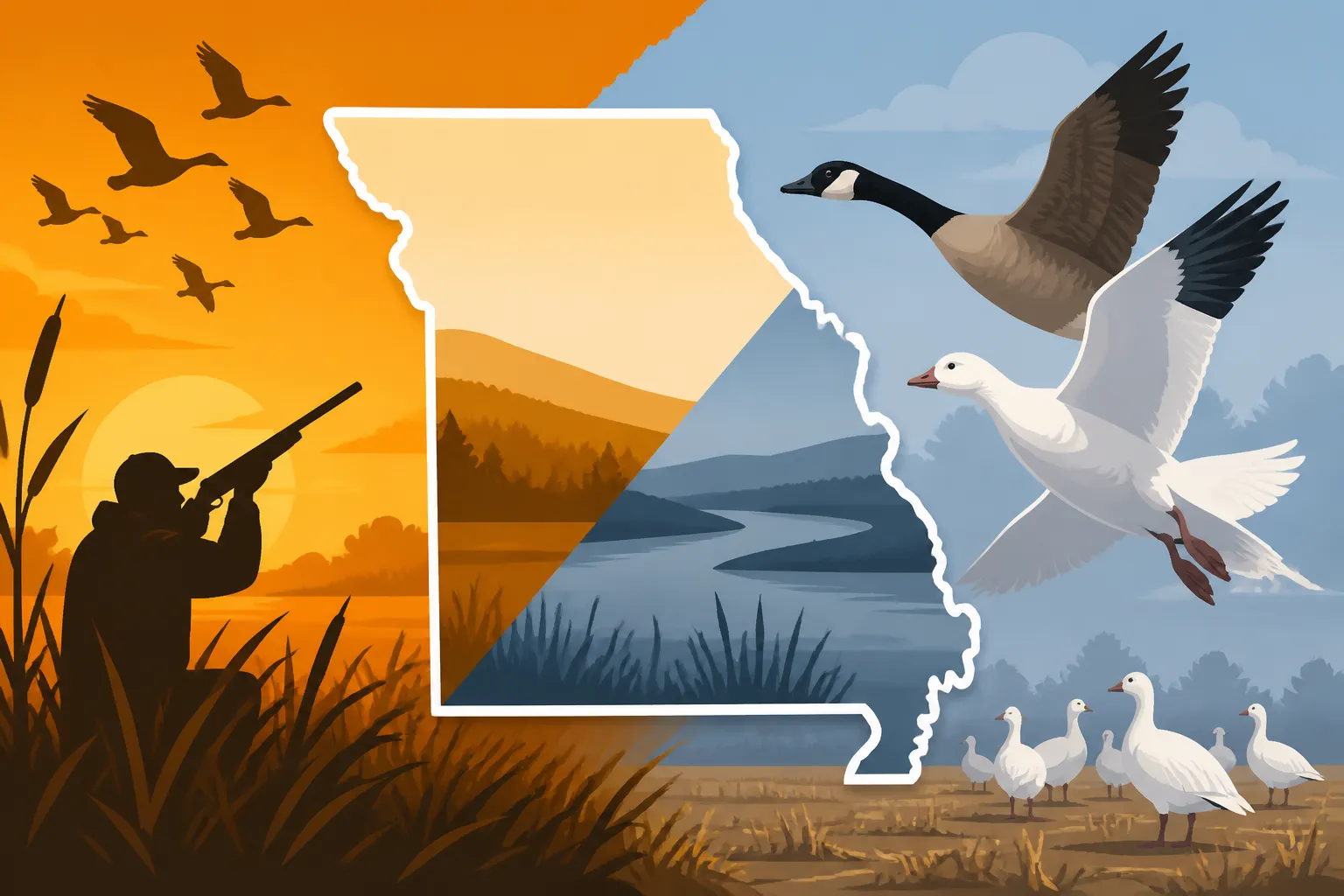
Missouri Goose and Snow Goose Seasons
If you've ever felt like deciphering Missouri's goose hunting regulations requires a Ph.D. in migratory bird law, you're definitely not alone. It can be incredibly confusing, with different species, staggered season dates, and special conservation orders throwing a wrench into what should be a straightforward pursuit. This guide is here to untangle that complexity, offering a clear, comprehensive look at Missouri's goose and snow goose seasons, so you can spend less time scratching your head and more time looking to the sky.
Understanding Missouri's Goose Hunting Landscape
Missouri sits squarely in the heart of the Mississippi Flyway, a superhighway for countless migratory birds, including an impressive number of geese. This geographical advantage means we get incredible opportunities, but it also necessitates careful management to ensure healthy populations for generations to come. Knowing what types of geese frequent our state and why helps us appreciate the nuances of the seasons set by the Missouri Department of Conservation (MDC) in conjunction with federal guidelines.
The Diverse Goose Species in Missouri
When we talk about goose hunting in Missouri, we're primarily focused on three main players: Canada geese, snow geese, and white-fronted geese. Each has its own distinct characteristics, migration patterns, and, consequently, its own set of hunting regulations. Canada geese, with their familiar black neck and white chinstrap, are a common sight, from local resident flocks to migrating giants. Missouri sees several subspecies of Canada geese, ranging from the relatively small interior Canadas to the larger giant Canadas, and understanding their movements is key to success.
Snow geese, on the other hand, are the enigmatic white birds that often descend in massive, swirling tornadoes, particularly during their spring migration. These "light geese" include both the pure white snow goose and the blue-phase snow goose, which is a genetic variant of the same species. Their populations have grown so large that special conservation measures are in place to help manage their numbers. Lastly, we have white-fronted geese, often called "specklebellies" due to the black barring on their breasts. These wary birds offer a challenging hunt and are highly prized for their table fare. Their migration through Missouri is usually more concentrated than Canada geese but not as overwhelming as snow geese.
Key Migratory Flyways and Habitat
Missouri's position in the Mississippi Flyway makes it a critical stopover point for geese traveling from their northern breeding grounds to southern wintering areas. The state is crisscrossed by major river systems like the Missouri River and the Mississippi River, which serve as natural navigation corridors and provide essential roosting and feeding habitat. These river bottoms, along with numerous man-made reservoirs and the vast agricultural fields of central and northern Missouri, create a mosaic of perfect goose country.
Managed wetland areas, many operated by the MDC, are particularly important. Places like Grand Pass Conservation Area, Eagle Bluffs Conservation Area, and Fountain Grove Conservation Area are strategically managed to provide food and sanctuary, drawing in thousands of geese. Understanding how these areas are managed and when geese typically use them can give you a significant advantage. Geese will often roost on large bodies of water or protected wetlands and then fly out to feed in nearby agricultural fields, primarily feasting on waste grain such as corn, soybeans, and rice, especially during colder weather. Hunters often focus their efforts on these feeding patterns, setting up in the fields where the geese are concentrated.
The Missouri Department of Conservation's Role
The MDC plays a pivotal role in managing Missouri's goose populations and setting hunting seasons. Working under frameworks established by the U.S. Fish and Wildlife Service, the MDC biologists monitor populations, conduct aerial surveys, and analyze harvest data to ensure sustainable hunting opportunities. This data-driven approach helps determine bag limits, season dates, and any special regulations. They also manage critical habitat on public lands, creating environments that benefit geese and other waterfowl.
It's a delicate balance, trying to provide ample hunting opportunities while safeguarding the future of the resource. The regulations you see—from the different duck zones that affect specific opening and closing dates to the specific daily bag limits—are all part of this larger management strategy. It's why staying up-to-date with the latest MDC regulations each year is absolutely crucial, as dates and rules can change based on population trends and federal guidelines.
Missouri's Canada Goose Seasons: A Hunter's Guide
Canada geese are perhaps the most iconic waterfowl hunted in Missouri, offering challenging and rewarding opportunities throughout various distinct seasons. These seasons are carefully structured to target both resident populations and migrating flocks as they push through the state, providing hunters with multiple chances to pursue these big birds.
Early Goose Portion
The early goose portion is a fantastic way to kick off the waterfowl season, typically starting in early September. This segment of the season is primarily designed to target the abundant resident Canada goose populations that breed and spend their entire lives within Missouri. These birds can become quite a nuisance in urban and suburban areas, so the early season helps manage their numbers while providing hunters with an opportunity before the main migration hits.
During this early period, the weather can still be quite warm, so proper game care is essential. The tactics often involve scouting local farm ponds, larger lakes, and agricultural fields where these local flocks feed and roost. Permission on private land is almost always a necessity for prime spots, as many resident geese have established patterns on specific farms. The daily bag limits are usually more generous during this time, reflecting the focus on resident birds. You'll need a valid Missouri small game hunting permit and HIP (Harvest Information Program) registration, but a federal duck stamp is not required for this specific early Canada goose season. Remember that you will still need to abide by Missouri Hunter Orange Rules if other deer or turkey seasons are open concurrently in that specific area.
Regular Goose Portion
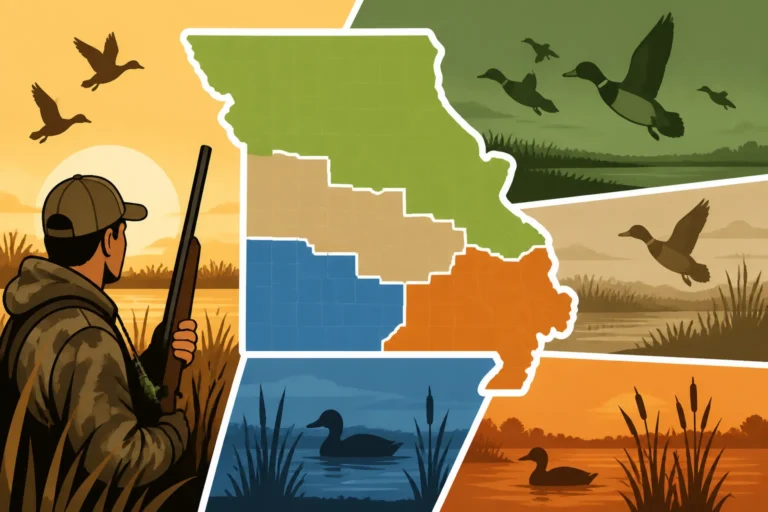
The regular Canada goose season is what most hunters think of when they talk about goose hunting. This season usually opens sometime in October and runs through late January, often with a brief closure during the firearms deer season to avoid conflicts and reduce pressure. This period coincides with the main fall migration of Canada geese from their northern breeding grounds, bringing in a fresh influx of birds. The regular season is often split into North, Middle, and South zones, mirroring the Missouri Duck Zone Boundaries, although goose zones sometimes have slightly different dates.
During this peak migration, hunters will encounter a mix of local birds and those passing through. Strategies often involve large decoy spreads in cut fields where geese are feeding, or ambushing them along flight paths between roosts and feeding areas. Effective calling, good concealment, and diligent scouting are paramount. You’ll definitely need your A-game here. For this season, a valid Missouri small game hunting permit, HIP registration, and a Missouri Federal Duck Stamp Requirement are all mandatory. Pay close attention to the daily bag limits, which are typically more restrictive than the early season, and vary depending on the specific zone and time frame.
Late Goose Portion
Sometimes, there's a late goose portion, often extending into February, particularly for Canada geese. This season is usually implemented to target late-migrating birds or to provide additional opportunity on resident flocks that might have been overlooked earlier in the year. By this point, Missouri can be experiencing truly cold winter weather, often with snow and ice, which can change goose behavior dramatically.
Geese will often concentrate around open water sources, such as major rivers or power plant lakes, and feed heavily in fields to maintain their energy reserves. Hunters pursuing birds in this late season often find less competition but face tougher conditions. The birds can also be incredibly wary, having been hunted for months. Gear that keeps you warm and dry, like insulated waders and layers, becomes crucial. The permit requirements are generally the same as the regular season—state small game permit, HIP registration, and a federal duck stamp. While the number of birds might be lower than the mid-season peak, the dedicated late-season hunter can still find success by understanding how geese adapt to the harsh winter environment. You can learn more about general waterfowl strategies in the post titled Missouri Waterfowl Seasons and Duck Zones.
The Snow Goose Conservation Order: A Unique Opportunity
The snow goose conservation order is a truly unique phenomenon in waterfowl hunting. Unlike the traditional regulated seasons for Canada geese or ducks, the conservation order is a special federal initiative designed to reduce the skyrocketing population of mid-continent light geese (snow, blue, and Ross's geese). Their numbers have grown to such an extent that they are literally destroying their Arctic breeding grounds, threatening not only their own future but also the fragile ecosystems other waterfowl rely upon.
What is the Conservation Order?
The Conservation Order isn't a "season" in the traditional sense; it's a special hunting period with relaxed regulations aimed at maximizing harvest efficiency. This federal mandate allows states in the flyways to implement rules that would be unthinkable during regular seasons, all with the goal of population control. In Missouri, this period typically begins in late January or early February, right after the regular waterfowl seasons close, and can run well into March, sometimes even early April.
This extended period gives hunters ample time to pursue these prolific birds. The rationale is simple: the birds are causing ecological damage, so the goal is to take as many as possible. This approach differs greatly from the management of other waterfowl species, where conservation efforts focus on maintaining stable populations. For snow geese, the focus is squarely on reduction. Understanding this foundational difference helps to appreciate why the rules are so different during the Conservation Order.
Extended Season Dates and Unconventional Methods
During the Missouri Snow Goose Conservation Order, hunters benefit from a set of incredibly liberal regulations. First, the season is remarkably long, often spanning two months or more, allowing for numerous opportunities. Second, and perhaps most notably, hunters are allowed to use electronic calls to lure in birds. This is a game-changer, as the sheer vocalizations of tens of thousands of snow geese are difficult to replicate with traditional mouth calls. These e-callers are often placed within massive decoy spreads to create a true sensory overload for incoming flocks.
Third, unplugged shotguns are permitted. This means you can remove the plug from your shotgun, allowing it to hold more than the typical three rounds (one in the chamber, two in the magazine). This significantly increases your firepower during a typical snow goose volley. Fourth, shooting hours are extended, often from 30 minutes before sunrise to 30 minutes after sunset, giving hunters more time in the field. These methods are specifically designed to be as effective as possible in reducing snow goose numbers. Many hunters will target geese in cut corn or bean fields, often utilizing Layout Blinds in Harvested Fields to conceal themselves effectively.
Permit Requirements and Participation
Participating in Missouri's Snow Goose Conservation Order is relatively straightforward, but it does require a specific permit. You'll need to purchase a Missouri Conservation Order Permit, which is generally quite affordable. The good news is that during this special order, you do not need a federal duck stamp, nor do you need to register for HIP. The bag limits are also removed entirely; there is no daily bag limit or possession limit for snow geese during the Conservation Order. This allows hunters to take as many birds as they can ethically and practically harvest.
However, while the rules are relaxed, the challenge of hunting snow geese remains. These birds are incredibly intelligent and adapt quickly to hunting pressure. Successfully engaging them often requires substantial effort, large numbers of decoys (sometimes thousands of wind socks or full-bodies), and an intimate knowledge of their movements. Hunters often form groups to share the workload and expense, making for a truly unique and social hunting experience. It's a great opportunity to witness massive migrations and contribute to a vital conservation effort. If you're looking for specialized advice, a post like Snow Goose Tactics in Spring can offer deeper insights.
Permits, Regulations, and Essential Gear for Goose Hunting
Navigating the rules and equipping yourself properly for Missouri goose hunting can feel like a lot, especially for newcomers. But with a clear understanding of what's required and what gear genuinely makes a difference, you'll be well-prepared for success in the field. Ignoring regulations isn't an option, and having the right equipment dramatically improves your odds and comfort.
Required Permits and Federal Duck Stamp
For most goose hunting in Missouri, beyond the Early Goose Portion, you're going to need a few key permits. First, a Missouri Small Game Hunting Permit (or a Missouri Combination Hunting and Fishing Permit) is fundamental. This is your state-level license to hunt migratory birds. Residents and nonresidents alike will need one, though the Missouri Nonresident Small Game Permit Cost will differ from resident prices. You also need to ensure you are HIP (Harvest Information Program) registered. This is a free, quick registration that allows the U.S. Fish and Wildlife Service to gather vital harvest data on migratory birds. It's a simple checkbox when you buy your permit online or at a vendor, but it's legally required.
Crucially, for all regular Canada goose seasons and white-fronted goose seasons, you must possess a Federal Migratory Bird Hunting and Conservation Stamp, more commonly known as the Federal Duck Stamp. This stamp directly funds wetland habitat conservation across the country, so every purchase helps the resource. Remember, this stamp is not needed for the Early Goose Portion or the Snow Goose Conservation Order. Always keep your permits and stamp with you while hunting, as conservation agents can and will check for compliance.
Legal Shooting Hours and Shotgun Restrictions
Legal shooting hours for geese in Missouri typically follow the same rules as ducks: from 30 minutes before sunrise until sunset. However, this is one of the key areas where the Snow Goose Conservation Order differs, as it often allows for extended hours, sometimes until 30 minutes after sunset. Always double-check the current year's MDC regulations for precise times.
Regarding shotguns, the standard rule for all waterfowl and migratory bird hunting in Missouri is that your shotgun must be plugged to hold no more than three shells total (one in the chamber, two in the magazine). This restriction is lifted only during the Snow Goose Conservation Order, where unplugged shotguns are explicitly allowed. Another critical regulation is the use of nontoxic shot. Lead shot is strictly prohibited for all waterfowl hunting in Missouri, including geese. You must use nontoxic alternatives like steel, bismuth, or tungsten-iron. Penalties for using lead shot can be severe, so don't risk it.
Gear Essentials for Goose Success
Having the right gear is non-negotiable for consistent goose hunting success. Decoys are perhaps the most vital component. For Canada geese, a spread of 2-4 dozen high-quality full-body decoys or realistic silhouettes can be very effective. For snow geese, however, you're often looking at hundreds, if not thousands, of decoys – anything from wind socks to silhouettes and full-bodies to create the illusion of a massive flock.
Concealment is also paramount. Layout blinds are incredibly popular for field hunting, allowing hunters to lie flat and blend into the stubble, such as when Hunting Missouri Standing Corn and Beans. Permanent pit blinds are also common on private leases. For calling, Canada goose calls require skill and practice, mimicking clucks, honks, and moans. For snow geese, during the Conservation Order, electronic calls are your best friend, as the volume and variety of calls from a large snow goose flock are hard to replicate otherwise.
Don't forget appropriate clothing for Missouri's often unpredictable weather. Layering is key, from moisture-wicking base layers to insulated mid-layers and a waterproof/windproof outer shell. Camouflage patterns that match the surrounding field stubble are most effective. Lastly, a reliable mapping app like GoHunt can be invaluable for scouting, marking permission boundaries, and navigating public lands. GoHunt allows you to see property lines, topographic features, and even recent satellite imagery, which is crucial for identifying key feeding areas and potential roosts, making your scouting efforts much more efficient and reducing wasted time in the field. Using GoHunt to drop pins on observed bird activity can really hone your strategy.
Effective Strategies for Missouri Goose Hunting
Hunting geese in Missouri is a game of strategy, patience, and adapting to the birds' ever-changing behavior. From meticulous scouting to expert decoy placement and calling, every detail counts. These birds are intelligent and have survived many hunting seasons, so a well-thought-out plan is crucial for consistent success.
Scouting for Success: Reading the Fields
Scouting is, without a doubt, the single most important factor in successful goose hunting. You can have the best decoys and calls, but if you're not where the birds want to be, it's all for naught. Effective scouting involves reading the fields, identifying what the geese are eating, and understanding their flight paths. Geese are creatures of habit; they will typically fly from their roosting areas to specific feeding fields, often utilizing the same routes day after day until disturbed or food sources change.
Look for fresh droppings, tracks in the mud, and, most importantly, actual birds on the ground. Drive backroads in the late afternoon or early morning, using binoculars to spot where the geese are concentrating. Once you locate feeding birds, try to determine what type of field they're in (corn, soybeans, wheat stubble) and observe their entry and exit points. Remember, for private land, observing is fine, but you must obtain permission from the landowner before stepping foot on their property to hunt. A tool like GoHunt can help you identify landowner names and property boundaries quickly, making the process of asking for permission more straightforward and professional.
Decoy Spreads for Different Species
The size and type of your decoy spread will vary significantly depending on whether you're targeting Canada geese or snow geese. For Canada geese, especially during the early and regular seasons, a spread of 2-4 dozen realistic full-body or silhouette decoys can be very effective. The key is to create a natural-looking landing zone. Many hunters arrange their decoys in a "J" or "U" shape, with the open end facing the direction from which they expect the geese to approach, creating a safe landing strip right in front of their blinds.
Snow geese, on the other hand, require a completely different approach. These birds travel and feed in massive flocks, sometimes thousands strong. To draw them in, you often need a truly overwhelming spread—hundreds, or even thousands, of decoys. Wind socks are popular for snow geese due to their portability and ability to simulate movement with wind. Mixing in a few full-bodies or "flyer" decoys on poles can add realism. Layout blinds should be placed within the spread, carefully brushed in to disappear into the field. Think big, loud, and active to mimic a happy, feeding snow goose colony.
Calling Techniques and Concealment
Calling geese effectively is an art form. For Canada geese, it's about making realistic clucks, honks, and murmurs that mimic a contented flock. Volume and rhythm are important, but often less is more, especially with wary birds. You're trying to communicate that your spread is a safe and inviting place to land. Knowing when to call, and just as importantly, when to be silent, comes with experience.
For snow geese, during the Conservation Order, the strategy shifts dramatically with the use of electronic calls. These e-callers can blast out incredibly loud, realistic snow goose vocalizations that can draw birds in from miles away. The goal is to create a cacophony that sounds like a massive, enthusiastic feeding party. However, even with e-calls, concealment remains absolutely critical. Snow geese have incredible eyesight, and they will flare at the slightest hint of danger. Layout blinds, carefully brushed in with local vegetation, are essential. You can also utilize natural cover like fencerows or ditches, but ensure your blind blends perfectly.
Weather's Impact on Goose Movement
Weather plays a huge role in goose migration and feeding patterns. A strong cold front pushing down from the north can trigger massive movements of geese, bringing in fresh birds that might be less wary. High winds often keep birds flying lower and make them more susceptible to decoy spreads. Conversely, calm, bluebird days can make geese more difficult to decoy, as they have more time to scrutinize your setup.
Snowfall can also be a game-changer. Geese need to find food, and fresh snow cover can make waste grain harder to access, concentrating birds in fields that have been cleared or where food is more visible. Knowing how geese react to different weather conditions can help you predict their movements and adjust your hunting strategy accordingly. For example, after a fresh snow, targeting a sunny, south-facing field that has melted slightly could prove extremely effective, as this allows the geese easier access to the exposed grain.
| Feature / Season | Early Canada Goose Season | Regular Canada Goose Season | Snow Goose Conservation Order | White-Fronted Goose Season |
|---|---|---|---|---|
| Primary Target | Resident Canada Geese | Migratory & Resident Canada Geese | Overpopulated Snow/Blue/Ross's Geese | Migratory White-Fronted Geese |
| Typical Dates | Early-Mid September | Oct-Jan (split), zone-dependent | Feb-Apr (extended) | Oct-Jan (often with Canada goose) |
| State Permit Required | Small Game or Combo Hunt/Fish | Small Game or Combo Hunt/Fish | Conservation Order Permit | Small Game or Combo Hunt/Fish |
| Federal Duck Stamp | No | Yes | No | Yes |
| HIP Registration | Yes | Yes | No | Yes |
| Bag Limit | Often 5/day (check current regs) | Often 3/day (check current regs) | No Limit | Often 2/day (check current regs) |
| Possession Limit | 3x Daily Bag (check current regs) | 3x Daily Bag (check current regs) | No Limit | 3x Daily Bag (check current regs) |
| Electronic Calls Allowed | No | No | Yes | No |
| Unplugged Shotgun Allowed | No (3-shell limit) | No (3-shell limit) | Yes | No (3-shell limit) |
| Shooting Hours | 30 min before sunrise to sunset | 30 min before sunrise to sunset | Extended (check current regs) | 30 min before sunrise to sunset |
| Nontoxic Shot Required | Yes | Yes | Yes | Yes |
| Typical Decoy Spread | 2-4 dozen | 2-6 dozen | Hundreds/Thousands | 1-3 dozen (mixed with Canadas) |
Disclaimer
Please remember that hunting regulations, season dates, and permit requirements can change annually. Always consult the most current Missouri Department of Conservation (MDC) hunting regulations and waterfowl guides before heading into the field to ensure compliance with all state and federal laws. This guide is for informational purposes only and should not be considered a substitute for official regulations.