Missouri Black Bear Numbers
For years, the thought of encountering a black bear in the Missouri woods felt like something out of a tall tale, or at best, a fleeting rumor. Many long-time hunters and outdoor enthusiasts grew up in an era where bears were essentially absent from the state, making recent sightings and discussions about their comeback feel surreal. This comprehensive guide aims to clear up the mystery, diving deep into the fascinating story of Missouri's black bear numbers, where they live, how their population is managed, and what this growing presence means for everyone who ventures into the Show-Me State's wild places.
The Return of Missouri's Black Bears: A Conservation Success Story
The story of black bears in Missouri is one of resilience and a testament to natural recovery, aided by changing landscapes and improved conservation ethics. For generations, the idea of a thriving bear population in Missouri was simply a forgotten chapter in the state's natural history. But things have changed, and these magnificent creatures are making a strong comeback.
A Historical Perspective on Their Presence
Before European settlement, black bears were an integral part of Missouri's diverse ecosystem, roaming widely across the state, particularly in the vast timberlands of the Ozarks. They were a common sight, playing a crucial role in the forest ecology. However, with the relentless push of settlement, widespread deforestation, and unregulated hunting throughout the 19th and early 20th centuries, black bears faced intense pressure. Their habitats were destroyed, and they were often seen as a nuisance or a threat to livestock, leading to their extirpation from Missouri by the 1930s. For decades, the black bear was nothing more than a historical footnote in Missouri's wildlife records.
The bears that are now recolonizing Missouri aren't the result of a reintroduction program by our state conservation agency, but rather a natural expansion from a robust population in Arkansas. Beginning in the 1950s and 60s, the Arkansas Game and Fish Commission embarked on a highly successful black bear reintroduction effort, bringing bears from Minnesota and Manitoba into the Ouachita and Ozark Mountains of Arkansas. As that population flourished, bears began to disperse northward, eventually finding their way across the border into the southern Ozarks of Missouri. These pioneering bears found suitable habitat, ample food, and relatively little human disturbance in the rugged, timbered hills of southern Missouri, setting the stage for the population growth we see today.
How Bear Numbers are Tracked and Monitored
Understanding how many bears are in Missouri, where they are, and how they are doing is a complex but vital task for wildlife biologists. It's not as simple as counting deer in a field. Black bears are elusive, wide-ranging, and often secretive animals, making direct headcounts impractical. Instead, the Missouri Department of Conservation (MDC) employs a variety of sophisticated techniques to estimate population numbers and monitor their health and expansion.
One of the primary methods involves DNA sampling. When a bear rubs against a tree or crosses a specific scent station, it often leaves behind hair. Biologists can collect these hair samples, extract DNA, and identify individual bears, allowing them to estimate population size and track movement without ever capturing the animal. This non-invasive method provides valuable genetic data on the overall health and diversity of the population. Similarly, hunters and landowners might capture images of bears on trail cameras, and while these aren't direct counts, compiling and analyzing these images over time and across different regions provides insights into their presence and relative abundance. When using mapping tools like GoHunt, you might even notice public sightings layers or reported activity in certain areas, which helps supplement official data.
Another critical component of bear monitoring involves more hands-on field research, though this is less about counting every single bear and more about understanding population dynamics. This includes tranquilizing bears to fit them with GPS collars, which allows biologists to track their movements, denning habits, and habitat use. Cubs are often ear-tagged and measured during den checks, providing data on cub survival rates and reproductive success. These direct interactions, while limited to a small sample of the population, offer invaluable insights into the biological health and reproductive potential of Missouri's black bears. Public reports of sightings, though sometimes anecdotal, are also systematically collected and mapped, helping to confirm bear presence in new areas and understand their general distribution across the state. This combination of genetic analysis, radio-telemetry, and public observation paints an increasingly clear picture of our growing bear population.
Understanding Missouri's Black Bear Population Estimates
Missouri's black bear population has experienced a remarkable resurgence over the past few decades, evolving from a handful of transient individuals to a thriving, established population. This growth is a significant ecological event for the state, showcasing the capacity for nature to recover when conditions are right.
The Current Population Trend and Where They Are Concentrated
The trend for Missouri's black bear population is unequivocally upward. For many years, the estimate hovered around a few hundred bears, primarily confined to the southernmost counties. However, recent surveys and research indicate a significant increase, with estimates now in the range of several hundred to well over a thousand bears, depending on the most recent modeling data. This isn't just a slight bump; it represents a substantial and sustained growth, signaling a healthy and expanding population. This growing population means more opportunities for incidental sightings for those Deer Hunting the Missouri Ozarks or during Spring Turkey Calling in Missouri Timber.
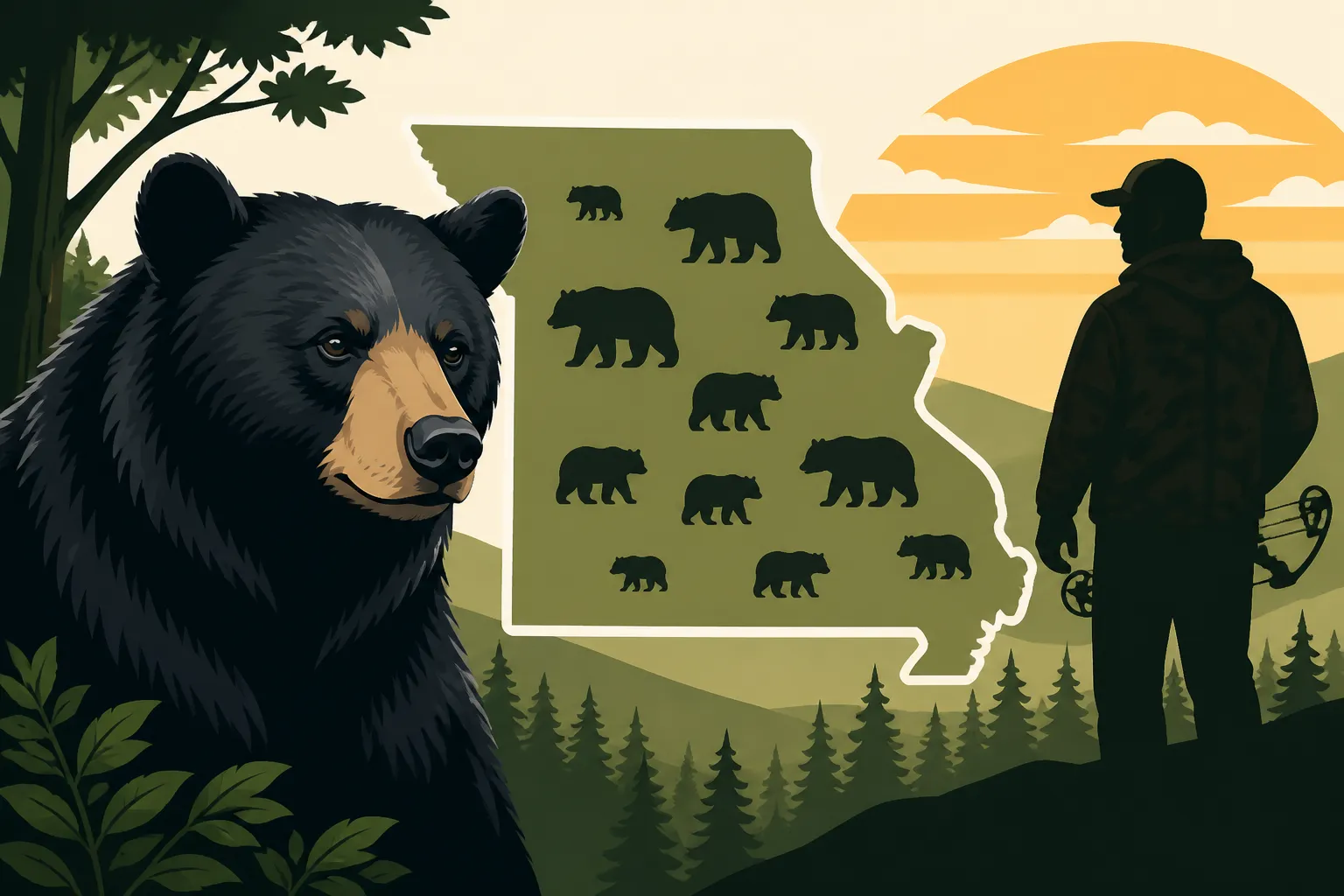
The vast majority of Missouri's black bears are concentrated in the heavily timbered, rugged terrain of the southern Ozarks. Counties like Douglas, Howell, Shannon, Carter, Ozark, and Taney consistently show the highest densities of bear activity. This region provides the ideal blend of dense forest cover, abundant water sources, and diverse food options—from acorns and wild berries to insects and small mammals. While the core population remains firmly rooted in these southern strongholds, there is increasing evidence of bears venturing northward and westward into adjacent counties, a clear sign of a healthy population expanding its range as younger bears seek out new territories.
Factors Influencing Bear Growth and Expansion
Several key factors have contributed to the remarkable growth and expansion of Missouri's black bear population. Foremost among these is the availability of suitable habitat. The regrowth of forests in the Ozarks after historical logging and agricultural abandonment has created vast tracts of contiguous timberland, offering both cover and food for bears. Large public land holdings, such as the Mark Twain National Forest Hunting areas, provide crucial secure habitat where bears can live relatively undisturbed by human activity, especially during critical denning and cub-rearing periods.
Food availability is another critical driver. Black bears are opportunistic omnivores, and Missouri's diverse natural landscape provides a rich smorgasbord of seasonal foods. Acorns from oak forests are a primary fall food source, essential for bears to put on fat reserves for winter denning. Wild berries, nuts, insects, grubs, and even agricultural crops like corn (particularly on the fringes of their range, which can sometimes lead to conflicts) all contribute to their diet. A series of good mast years—when oak trees produce abundant acorns—can significantly boost cub survival and overall population health. When considering Hunting Missouri Standing Corn and Beans, it's good to be aware that these agricultural areas can attract bears, especially in counties bordering their core range.
Finally, a crucial factor has been the absence of widespread hunting pressure until very recently, allowing the population to grow largely unimpeded. The protective status afforded to bears for decades, coupled with public awareness campaigns from MDC, has fostered a more tolerant view among the general public. While challenges like habitat fragmentation, vehicle collisions, and occasional human-bear conflicts still exist, the overall environment has been conducive to the black bear's return. Understanding this dynamic is key to appreciating the current Missouri Black Bear Population and its trajectory.
Where Bears Are Found and What it Means for Hunters
The presence of black bears in Missouri is no longer a novelty; it's a growing reality for anyone spending time in the state's wilder areas, especially in the southern half. For hunters, this means not only a chance to potentially glimpse one of these magnificent animals but also a need to be aware of their habits and how to coexist safely.
Geographic Distribution and Key Habitats in Missouri
As mentioned, the heart of Missouri's black bear country remains the southern Ozarks. This region's dense timber, rugged topography, and abundant natural food sources provide prime habitat. Counties along the Arkansas border, like Ozark, Howell, and Oregon, often report the most consistent bear activity. However, over the last decade, their range has demonstrably expanded. You're increasingly likely to find bears, especially younger males dispersing, in areas stretching north towards the Missouri River and west into the southwestern Ozarks. Conservation areas and national forest lands within this range, such as sections of the Mark Twain National Forest Hunting and large contiguous tracts of timber in places like the Irish Wilderness, are key strongholds.
Bears favor remote, secluded areas with dense cover, but they are also drawn to food sources, which can include forest edges near agricultural fields or even residential areas if attractants are present. Rivers and stream corridors, which often offer travel routes and diverse vegetation, are also important. Anyone using resources like GoHunt to scout public lands in these regions should pay attention to signs of bear activity, like scat, claw marks on trees, or overturned rocks and logs, which indicate foraging. While their presence is strongest in the deep woods, don't be surprised if a lone bear, particularly a younger, dispersing individual, shows up in unexpected places further from core bear habitat. Keeping track of Where Missouri Black Bears Live is an ongoing effort that involves both biological surveys and public reporting.
Implications for Deer and Turkey Hunters
For deer and turkey hunters, the return of black bears brings a new dimension to their time afield. While bear attacks are exceedingly rare, especially with Missouri's shy and non-aggressive bear population, awareness and preparedness are always wise. The biggest implication often revolves around managing scent, food, and game after a harvest. When Field Dressing and Cooling in Early-Season Heat or any time of year, bear awareness becomes part of the routine. Bears have an incredible sense of smell and are opportunistic scavengers. If you harvest a deer, especially late in the evening, and leave it overnight, there's a chance a bear might discover it.
To mitigate potential issues, if you must leave game in the woods, field dress it thoroughly and drag it as far from your stand or camp as possible to disperse scent. If you can, quarter and pack out your game immediately. Hunters who pack lunches or snacks should ensure all food waste is packed out, and scented items like hand sanitizer or bug spray are sealed. For those camping, securing food in bear-resistant containers or hanging it from a tree limb at least 10 feet off the ground and 4 feet from the trunk is crucial. Even seemingly innocuous items like dog food or bird seed at a cabin can attract bears, so understanding proper food storage is paramount. Scouting Missouri Public Land Before Season becomes even more important when considering areas of bear activity, as knowing the landscape can help you anticipate potential encounters and plan accordingly.
The good news is that most encounters with black bears are fleeting. Bears are typically more afraid of humans than we are of them, and will often flee before you even know they are there. If you do encounter a bear, make noise, make yourself look large, and never run. Carry bear spray if it makes you feel more comfortable, but remember that the primary goal is prevention through proper food and carcass management. Being informed is the best defense, and understanding the bear's natural cautious behavior is key to safely sharing the woods.
Black Bear Management and Future Outlook in Missouri
The growth of Missouri's black bear population is a significant conservation achievement, but it also brings responsibilities. Managing a large carnivore population in a state with a high human population requires careful planning, ongoing research, and adaptive management strategies.
Conservation Efforts and Ongoing Research
The Missouri Department of Conservation (MDC) has been at the forefront of monitoring and managing the state's growing black bear population. Their efforts are multi-faceted, focusing on understanding the bears, educating the public, and proactively addressing potential conflicts. Much of this work involves extensive research projects, often in collaboration with universities, to gather scientific data on bear movements, habitat use, reproductive rates, and diet. GPS telemetry studies, for instance, provide valuable insights into individual bear ranges and how they interact with different landscapes, including those influenced by human activity. This helps the MDC refine their understanding of Missouri Black Bear Population dynamics.
Public education is another cornerstone of MDC's strategy. As bears expand their range, more Missourians are encountering them, sometimes for the first time. The MDC works diligently to inform the public on "Be Bear Aware" practices, focusing on reducing attractants around homes and campsites, what to do if you encounter a bear, and how to report sightings. This proactive approach aims to minimize human-bear conflicts, which often arise when bears become habituated to human food sources. By encouraging responsible behavior, the MDC hopes to foster coexistence and prevent issues that could harm both bears and people. These efforts are crucial for the long-term success of the bear population and for maintaining public support for their presence.
The Future of Missouri's Black Bear Population
The outlook for Missouri's black bear population appears robust and positive. Given the continued availability of suitable habitat, especially within the vast tracts of the Ozarks, and a generally favorable public attitude toward wildlife, the population is expected to continue to grow and expand its range. While the core will likely remain in the southern counties, it's probable that bears will become more commonly seen in central and even parts of northern Missouri over time, particularly as young males disperse to establish new territories. This expansion will require ongoing vigilance and adaptive management from the MDC.
As the population grows, the conversation naturally shifts toward how best to manage it. This includes considering regulated hunting as a management tool, a practice implemented in many other states with healthy bear populations. Such a season would be carefully structured to ensure sustainability, focusing on specific zones and strict quotas to maintain a healthy bear population while providing recreational opportunities. The MDC already has extensive experience managing other game species, and any bear hunting season would be developed with the same scientific rigor and conservation principles. The long-term goal is to maintain a healthy, wild bear population that coexists with Missouri's human residents, ensuring these magnificent animals are a permanent fixture in the Show-Me State's natural heritage. Understanding the Missouri Black Bear Season History in other states often provides a roadmap for sustainable management here.
| Aspect | Historical (Pre-1930s) | Current (Approximate) | Future Outlook |
|---|---|---|---|
| Population Status | Widespread, abundant | Growing, established | Continued growth & expansion |
| Primary Range | Statewide | Southern Ozarks | Wider Ozark, potential northward creep |
| Conservation Status | Hunted to extirpation | Managed, protected (until recently) | Managed via regulated season |
| Origin of Current Population | Native | Natural recolonization from AR | N/A |
| Major Threats | Habitat loss, overhunting | Habitat fragmentation, vehicle collisions, human-bear conflict | Management of human-bear interactions |
Disclaimer
This article is for general informational purposes only and does not constitute professional advice. Laws, prices and regulations vary by location and change over time. Consult a qualified professional for guidance on your specific situation.