Scaled Quail Sightings in Missouri
Imagine you're out walking a brushy fencerow in rural Missouri, maybe looking for early season rabbits, when you flush a covey of quail. But something feels… different. They look a little off, their calls aren't quite right, and you scratch your head wondering if you just saw a ghost, or perhaps, a scaled quail. It’s a rare occurrence, bordering on the mythical for most hunters and birders in our state, and this guide will dive deep into what makes a scaled quail unique, why you almost never see them in Missouri, and what to do if you think you've spotted one of these elusive birds.
What Are Scaled Quail and Why Are They So Unique?
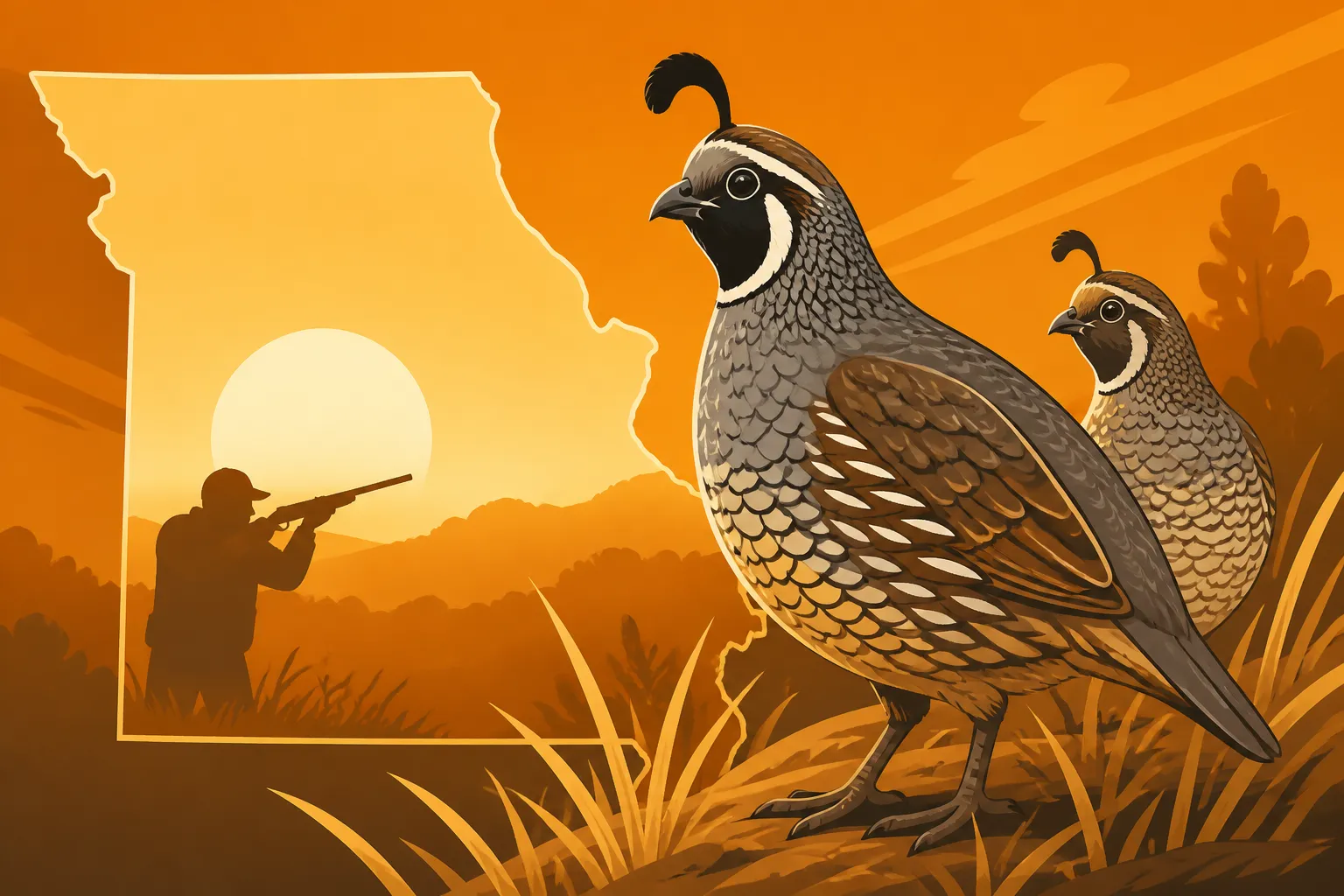
Scaled quail, often affectionately called "cottontops" for the distinctive white crest on their heads, are a truly striking game bird with a look all their own. Unlike our familiar Northern Bobwhite Quail in Missouri, which tend to have a more uniform brown and white pattern, scaled quail boast beautiful, scale-like feather patterns across their chest and back, often with a bluish-gray hue. This gives them a distinct, almost armored appearance, a perfect adaptation for the arid, open landscapes they typically call home. Their unique crest, which can be raised or lowered, really sets them apart from any other quail species you'd find regularly in our state.
Beyond their looks, their behavior and preferred habitat are vastly different from the bobwhites we know and love. Scaled quail are birds of the southwestern deserts and grasslands, thriving in dry, scrubby environments with sparse vegetation, yucca, cactus, and rocky outcrops. Think of places like Arizona, New Mexico, or parts of Texas – starkly different from the humid, timbered draws and agricultural fields of Missouri. They're often found in larger, looser coveys than bobwhites and have a tendency to run rather than flush when disturbed, a trait that can be both frustrating and fascinating for hunters who pursue them in their native range. If you were to research game bird habitats on a platform like GoHunt, you'd quickly see how specialized their needs are.
Even their vocalizations are distinct. While a bobwhite's iconic "bob-white!" call is unmistakable, scaled quail have a higher-pitched, almost chirping or chattering call, sometimes described as a "peep-peep" or a "chip-chip-chip." If you hear a quail call that doesn't quite sound like the familiar bobwhite whistle, it might just be your first clue that something unusual is in your presence. Recognizing these subtle differences in appearance, behavior, and sound is key to identifying a scaled quail, should one ever truly grace our Missouri landscape.
Historical and Atypical Sightings in Missouri
Let's be clear upfront: scaled quail are not considered a native, resident game species in Missouri. Their natural range is hundreds of miles to our southwest, making any sighting here incredibly rare and usually a cause for much excitement and often, skepticism. Missouri’s climate, with its humid summers and cold, snowy winters, along with its dense deciduous forests and lush agricultural fields, simply doesn't align with the arid, open country that scaled quail prefer and require to thrive. This fundamental difference in habitat is why they haven't established a breeding population here.
However, the world of wildlife is full of surprises, and there have been anecdotal or unconfirmed reports of scaled quail in Missouri over the decades. These sightings are typically isolated incidents, often attributed to what wildlife biologists call "vagrants" – individual birds that have wandered far outside their normal range due to extreme weather events, disorientation during migration, or other unknown factors. Another possibility, though less common for scaled quail than for some other species, is that the birds are escapees from private aviaries or game farms. Someone might raise them as ornamental birds or for dog training, and a few could get loose. Unfortunately, without concrete evidence like photos or collected specimens, these reports remain largely unverified stories.
The reality is, most reported "scaled quail" in Missouri turn out to be misidentified Northern Bobwhite Quail in Missouri. Bobwhites can have variations in plumage, especially younger birds or those in different molting stages, which might lead a casual observer to think they've seen something different. Lighting conditions, brief glimpses, or a bird running quickly through cover can all contribute to misidentification. This isn't a knock on anyone's observation skills; it simply highlights how difficult it can be to positively identify a rare species, especially one so similar yet distinct from our common bobwhite.
Factors Influencing Scaled Quail Presence
The primary factor keeping scaled quail out of Missouri is, quite simply, habitat. These birds are adapted to arid and semi-arid grasslands, often with a mix of brushy cover, cacti, and yucca. They rely on these specific plant communities for food, nesting cover, and protection from predators. Missouri, on the other hand, is dominated by tallgrass prairies, oak-hickory forests, and vast agricultural lands. While we have grasslands, they are generally much wetter and lusher than the environments scaled quail are built for. Even our most open prairie landscapes, like those you might find on some Missouri Prairie Conservation Areas, don't quite offer the unique combination of sparse, xeric vegetation that scaled quail demand.
Climate also plays a huge role. Scaled quail are accustomed to hot, dry summers and generally mild winters in their native range. Missouri's frequent humidity, heavy rainfall, and prolonged periods of freezing temperatures, especially with snow cover, would be incredibly challenging for a scaled quail to survive. Their foraging strategies and thermal regulation are optimized for drier conditions. A prolonged cold snap or heavy snow event, which are common across much of Missouri, could easily decimate any small, unestablished population of scaled quail that might somehow appear. This is a stark contrast to how our native bobwhites have adapted to and thrived in our distinct Missouri weather patterns.
While some might wonder about range expansion due to climate change, it's important to understand that such shifts typically occur over very long periods and involve incremental changes in habitat suitability. For a species like the scaled quail to establish a foothold in Missouri, a dramatic and sustained shift in multiple ecological factors would be required, far beyond what we've observed or could reasonably expect in the near future. Their population trends and preferred habitats are closely monitored in their native states, and there's currently no scientific indication of a natural, sustained push eastward into our region. Researching species ranges and habitat on tools like GoHunt helps illustrate just how particular many game animals are about their environmental needs.
Reporting and Verifying Scaled Quail Sightings
So, what if you genuinely believe you've seen a scaled quail in Missouri? The first and most critical step is documentation. Because these sightings are so unusual, a clear photograph or video is paramount. Try to get images that show key identifying features: the white "cottontop" crest, the distinct scale-like feather pattern on the chest and flanks, and the overall bluish-gray coloration. If possible, note the exact location (GPS coordinates are ideal), date, time, and any observations about the bird's behavior, such as if it was alone, with other quail, or what kind of habitat it was in. The more detail you can provide, the better.
Once you have your evidence, the next step is to report it to the Missouri Department of Conservation (MDC). They are the authoritative source for wildlife records in our state. You can typically reach out to your local conservation agent or regional MDC office. They're trained in species identification and will have the resources to review your submission. Don't be surprised if they ask a lot of questions; it's part of the verification process for such a rare observation. They might even want to visit the site where the sighting occurred if the evidence warrants it. Keep in mind that verifying such a sighting is a big deal and requires a high degree of confidence.
While the chances of seeing a truly wild, free-ranging scaled quail in Missouri are incredibly slim, it’s not entirely impossible. The key is careful observation and solid evidence. In the meantime, focusing on our native quail, the bobwhite, and understanding its habitat needs and conservation efforts, such as those discussed in What a Quail Restoration Landscape Is, will likely be a far more productive pursuit for most hunters and outdoor enthusiasts. If you are using a tool like GoHunt to analyze land for Northern Bobwhite Quail in Missouri, understanding the difference between bobwhite habitat and the needs of an arid species like the scaled quail will become even more apparent.
Here's a quick comparison to help differentiate between our common Northern Bobwhite Quail and the much rarer Scaled Quail:
| Feature | Northern Bobwhite Quail (Our Missouri Native) | Scaled Quail (Rare/Non-Native in MO) |
|---|---|---|
| Plumage Color | Reddish-brown, white throat/eyebrow (males), mottled brown | Bluish-gray, distinct scale-like pattern on chest/back |
| Head Feature | No prominent crest | Prominent white "cottontop" crest |
| Typical Size | Medium-sized, plump | Slightly smaller or similar, more slender appearance often |
| Primary Call | "Bob-white!" or "Poor bob!" | Higher-pitched "peep-peep" or "chip-chip-chip" chattering |
| Primary Habitat | Open woodlands, brushy fields, agricultural edges, tallgrass | Arid grasslands, scrub deserts, yucca, cactus, rocky outcrops |
| Behavior | Often freezes, then flushes explosively in coveys | More prone to running than flying, often in larger coveys |
| Native Range | Eastern & Central North America (including Missouri) | Southwestern US & Mexico |
Remember, whether you're scouting for typical Missouri game or just enjoying a walk in the woods, understanding our native species, their ranges, and the conservation efforts that support them, like those outlined in Missouri Quail Restoration Landscapes, is a fantastic way to engage with our state's rich wildlife heritage. While a scaled quail sighting in Missouri would be quite the tale, most of our focus remains on ensuring the health and abundance of species that truly call our state home.
Disclaimer
This article is for general informational purposes only and does not constitute professional advice. Laws, prices and regulations vary by location and change over time. Consult a qualified professional for guidance on your specific situation.