Missouri Deer Vehicle Collisions
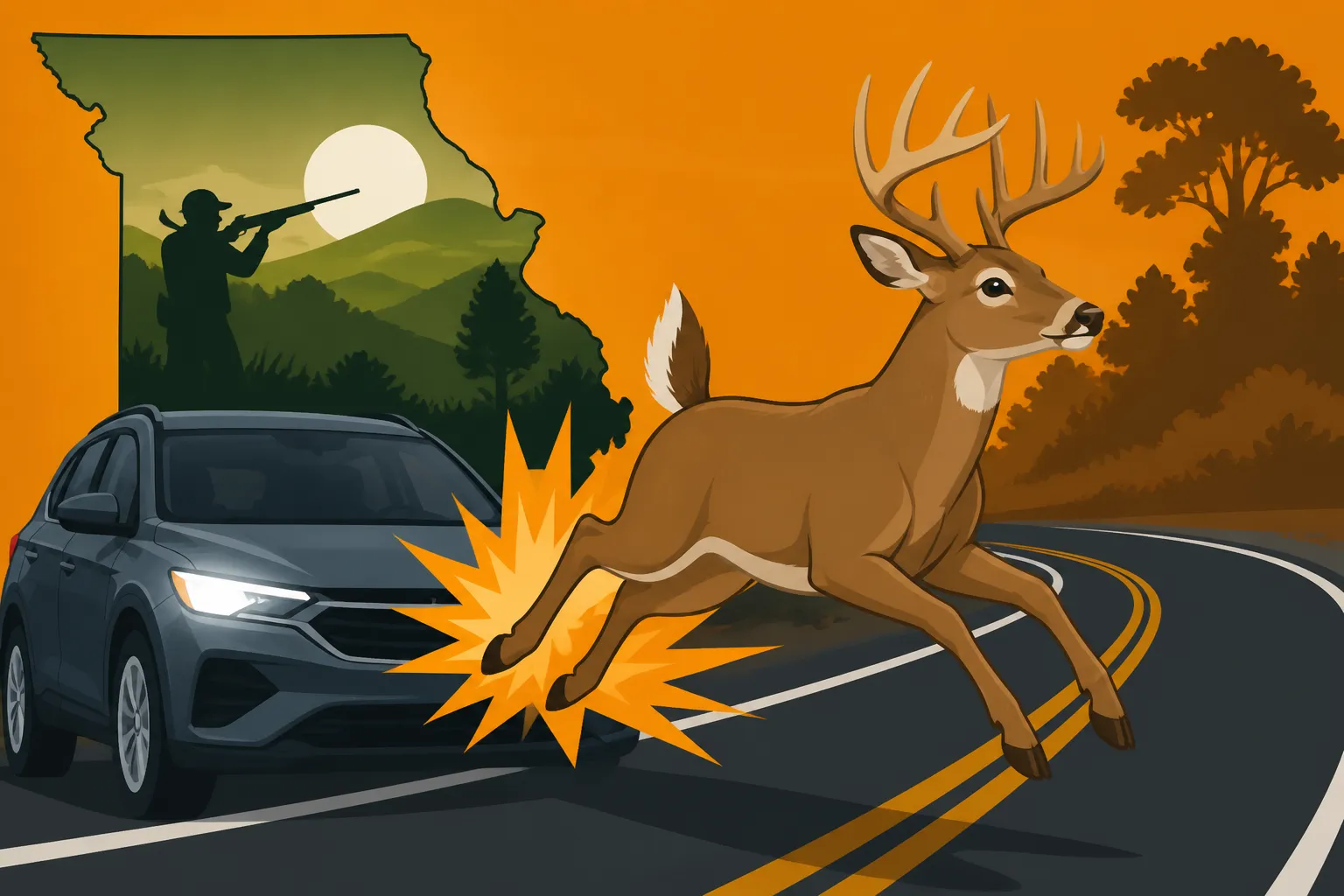
It's a chilling reality for many drivers across the Show-Me State: that sudden thud, the jarring impact, and the heartbreaking realization that you've just hit a deer. Deer-vehicle collisions aren't just an unfortunate statistic; they're a significant concern for personal safety, vehicle damage, and the welfare of our beloved wildlife. This comprehensive guide is here to help you understand why these incidents are so common in Missouri, when and where you're most at risk, what vital steps to take if an accident occurs, and practical strategies to avoid them altogether.
Understanding Why Missouri's Roads See So Many Deer-Vehicle Collisions
If you've spent any amount of time driving Missouri's rural highways or even suburban roads, you've likely had a close call with a deer, or know someone who has. It often feels like the deer are everywhere, and honestly, they kind of are. This isn't just bad luck; it's a combination of factors related to our state's thriving deer population, how their habitat interacts with our infrastructure, and even how hunting seasons can influence their movements.
The Thriving Missouri Deer Population
One of the primary reasons for the high number of deer-vehicle collisions is simply the sheer abundance of white-tailed deer in Missouri. Our state has done an incredible job over the decades in restoring and managing its deer herd, transforming it from a rarity to a widespread and healthy population. While this is fantastic news for hunters and wildlife enthusiasts, it naturally means more deer are moving across the landscape, including across our roads and highways.
When you look at resources like the most recent Missouri Deer Herd Size estimates or review the Missouri Deer Population Estimate data, it becomes clear that these animals are prolific. They've adapted incredibly well to various habitats, from the dense timber of the Ozarks to the agricultural fields of northern Missouri, and even the fringes of our expanding suburban areas. This adaptability means they're living closer to human development than ever before, increasing the chances of their paths intersecting with ours. As suburban areas grow, pushing houses and businesses further into what was once natural deer habitat, these animals find themselves navigating new obstacles. The roads that connect our towns and cities become unavoidable crossings in their daily routines.
Habitat Fragmentation and Deer Movement
Our modern infrastructure, particularly roads and highways, often cuts directly through the natural travel corridors that deer have used for generations. Deer, being creatures of habit, tend to follow lines of least resistance or areas of cover, such as creek bottoms, timber edges, and fencerows. The problem arises when these natural pathways are bisected by asphalt. A deer moving from its bedding area in a timber block to a preferred feeding spot in a nearby field might have no choice but to cross a busy highway to get there.
Think about driving through areas where a dense patch of woods suddenly gives way to a sprawling cornfield, with a road running right between them. This is a classic deer crossing zone. They're simply trying to get from point A to point B for food, water, or shelter, and our roads become inconvenient (and dangerous) barriers. Even subtle changes in elevation or cover, like a ditch or a hedgerow, can act as a funnel, directing deer towards specific crossing points that might not be obvious to a passing motorist. These fragmented habitats force deer into more exposed movements, making them more vulnerable to traffic.
Hunter Pressure and Deer Behavior
While often overlooked by non-hunters, hunting pressure can also play a role in increasing deer movement, sometimes leading to more road crossings. During Missouri's various deer seasons, especially intense periods like Missouri's November Firearms Portion, deer are actively being pursued by hunters. This can cause them to move more frequently, travel longer distances, and sometimes use routes they might typically avoid, all in an effort to escape pressure.
Imagine a deer that normally beds in a secluded timber block being pushed out by hunters. It might flee across an open field, heading for another patch of woods, and in doing so, cross a road it wouldn't normally traverse during quieter times. This added layer of movement, often erratic and unpredictable, means that even drivers who are usually vigilant during peak deer activity might encounter a deer in an unexpected place. Hunters using mapping tools like GoHunt to understand deer movement patterns for their pursuit also inadvertently gain insight into areas where deer activity might be elevated, offering a different perspective on potential road hazards. It's a subtle effect, but definitely a factor, especially in areas with high hunting participation.
When and Where to Be Most Vigilant on Missouri Roads
Knowing why deer collisions happen is one thing, but understanding when and where they're most likely to occur can be truly life-saving. It allows you to adjust your driving habits and heighten your awareness during these critical periods.
Seasonal Peaks and the Rut
Without a doubt, fall is the riskiest time of year for deer-vehicle collisions in Missouri. Specifically, October, November, and December see a dramatic spike in incidents. Why? The answer largely lies in the deer's breeding season, commonly known as the rut. As When the Missouri Rut Peaks, typically in early to mid-November, bucks become much more active, often chasing does across vast areas without much regard for roads or other obstacles. Does, in turn, are also moving more as they try to evade persistent bucks. This intense activity means more deer are on the move, covering greater distances, and entering areas they might not typically frequent.
Beyond the rut, late fall and early winter bring changes in food sources. As agricultural fields are harvested and natural forage diminishes, deer often have to travel further to find Late-Season Food Sources for Whitetails, concentrating their movements along remaining food plots, browse areas, or standing crops. This increased necessity to find sustenance keeps them moving well into December, long after the peak of the rut has passed, maintaining that high risk on our roadways.
Dawn, Dusk, and Nighttime Driving
Deer are crepuscular animals, meaning they are most active during the twilight hours of dawn and dusk. This behavioral pattern directly coincides with many people's commuting times, creating a perfect storm for collisions. During these low-light conditions, it's incredibly difficult to spot a deer until it's too late. Their natural camouflage blends seamlessly with the dim surroundings, and their sudden movements can catch even the most attentive driver off guard.
Driving at night, especially on unlit rural roads, presents its own set of challenges. While deer might be less active than at twilight, they are still moving. Your headlights provide a limited field of vision, and deer can appear out of nowhere. The "deer in headlights" phenomenon is real; a deer can freeze, disoriented by the bright lights, making it harder for you to react. It's during these times that slowing down and being extra vigilant becomes absolutely critical, regardless of how familiar you are with the road.
Hotspot Locations and Signage
Deer don't just randomly appear anywhere; they tend to cross roads in predictable areas. These "hotspots" are typically found where roads pass through or along prime deer habitat: dense timber, thick brush, creek bottoms, and agricultural field edges. Any area where there's a transition from one type of cover to another, or where natural features funnel deer movement, is a likely crossing point. For instance, in Deer Hunting the Missouri Ozarks, the winding roads often cut through dense timber, while in Hunting North Missouri's Big-Buck Farm Country, deer might travel along fencerows or timbered draws that frequently intersect roads.
Those yellow diamond "deer crossing" signs aren't just decorative; they're strategically placed by state transportation departments in areas with a statistically higher incidence of deer-vehicle collisions. Pay attention to them! They serve as a clear warning that you're entering a high-risk zone. Furthermore, if you're frequently driving through a certain area, take mental notes of where you've seen deer before, or where their tracks might lead to the road. Using an app like GoHunt to view detailed aerial maps can also help you identify areas where dense cover meets roads, providing an additional layer of insight into potential crossing points, even when you're just commuting.
What to Do If You Experience a Deer-Vehicle Collision in Missouri
Even with the most careful driving, sometimes an accident is unavoidable. Knowing what to do in the immediate aftermath of hitting a deer can make a significant difference in your safety, legal obligations, and insurance claim process. It's a stressful situation, but having a plan can help.
Immediate Safety Measures
The moments immediately following a collision can be disorienting and frightening. Your first priority should always be safety. First, stay calm. Take a deep breath. Check yourself and any passengers for injuries. If anyone is hurt, call 911 immediately. Next, if your vehicle is still drivable and it's safe to do so, pull over to the side of the road, away from traffic. Turn on your hazard lights to alert other drivers to your presence.
It's crucial not to approach an injured deer. Even if it appears stunned or dead, an injured deer can be incredibly unpredictable and dangerous. It might suddenly kick, try to stand, or bolt, posing a risk to you and potentially darting back into traffic. Maintain a safe distance and leave the animal alone. Your safety is paramount.
Reporting and Insurance
After ensuring immediate safety, your next step should be to contact law enforcement. This could be the Missouri State Highway Patrol, your local Sheriff's Department, or municipal police, depending on your location. It's important to get an official report, even if the damage seems minor and you don't believe anyone is injured. A police report serves as critical documentation for your insurance company, verifying the circumstances of the incident. It details the date, time, location, and conditions, which can be invaluable when filing a claim.
Once law enforcement has been contacted, get in touch with your insurance provider as soon as possible. Deer-vehicle collisions are typically covered under the "comprehensive" portion of your auto insurance policy, rather than collision coverage. This distinction is important because it often means the incident won't be counted against your collision deductible or impact your premiums in the same way a collision with another vehicle would. Be prepared to provide all the details, including the police report number if you have it.
Dealing with the Deer
Missouri has specific rules regarding deer that are involved in vehicle collisions. If you hit and kill a deer, you are legally allowed to claim the animal for consumption, but there's a critical step you must take first. You must contact either the Missouri Department of Conservation (MDC) or local law enforcement to obtain a "disposition permit." This permit legitimizes your possession of the animal and helps the MDC track roadkill incidents, which in turn informs their wildlife management strategies. Missouri Deer Transport Rules dictate that you cannot simply load the deer into your vehicle and drive off without this permit. This is vital to prevent illegal harvesting or poaching.
If you don't wish to keep the deer, or if it's only injured and not immediately dispatched, law enforcement will usually handle the situation, either by dispatching the animal humanely or by contacting appropriate roadkill removal services. Never attempt to put an injured deer out of its misery yourself, as this can be dangerous and could also be interpreted as an illegal act depending on the circumstances. It's always best to let trained professionals handle the animal.
Here's a quick reference table for what to do:
| Situation | Immediate Action | Next Steps | Important Notes |
|---|---|---|---|
| Collision Occurs | – Stay calm, check for injuries | – Move vehicle to safety, turn on hazards | – Your safety and passenger safety are paramount. |
| If Deer is Injured/Deceased | – DO NOT APPROACH THE DEER | – Call law enforcement (Highway Patrol/Sheriff) | – Injured deer are unpredictable and dangerous. |
| Reporting the Incident | – Call law enforcement for an official report | – Get report number for insurance | – This validates your claim and helps track incidents. |
| Insurance Claim | – Contact your insurance provider | – Provide police report details | – Typically covered under comprehensive, not collision. |
| Claiming the Deer (if killed) | – Contact MDC or law enforcement for disposition permit | – Wait for authorization before moving deer | – Failure to get a permit is illegal. Missouri Deer Transport Rules apply. |
| Not Claiming the Deer | – Law enforcement will handle removal | – Follow their instructions regarding your vehicle | – Do not interfere with removal efforts. |
Proactive Strategies for Avoiding Deer Encounters
While we can't control every deer's movement, we can certainly take proactive steps to significantly reduce our risk of a deer-vehicle collision. Many of these strategies boil down to heightened awareness and responsible driving practices.
Defensive Driving Techniques
The most effective way to avoid hitting a deer is through defensive driving. This means being constantly aware of your surroundings, especially during high-risk periods. First and foremost, slow down, particularly at dawn, dusk, and night, and whenever you see a "deer crossing" sign. A few miles per hour can make a huge difference in your reaction time.
Don't just stare straight ahead at the asphalt. Instead, scan the roadsides, ditches, and tree lines for movement or the tell-tale gleam of deer eyes reflecting your headlights. Deer rarely travel alone, so if you spot one, assume there are more nearby. Slow down further and be prepared for another deer to follow the first. When using your high beams in rural areas, constantly look for signs of deer. If you spot them, dim your lights. Bright lights can sometimes cause a deer to freeze, making them an even easier target.
Finally, and this is a tough one for many, avoid swerving violently to miss a deer. While your instinct might be to swerve, this often leads to more severe accidents, such as hitting oncoming traffic, running off the road, or colliding with a fixed object. Instead, brake firmly and try to maintain control of your vehicle, steering as straight as possible. It's a difficult choice, but hitting the deer is often less dangerous than an uncontrolled swerve.
Utilizing Technology and Information
Modern technology can be a valuable ally in your efforts to avoid deer. While no app can guarantee you'll never hit a deer, staying informed about local wildlife patterns can give you an edge. Many mapping applications offer overlays or community-sourced data that indicate areas with high wildlife activity. While designed for hunters, tools like the Missouri Conservation Atlas can show you where large tracts of timber, major creek drainages, and other prime deer habitats exist, which often correlate with deer crossing hotspots. Even an app like GoHunt, popular with hunters for its detailed mapping and information on game movements, can inadvertently help a driver by revealing areas with concentrated deer activity. By understanding where deer are likely to be, you can approach those sections of road with extra caution.
Additionally, keeping an eye on reports from the Missouri Department of Conservation regarding Missouri Wildlife Disease Monitoring or EHD Outbreaks in Missouri Deer can provide context about local deer populations. For example, a significant disease outbreak in a specific county might temporarily reduce deer numbers, while a period of healthy growth might mean more deer are present. While this isn't a direct collision avoidance tool, it helps paint a broader picture of the deer population you're sharing the roads with.
Community and Habitat Management
While individual driving habits are crucial, community-level efforts also play a role in reducing deer-vehicle collisions. Local governments can implement a variety of strategies, from installing more visible and reflective deer crossing signs to maintaining clear sightlines along roadsides by periodically trimming brush and tall grasses. In areas with exceptionally high collision rates, targeted initiatives like deer fencing or wildlife crossings (though less common in Missouri) can be explored.
Furthermore, responsible deer population management through regulated hunting seasons helps maintain healthy deer numbers that are more in balance with the available habitat, which in turn can reduce overall deer densities in certain areas and thus lower collision risks. Hunters, by participating in seasons and understanding How Many Acres MDC Owns and manages for habitat, are indirectly contributing to a safer driving environment for everyone. It's a complex interplay of factors, but every little bit helps in making our Missouri roads safer for both drivers and wildlife.
Disclaimer
This article is for general informational purposes only and does not constitute professional advice. Laws, prices and regulations vary by location and change over time. Consult a qualified professional for guidance on your specific situation.