What Causes an EHD Outbreak
There's nothing quite as disheartening for a hunter as finding deer that have perished not from a well-placed shot, but from disease. Many of us have walked our favorite timber or crept along a creek bank only to stumble upon a lifeless whitetail, often near water, a grim reminder of nature's harsh realities. This often points to Epizootic Hemorrhagic Disease, or EHD, an ailment that periodically sweeps through our Missouri deer herd. This guide aims to pull back the curtain on what causes an EHD outbreak, helping you understand this frustrating, yet natural, phenomenon.
The Culprit: Understanding the Bluetongue Virus and EHD
When we talk about EHD, we're really talking about a viral infection that, while naturally occurring, can have devastating impacts on local deer populations. It's not something that hunters can prevent, but understanding its mechanics helps us appreciate the resilience of the herd and the challenges wildlife managers face.
What Exactly is Epizootic Hemorrhagic Disease EHD?
Epizootic Hemorrhagic Disease, or EHD as it's commonly known, isn't a bacterial infection or something spread by direct contact between deer like a common cold. Instead, it's caused by a virus in the genus Orbivirus, closely related to the bluetongue virus, which affects livestock. When an outbreak occurs, it can manifest in two main forms: acute and chronic. The acute form is the most dramatic, leading to rapid onset of symptoms and often death within a few days. Deer infected with the acute form typically develop a high fever, become lethargic, lose their appetite, and show signs of swelling in the head, neck, tongue, and eyelids. Their tissues can hemorrhage, meaning they bleed internally, which is where the "hemorrhagic" part of the name comes from.
The chronic form is a bit different. Deer that survive the initial acute phase might develop chronic symptoms, such as ulcers and lesions on the tongue, mouth, rumen (their first stomach), and hooves. You might find deer that have shed their hooves or show signs of lameness from these chronic infections. These deer are often emaciated and weakened, making them more susceptible to other diseases or predation. While EHD is particularly lethal to white-tailed deer, it doesn't affect humans, and there's no evidence of humans contracting the disease by handling or consuming venison from an infected animal, though consuming a healthy-looking deer is always advisable.
The Vector: The Role of Biting Midges
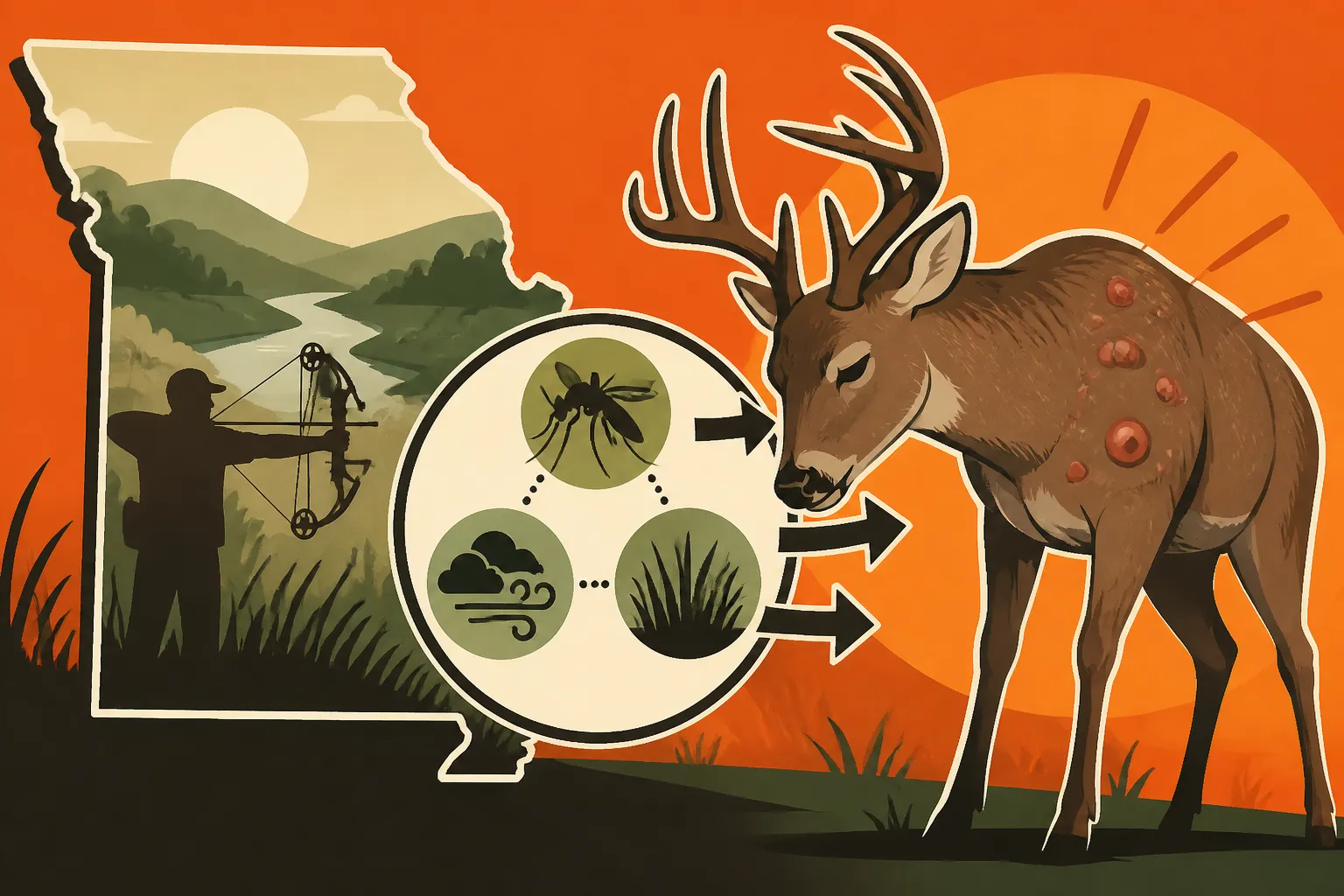
So, if deer don't spread EHD directly to one another, how does it move through the population? The answer lies with tiny, persistent insects: biting midges. Often called "no-see-ums" due to their minuscule size, these little flies, specifically from the genus Culicoides, are the primary vectors for EHD. They don't just annoy us; they pick up the virus from an infected deer when they feed, and then, after the virus replicates within the midge, they transmit it to a healthy deer during their next blood meal.
The life cycle of these midges is crucial to understanding outbreak patterns. They thrive in wet, muddy conditions, laying their eggs in moist soil, decaying vegetation, or shallow water along the edges of ponds, streams, and temporary puddles. As the weather warms and these moist breeding grounds persist, midge populations can explode. This means that a combination of factors, which we’ll dive into, creates the perfect storm for EHD to spread like wildfire. Without the biting midge, EHD wouldn't be able to cycle through the deer population. It's a classic example of how a seemingly small creature can have a massive impact on an entire ecosystem.
Different Strains and Their Severity
Just like with other viruses, there isn't just one "EHD virus." Scientists have identified multiple serotypes, or strains, of the EHD virus. The most commonly identified strains in North America are EHDV-1 and EHDV-2, but others exist. The specific strain circulating in a given year or region can influence the severity of an outbreak. Some strains might be more virulent, leading to higher mortality rates, while deer in certain areas might have developed some level of immunity to a particular strain over time. This makes predicting the impact of an outbreak a complex challenge for wildlife biologists.
Think of it like different strains of the flu in humans; some years are worse than others because a new, more aggressive strain emerges, or one that a population has less existing immunity to. When a novel EHD strain enters a deer population that has no prior exposure or immunity, the mortality can be incredibly high. This is why sometimes an EHD outbreak seems relatively mild, with localized losses, while other years, it devastates large areas of the state, causing widespread concern among hunters and land managers. The complexity of these strains is one reason why monitoring Missouri Deer Population Estimate and understanding disease dynamics is so important.
Environmental Triggers and Outbreak Conditions
EHD isn't a year-round threat that constantly hangs over our deer. It's a seasonal disease, typically flaring up under very specific environmental conditions. These conditions are directly tied to the life cycle of the biting midge and how deer interact with their environment.
Drought Conditions and Concentrated Deer
One of the most significant environmental triggers for a severe EHD outbreak is drought. This might sound counterintuitive given that midges love moisture, but let's connect the dots. During a prolonged drought, natural water sources like creeks, small ponds, and seeps begin to dry up. This forces deer, which need daily access to water, to congregate around the few remaining reliable water sources. Imagine a small pond that usually has deer visiting throughout the day, spread out over a wide area. Now, because every other watering hole in a square mile has dried up, that same pond becomes a magnet, with dozens of deer coming and going from dawn till dusk.
This concentration of deer at dwindling water sources creates a perfect hotspot for EHD transmission. An infected deer, carrying the virus, comes to drink. Midges, also drawn to the moist edges of the remaining water, feed on that deer. Then, those same midges bite uninfected deer coming to the same water source. The sheer volume of deer in a small area, combined with the high density of midges, drastically increases the rate at which the virus spreads. This is a common scenario we see in many of the EHD Outbreaks in Missouri Deer over the years, where dry summers often precede significant die-offs.
Warm Weather and Midge Proliferation
While drought concentrates deer, prolonged periods of warm weather are what truly supercharge the midge population. These biting insects thrive in warmth. Extended summers with higher-than-average temperatures allow midge populations to complete multiple generations, leading to an explosion in their numbers. Not only do more midges hatch, but the warmer temperatures can also accelerate the virus's replication within the midge itself, meaning the insect can become infectious more quickly after feeding on an infected deer.
The timing is critical. EHD outbreaks typically occur from late summer through early fall in Missouri, generally peaking in August and September. This is when summer's heat has had ample time to cultivate massive midge populations, and before the first hard frost of autumn. A hard frost is the natural "cure" for an EHD outbreak, as it kills off the adult midges, effectively breaking the transmission cycle. Without them, the virus has no way to jump from one deer to another. So, a warm, extended fall, especially if preceded by drought conditions, can prolong an outbreak and lead to even greater deer losses.
Habitat and Geography: Where EHD Hits Hardest
Certain habitats and geographical areas in Missouri are more prone to EHD outbreaks. River bottoms and areas with numerous small, shallow water sources—especially those that shrink during dry spells—are prime midge breeding grounds. Think about the moist, silty banks of the Missouri River or smaller creeks, or low-lying areas in agricultural regions where temporary puddles linger after rains or irrigation. These are ideal for Culicoides larvae.
Consequently, areas with higher deer densities, particularly in regions like North Missouri's big-buck farm country or some of our river bottom regions, tend to see more pronounced outbreaks. More deer mean more hosts for the midges, and if those deer are concentrated, the spread is rapid. Conversely, vast, dry upland areas or parts of the Deer Hunting the Missouri Ozarks with well-drained soils and fewer stagnant water sources might experience less severe or more localized EHD activity. However, even in the Ozarks, if a drought forces deer to specific springs or isolated creek holes, those locations can become lethal hotspots. Scouting these areas, perhaps using tools like GoHunt to analyze historical satellite imagery for water sources or terrain, can give you a better idea of potential concentration points.
The Impact on Missouri's Deer Herd and Hunting
An EHD outbreak isn't just a biological event; it has tangible consequences for our deer herd and, by extension, for Missouri hunters. The visual signs can be unsettling, and the local impacts on deer numbers can be significant.
Recognising the Signs of EHD in Deer
As hunters and outdoor enthusiasts, we spend a lot of time in the woods, and being able to recognize the signs of EHD can be important. The most obvious, and unfortunately, most common sign is finding dead deer, particularly near water sources. Infected deer develop a high fever, and they'll often seek out water to cool themselves. So, finding a deer carcass in a creek, pond, or marshy area is a strong indicator of EHD.
Live deer showing symptoms might appear lethargic, weak, and disoriented. They might exhibit excessive salivation, have swollen heads, necks, or tongues, and appear generally unwell. Their eyes might be swollen and red. Some deer will become lame due to hemorrhages in their joints or sloughing hooves. It's a pretty rough way to go, and it's something that, once you've seen it, you rarely forget. If you spot a sick or dead deer showing these signs, it's always a good idea to report it to the Missouri Department of Conservation (MDC). You can learn more about Reporting a Sick Animal in Missouri through their channels, which helps them monitor disease prevalence and understand its spread.
Short-Term vs. Long-Term Herd Health
The short-term impact of EHD can be quite dramatic. In a severe localized outbreak, deer mortality can be high, sometimes wiping out a significant portion of the local herd within a few weeks. It's not uncommon for hunters to notice a stark absence of deer in areas that were previously bustling with activity. This can be particularly frustrating after you've spent weeks Scouting Missouri Public Land Before Season and identified promising spots, only to find the deer gone. The immediate aftermath can feel devastating, and seeing fewer deer on trail cameras or during your hunts is a direct consequence.
However, the long-term outlook for Missouri's deer herd is generally positive. White-tailed deer are incredibly resilient animals. While some individuals die, others survive and develop immunity to the specific strain they were exposed to. The herd often recovers surprisingly quickly, often within a few years, especially if subsequent years don't see severe outbreaks. Does that survive continue to reproduce, and with reduced competition for resources due to the mortality, fawns often have better survival rates and grow healthier. Over time, the population rebounds, though specific areas may take longer to recover depending on the severity of the initial die-off. Understanding this cycle helps maintain perspective when facing these challenging events.
Implications for Hunters and Management
For hunters, EHD outbreaks can be incredibly frustrating. Imagine putting in all the effort for a successful season, carefully planning your hunt using resources like GoHunt to analyze land features, only to find your favorite hunting ground eerily quiet. It can certainly affect hunting success, especially in the immediate aftermath of a severe outbreak. When deer numbers are down in a particular area, hunters might need to adjust their expectations or scout new areas. This might mean exploring different parts of the state or focusing on public lands less impacted, perhaps even looking at options like Hunting Missouri River Sandbars for Ducks if deer hunting feels too sparse.
From a management perspective, EHD is largely uncontrollable. Since it's a naturally occurring disease transmitted by insects, there are no effective vaccines or widespread treatments for wild deer populations. The MDC primarily monitors outbreaks through hunter and public reports, post-mortem examinations, and by tracking Missouri Deer Harvest Records for changes in population trends. They use this data to understand the impacts and adjust future management strategies, such as setting antlerless permit quotas, if necessary, to help local populations recover. The good news is that these outbreaks are generally localized, and Missouri's overall deer population has shown remarkable resilience in the face of these challenges over many decades.
| Environmental Factor | Impact on Midges (Vector) | Impact on Deer (Host) | EHD Outbreak Likelihood/Severity |
|---|---|---|---|
| Drought | Concentrates at water | Concentrates at water | High (Increased transmission) |
| Warm Weather | Population booms | Increased exposure | High (Midges thrive, prolonged season) |
| First Hard Frost | Midges die off | Transmission stops | Low (Ends the outbreak) |
| High Deer Density | More hosts for midges | More opportunities for infection | Increased (Rapid spread) |
| Habitat (Wetlands) | Ideal midge breeding | Increased exposure | Higher (More midges, more deer interaction) |
Disclaimer
This article is for general informational purposes only and does not constitute professional advice. Laws, prices and regulations vary by location and change over time. Consult a qualified professional for guidance on your specific situation.