Woodcock and Snipe Along the River Bottoms
When you think about hunting in Missouri, most folks immediately picture chasing whitetails in the timber or calling in a gobbler on a crisp spring morning. And rightly so, those hunts are legendary! But tucked away in the often-overlooked river bottoms and marshy edges of our state lies a unique and incredibly rewarding challenge: hunting woodcock and snipe. These migratory shorebirds offer a fast-paced, dog-work-intensive experience that’s a welcome change from the more stationary pursuits. If you've ever found yourself wondering what else the Missouri hunting landscape has to offer, or simply want to discover some truly exciting wing-shooting, this comprehensive guide is for you.
Understanding Woodcock and Snipe Behavior
Before you can effectively hunt woodcock and snipe, it's really helpful to understand a bit about these fascinating birds. They're both migratory shorebirds, but they have distinct preferences for habitat and exhibit different flight behaviors, which means you'll approach hunting them with slightly varied tactics. Think of them as the quirky, lesser-known cousins in the migratory bird family – just as deserving of your attention, but demanding a different kind of respect.
Woodcock: Timberdoodles of the Wet Woods
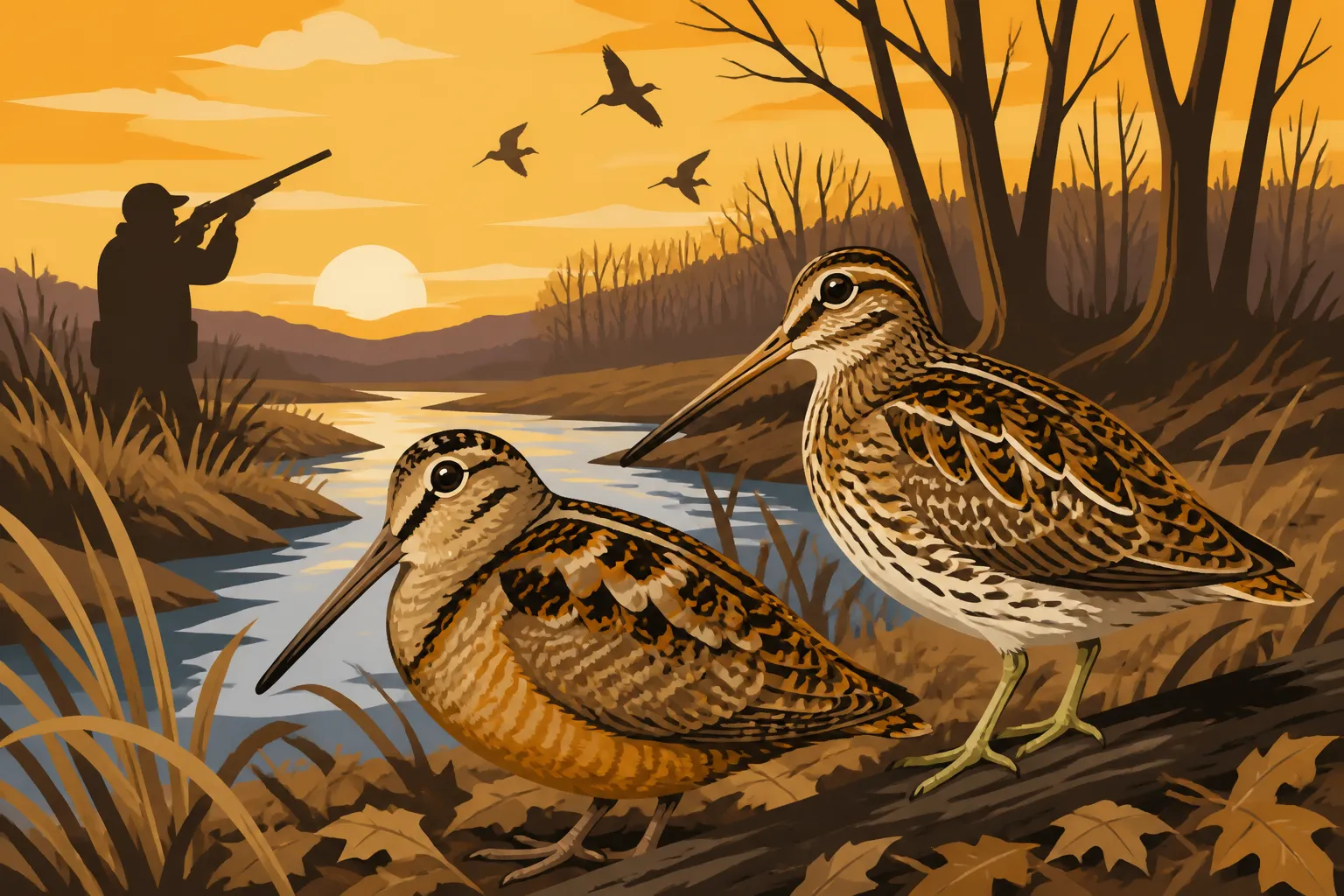
The American woodcock, affectionately known as the "timberdoodle," is a bird that truly embodies the spirit of the brushy river bottom. These plump, camouflaged little birds are masters of disguise, blending seamlessly into the fallen leaves and tangled undergrowth. They're primarily insectivores, with a particular fondness for earthworms, which dictates their habitat choices. You'll find them probing soft, moist soil with their long, sensitive bills, often in areas where the ground is literally squishy underfoot.
When flushed, a woodcock has a distinctive, almost erratic flight pattern. They spring vertically for a few feet, then level out, weaving through the timber with a surprisingly quick and agile flight. This vertical burst gives them an initial advantage, allowing them to clear the immediate brush before darting away. The sound of their wings can be a soft, whistling flutter, often the first indication you have of their presence. They typically don't fly far, often pitching down after 50 to 100 yards, which can sometimes allow for a second flush if you mark them well. Their population trends are carefully monitored, and understanding these birds helps conservation efforts. They're truly a unique quarry in Missouri's diverse hunting landscape.
Snipe: Speedy Marsh Ghosts
The common snipe, on the other hand, is a bird of the open marsh and wet fields, though you'll often encounter them along the muddier edges of river bottoms and around shallow ponds. These long-billed birds are incredibly well-camouflaged, similar to woodcock, but their preference for more open, saturated ground sets them apart. They thrive in boggy areas, rice fields, and wet pastures where they can feed on insects, crustaceans, and seeds found just below the surface. They’re often seen bobbing their heads as they feed, a characteristic behavior that can help you spot them if you’re patient.
When a snipe takes flight, it's an altogether different experience from a woodcock. Snipe explode from the cover with a sharp, piercing "scaip!" call, immediately launching into a dizzying, zigzagging flight pattern that makes them notoriously difficult targets. Their flight is incredibly fast and unpredictable, often covering considerable distance before they set down, making follow-up shots rare. They often fly high and wide, making them a true test of a wing-shooter's reflexes. Trying to hunt snipe without a dog that can pinpoint their location can be like trying to find a needle in a haystack – a very muddy haystack! Understanding the difference in their flight patterns is crucial for preparing yourself for the shot, as these birds demand a quick reaction and a precise swing.
Finding Prime Habitat in Missouri River Bottoms
The key to finding these elusive birds in Missouri is knowing where to look. They're not just anywhere; they have specific habitat requirements that narrow down your search considerably. The extensive network of river systems in Missouri, particularly the larger ones like the Missouri River and its tributaries, creates vast expanses of ideal habitat. This is where your scouting skills, and perhaps a good mapping app like GoHunt, really come into play.
Key Features for Woodcock Cover
For woodcock, you're looking for young, regenerating timber stands, particularly those with a dense understory of brush and saplings. Think about areas along river bottoms that have been recently logged or experienced some sort of disturbance, allowing new growth to flourish. Alder thickets, willow stands, and dense patches of dogwood are absolute magnets for woodcock. The ground needs to be soft and moist, indicating a good supply of earthworms. Areas with standing water or saturated soil, but still within a wooded or heavily brushed setting, are perfect.
Consider checking the edges of old logging roads or trails within these bottomland forests, especially where they intersect with small seepages or creeks. The canopy might be somewhat open, allowing sunlight to penetrate and promote undergrowth, but it's the rich, moist soil that's the real draw. A slightly elevated bank next to a slough or oxbow lake, covered in dense, young growth, can be prime woodcock territory. Don't be afraid to get a little mud on your boots; the better the habitat for woodworms, the better the chances of finding timberdoodles. For a broader understanding of how to approach Scouting Missouri Public Land Before Season, many of these habitat indicators are quite similar.
Identifying Snipe Hotspots
Snipe, in contrast, prefer more open, marshy environments. Along Missouri's river bottoms, this means looking for shallow wetlands, flooded agricultural fields that are no longer actively farmed, wet pastures, and the muddy edges of slow-moving streams or sloughs. They love areas where the water is only a few inches deep, providing easy access to their invertebrate food sources. Tall grasses, sedges, and sparse cattails in these wet areas provide them with the perfect blend of cover and feeding grounds.
Keep an eye out for areas where the water table is high, creating perpetually damp ground. Drainage ditches, cattle ponds with muddy banks, and flood-prone lowlands near the main river channel are all excellent places to start. If you're using a mapping tool, look for contour lines that indicate very flat, low-lying areas, especially those marked as wetlands or frequently flooded zones. The Missouri River Sandbar Access might even present some opportunities on their muddy fringes if there's enough vegetation. It's often the places you'd least expect a bird to be, tucked away in plain sight in a boggy patch, that hold snipe.
Using Topographical Maps and Apps
Modern technology has become an indispensable tool for habitat scouting. Online topographical maps, aerial imagery, and dedicated hunting apps like GoHunt can save you countless hours of aimless wandering. Start by looking at detailed satellite views to identify the specific features we've discussed: patches of young timber, dense brush, marshy areas, and proximity to water sources. You can often discern different timber types and densities, as well as areas of standing water or very dark, indicating saturated soil.
Overlaying topographical lines will help you identify subtle elevation changes that might create a seepage or a low spot where water collects, making it ideal for woodcock or snipe. Look for areas with a high density of small creeks and drainages, especially where they meander through dense cover. Many conservation areas along river corridors will have detailed maps available online, often highlighting different habitat types. Pay close attention to public land boundaries too, as private landowners might have created excellent habitat that borders public access. The more you "scout" from your computer, the more efficient your time in the field will be.
Gear and Tactics for Success
Hunting woodcock and snipe is inherently an active pursuit. You'll be covering a lot of ground, often in challenging conditions, so your gear and tactics need to be up to the task. This isn't a sit-and-wait kind of hunt; it's a dynamic, exciting experience that demands engagement.
Shotguns and Loads for Fast Birds
For these quick-flushing, fast-flying birds, a light, fast-swinging shotgun is your best friend. Many upland hunters favor a 20-gauge or even a 28-gauge for its maneuverability and reduced recoil, which can be a blessing after a long day of walking and shooting. Over-and-under or side-by-side shotguns are popular for their balance and quick handling, but a reliable semi-automatic or pump can also be very effective. The key is to find a gun that feels like an extension of your arm, allowing you to react instantly to the bird's explosive flush. If you're debating a Best Shotgun Gauge for Missouri Quail, the same considerations apply here – light and quick.
When it comes to loads, you'll want something that puts a dense pattern of small shot out quickly. Light game loads with #7.5 or #8 shot are ideal for woodcock and snipe. These smaller shot sizes provide a high pellet count, increasing your chances of connecting with such erratic targets, without causing excessive damage to the delicate meat. A modified or improved cylinder choke is generally recommended, as these birds are often flushed at close range in dense cover. A tighter choke can lead to over-patterning at short distances, making it harder to hit these quick targets. Remember, lead shot is generally allowed for these birds unless you are on specific state or federal wetland areas where non-toxic shot is required, so always double-check the local regulations for your hunting spot. Many of the same principles apply for Shot Size for Missouri Bobwhites and Choke Choice for Covey Rises.
Footwear and Clothing for Wet Environments
This is where realism truly kicks in: you're going to get wet and muddy. Period. Investing in quality waterproof footwear is non-negotiable. Knee-high rubber boots are often the best choice for navigating the soggy, mucky terrain of river bottoms. They offer excellent waterproofing and protection from thorns and briars. If you're covering more varied ground, a sturdy pair of waterproof hiking boots, treated with a good waterproofing agent, can also work, but be prepared for mud over the tops. Choosing the right Boots for Walking Ozark Rock can offer some guidance, though you'll want even more water protection here.
Layered clothing is also crucial. Even on cool fall days, walking through dense cover and wading through mud will make you work up a sweat. Start with a moisture-wicking base layer, add an insulating mid-layer, and finish with a tough, briar-resistant outer layer. A good rain jacket, even if it's not actively raining, can serve as a windbreaker and offer extra protection when busting through wet brush. Don't forget a blaze orange vest or cap for safety, especially if you're hunting with partners, as these hunts often involve moving through thick cover where visibility can be limited. Missouri has specific Orange Requirements for Missouri Archers, and while these birds don't require orange, it's always a smart safety choice when moving through dense cover with others.
Working with a Dog Versus Still Hunting
While it's technically possible to "still hunt" woodcock and snipe, especially woodcock that hold tight, having a well-trained bird dog will dramatically increase your success and enjoyment. Pointers, setters, and flushers like spaniels are invaluable for sniffing out these camouflaged birds that often sit tight until you're nearly on top of them. A good dog will locate the bird, hold point (or flush it effectively), and retrieve it after the shot, saving you from losing downed birds in dense cover. The joy of watching a dog work these birds, nose to the ground in the brush, is a significant part of the experience.
If you're hunting without a dog, your approach will be slower and more methodical. You'll need to walk slowly and deliberately, pausing frequently and looking for subtle signs of birds. When you encounter promising cover, try walking in a zigzag pattern to maximize your chances of flushing a bird. Be prepared for an explosive flush at your feet. For snipe, without a dog, you'll need to focus on identifying very specific, small patches of ideal habitat and methodically walk them, often relying on pure luck or spotting them from a distance before they disappear into the marsh. It's a much harder task, but not impossible.
Navigating Seasons, Permits, and Regulations
Hunting migratory birds, including woodcock and snipe, comes with its own set of federal and state regulations. Staying informed about current seasons, permit requirements, and bag limits is absolutely essential for a legal and ethical hunt. This is where those official Missouri Department of Conservation (MDC) resources and reliable apps like GoHunt are your best friends.
Missouri Woodcock and Snipe Season Dates
The hunting seasons for woodcock and snipe in Missouri are set annually, typically in the fall, aligning with their southward migration. These seasons are generally quite generous in length, often spanning several weeks or even a couple of months, allowing ample opportunity to pursue them. Woodcock usually open a bit earlier than snipe, often in mid-October, and run into late November or early December, depending on migratory patterns and weather. Snipe seasons tend to follow a similar timeframe, sometimes starting a bit later and running longer into the early winter.
It is absolutely crucial to check the current year's Missouri Department of Conservation Migratory Bird Hunting Digest for the precise Missouri Woodcock and Snipe Dates. These dates can shift slightly from year to year based on federal frameworks and population assessments, so never rely on last year's calendar. Being off by even a day could result in a violation, and nobody wants that! These birds offer some of the latest migratory bird hunting opportunities in the season, which is a real bonus for dedicated wing-shooters.
Permit Requirements and HIP Registration
To hunt woodcock and snipe in Missouri, you'll need a valid Missouri Small Game Hunting Permit. This permit covers a wide array of small game species, including these migratory birds. For non-residents, the Missouri Nonresident Small Game Permit Cost can be an important consideration. Additionally, because woodcock and snipe are migratory birds, federal regulations require all hunters to be registered with the Harvest Information Program (HIP) annually. This is a free, quick registration that helps wildlife agencies gather vital harvest data to manage migratory bird populations across the country.
You'll also need a valid Federal Migratory Bird Hunting and Conservation Stamp, commonly known as a Federal Duck Stamp, if you are 16 years of age or older. While woodcock and snipe aren't ducks, they fall under the federal migratory bird umbrella, and this stamp is required. This stamp helps fund wetland conservation efforts, which directly benefits a wide range of migratory birds, including the ones you'll be pursuing. Ensure you have all three: your state small game permit, your HIP registration, and your Federal Duck Stamp, before heading afield. The MDC website and the MO Hunting app are excellent resources for purchasing permits and completing your HIP registration. You can learn more about What the Small Game Permit Covers for other hunting opportunities.
Bag Limits and Legal Shooting Hours
Just like with other game species, there are specific daily bag limits and possession limits for both woodcock and snipe. These limits are designed to ensure sustainable harvest and are strictly enforced. Typically, the daily bag limit for woodcock is three birds, and the possession limit is nine. For snipe, it's often eight birds daily, with a possession limit of 24. These numbers can vary slightly, so again, always consult the current MDC Migratory Bird Hunting Digest.
Legal shooting hours for migratory birds in Missouri generally run from one-half hour before sunrise until sunset. This allows for ample time to hunt throughout the day, but it's important to keep an eye on your watch, especially as the days shorten in the fall. Discharging a firearm outside of legal shooting hours is a serious offense. Being aware of your limits and the time of day ensures you're hunting responsibly and legally. This can feel a little different from the general Missouri Legal Shooting Hours for deer, so always double-check.
Ethical Considerations and Game Care
Hunting woodcock and snipe offers a unique opportunity to connect with nature and enjoy challenging wing shooting. But with that privilege comes a responsibility to hunt ethically and ensure the game you harvest is handled properly.
Respecting the Resource and Other Hunters
Ethical hunting means more than just following the law; it means demonstrating respect for the birds, the habitat, and your fellow outdoors enthusiasts. This includes making every effort to recover downed birds. Both woodcock and snipe, with their superb camouflage, can be incredibly difficult to find in dense cover, especially if they fall into thick brush or water. This is another reason why a good retriever is so valuable. Even if you're hunting without a dog, always mark where the bird falls and thoroughly search the area. Losing a bird is a disheartening experience and an ethical lapse.
Furthermore, be mindful of other hunters, especially if you're on public land. Missouri's Public Hunting Land in Missouri can get busy, and courtesy goes a long way. Maintain a respectful distance, avoid "sky-busting" (shooting at birds outside of effective range), and keep noise to a minimum. These hunts are often solitary or involve a small group, but it's important to share the resource responsibly. Practicing your shooting at clays before the season helps ensure clean kills and reduces the chance of wounding birds.
Field Dressing and Cooling for Optimal Flavor
Both woodcock and snipe are considered gourmet table fare by many hunters, renowned for their rich, dark meat. To ensure you get the best possible flavor, proper field dressing and cooling are critical, especially if you're hunting on a warmer fall day. As soon as possible after harvest, field dress the birds. This usually involves removing the entrails to allow the body cavity to cool down. You can do this by making a small incision near the vent and pulling out the organs, or by simply plucking a few breast feathers and making an incision to remove the breast meat directly.
Once field dressed, the birds should be cooled quickly. If you're out in the field for several hours, a small cooler with ice, or even just a game bag that allows for airflow, can make a big difference. Avoid piling birds in a hot game vest where they can spoil quickly. At camp or home, immediately refrigerate the birds. Many hunters prefer to breast out woodcock and snipe, but others enjoy roasting them whole (minus the entrails). The rich flavor is truly a treat, a delicious reward for a challenging hunt.
| Feature / Trait | American Woodcock (Timberdoodle) | Common Snipe (Marsh Ghost) |
|---|---|---|
| Preferred Habitat | Young, dense timber; moist, soft soil; alder/willow thickets; creek edges | Open marshes, wet fields, flooded pastures; muddy pond/stream edges |
| Primary Food | Earthworms, insects | Insects, crustaceans, seeds |
| Typical Flush | Vertical burst, then levels out; weaves through timber; soft whistle | Explosive, zigzagging flight; sharp "scaip!" call; flies high/fast |
| Flight Speed | Fast, agile | Extremely fast, erratic |
| Bag Limit (Daily) | 3 (usually) | 8 (usually) |
| Shot Size | #7.5 or #8 | #7.5 or #8 |
| Choke | Improved Cylinder, Modified | Improved Cylinder, Modified |
| Dog Preference | Highly beneficial (pointers, setters) | Highly beneficial (retrievers, flushers) |
| Ground Condition | Squishy, muddy but often under canopy | Saturated, open mud/shallow water |
Disclaimer
Hunting regulations and season dates are subject to change by the Missouri Department of Conservation (MDC) and federal agencies. Always consult the most current MDC Hunting and Trapping Regulations and Migratory Bird Hunting Digest before engaging in any hunting activity. This guide is for informational purposes only and should not be considered a substitute for official regulations. It is the hunter's responsibility to know and follow all applicable laws.