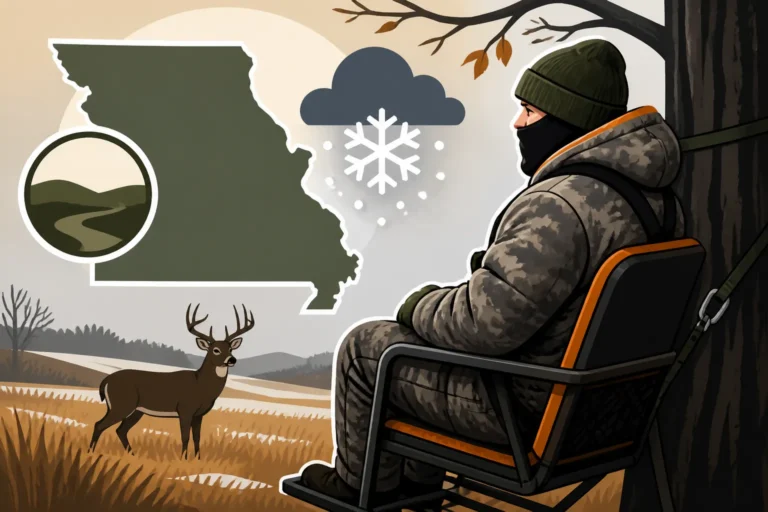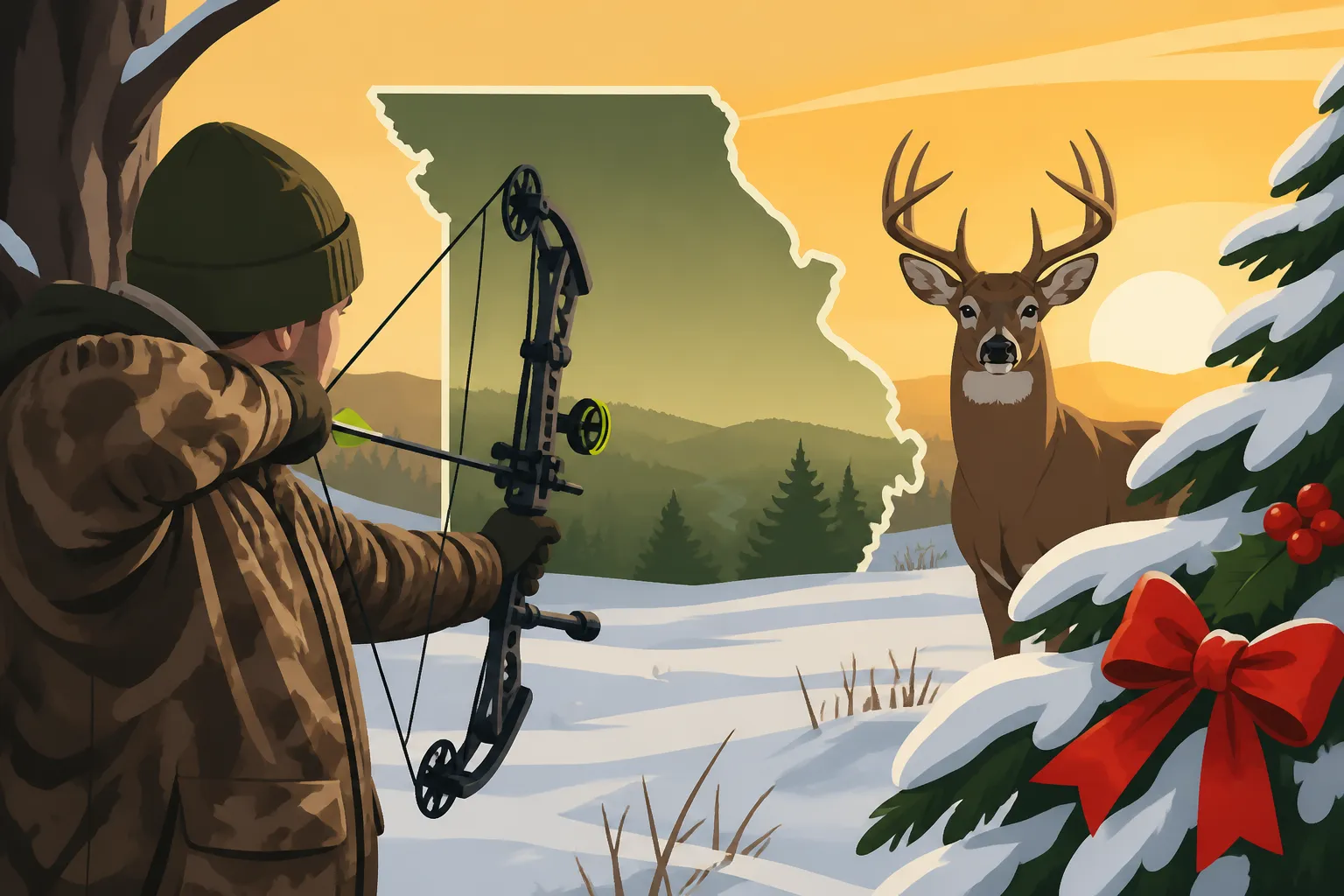
Hunting Missouri Deer After Christmas
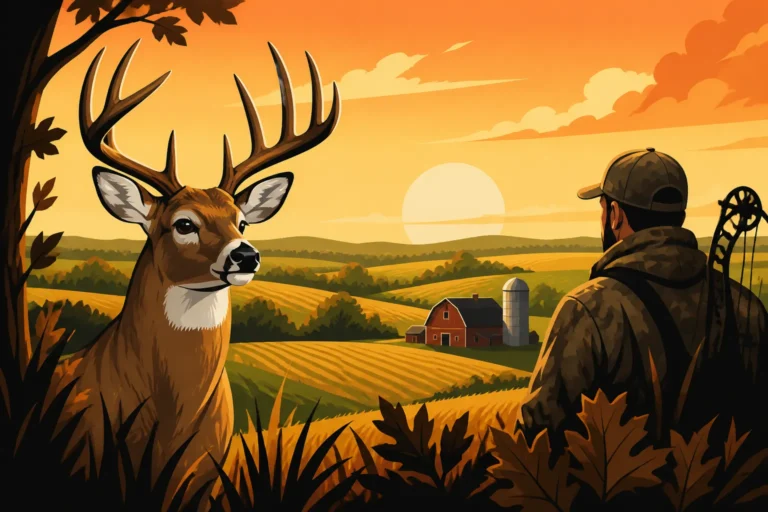
Many deer hunters pack away their gear after the intensity of Missouri's November firearms season, believing the best opportunities are behind them. But for those dedicated few, the weeks following Christmas offer a unique, challenging, yet incredibly rewarding chance to fill a tag. This guide will delve into the distinct behaviors of whitetails in the deep cold of winter and equip you with the strategies needed to successfully hunt Missouri deer after the holidays.
Understanding the Late-Season Landscape
When the holiday decorations come down, Missouri's deer herd is facing some of the toughest conditions of the year. The landscape has been stripped bare by harsh weather and previous harvests, and the deer are focused almost entirely on survival. This shift in priorities dramatically impacts where you'll find them and how they behave.
Deer Behavior Shifts in Deep Winter
By late December and into January, the frantic energy of the rut is a distant memory. Bucks are no longer chasing does with reckless abandon; instead, they're exhausted, often having lost a significant amount of body weight. Their sole focus, alongside the does and fawns, shifts to two critical elements: food and thermal cover. This isn't just a minor adjustment; it's a complete change in their daily rhythm and patterns.
Food sources that were abundant in early fall, like acorns scattered across the forest floor, are now either buried under leaf litter and snow or have long since been consumed. Agricultural fields might be harvested, leaving only residual pickings. This scarcity means deer are much more concentrated around any remaining high-calorie forage. They become incredibly efficient, often moving only as much as necessary to get from bedding to food and back again. Their daily patterns become more predictable, but also more sensitive to pressure. If you bump them once, they might relocate to an even thicker, more inaccessible patch of cover.
Thermal cover, particularly in northern Missouri or areas prone to heavy snow and ice, becomes paramount. Dense cedar thickets, south-facing slopes that catch the most sunlight, and thickets of honeysuckle or greenbrier offer crucial protection from biting winds and freezing temperatures. These areas act like natural shelters, allowing deer to conserve energy that would otherwise be spent trying to stay warm. Understanding these thermal refuges is as important as understanding their food sources. Deer will bed in these spots for the majority of the day, only venturing out during the warmest parts of the day, typically mid-morning to late afternoon, to feed before retreating again.
The impact of snow and extreme cold cannot be overstated. When the ground is covered in several inches of snow, it dramatically limits available forage, forcing deer to concentrate in smaller areas where they can access food. Fresh snow also makes tracking much easier, offering a clear visual of recent deer movement. However, it also makes human movement louder and more conspicuous, demanding extra stealth from the hunter.
Key Dates and Legalities for Late-Season Hunting
Before you even think about heading out after Christmas, it's absolutely crucial to be on top of Missouri's regulations. The seasons after the main firearms portion are often called "alternative methods" or "late antlerless," and they have very specific rules regarding dates, weapon types, and even the counties where you can hunt. Many hunters often confuse these, so let's break them down.
Missouri's Alternative Methods Portion usually runs for a relatively short period, often in late December and early January. This is a special opportunity for hunters to use specific weapons like muzzleloaders, archery equipment, or even at times, crossbows, air rifles, or certain handguns. It's designed to provide an additional chance to harvest deer after the primary firearms seasons have concluded. For details on exactly which weapons are permitted, it's always best to consult the current Missouri Department of Conservation (MDC) regulations, but generally, legal firearms for modern firearms season are restricted, making way for these "alternative" options. You'll need to make sure your choice of weapon, whether it's a traditional longbow or a modern muzzleloader, is compliant for this specific portion.
In addition to the Alternative Methods Portion, Missouri also offers a Late Antlerless Portion, which usually overlaps or follows closely. This season is specifically for harvesting antlerless deer (does) and is often limited to certain counties where deer populations need further management. These antlerless permits are often crucial for maintaining healthy deer herds and can be a great way to fill your freezer. Remember, these are specific antlerless permits, not your general firearms or archery permits. You'll need to check the MDC's county-specific regulations to ensure the county you plan to hunt in is open for this portion and that you have the correct permit. Information regarding Missouri Deer Permits and How to Buy One is readily available through the MDC, often online or at local vendors.
It’s also important to remember that during some of these later portions, even if you are using archery equipment, Orange Requirements for Missouri Archers might still apply, especially if the Alternative Methods Portion runs concurrently with other firearms seasons for different game animals. Always check the current regulations, as these can change annually. Being informed about these specific seasons, dates, and permit requirements, which are all part of the larger Missouri Deer Season Portions Explained, will ensure you're hunting legally and maximizing your late-season success.
Finding Late-Season Food and Cover
Late-season success hinges almost entirely on your ability to pinpoint the limited food sources and the dense thermal cover deer rely on when temperatures plummet. Deer simply cannot afford to waste energy, so their movements become incredibly focused.
Targeting Hard-to-Find Food Sources
Gone are the days of deer casually browsing through open timber. Now, every calorie counts, and whitetails will converge on the most nutritious and easily accessible food available. Identifying these late-season magnets is your top priority.
Agricultural Fields: Even after harvest, agricultural fields remain a primary draw, especially in northern and central Missouri's farm country. Look for cut corn and soybean fields where combines have left behind scattered kernels or beans. While it might seem like slim pickings to us, deer will meticulously glean these fields, especially after a fresh snow, which can actually reveal hidden kernels. Winter wheat fields, if planted in the fall, provide a green, palatable food source that's incredibly attractive. Brassicas like turnips and radishes, if planted specifically as food plots and if they haven't been completely consumed earlier in the season, are another high-energy option that can withstand cold weather. Even old hay fields or pastures can offer some residual browse. The key is to find fields with consistent, visible sign of recent deer activity – tracks leading in and out, or fresh droppings.
Natural Browse: In timbered areas, especially in the Ozarks where ag fields might be scarce, deer will turn to natural browse that remains palatable in winter. Honeysuckle and greenbrier are two common culprits that offer year-round greenery and are often heavily browsed in winter. Look for these dense, often thorny thickets. Cedar browse is another critical winter food source, especially in thick cedar glades or along creek bottoms where these evergreens thrive. Deer will literally eat the tips of cedar branches, providing both sustenance and cover. You'll often see distinct browse lines where deer have been feeding heavily.
Oak Stands: While the main acorn crop is usually gone by late December, don't completely discount oak stands. If you have a mild winter or if there was a particularly heavy mast crop, you might still find residual acorns, especially from white oaks that are less prone to rot. Deer will still dig through leaf litter and even thin snow to find these coveted nuts. Focus on areas with a high density of mature white oaks, particularly on south-facing slopes that might melt off sooner.
Food Plots: For those hunting private land, or on public land where food plots are managed by the MDC, these are absolute late-season goldmines. Plots designed with winter forage in mind, such as brassicas, winter wheat, or clover, will pull deer from a wide area. These cultivated areas offer a concentrated, reliable food source that deer simply can't ignore when other options are scarce. This type of detailed knowledge about Late-Season Food Sources for Whitetails is paramount for success.
Locating Thermal and Security Cover
Once you understand what deer are eating, the next puzzle piece is understanding where they're bedding. In late season, bedding isn't just about concealment; it's about survival from the elements. Deer need places where they can stay warm, conserve energy, and feel safe from predators.
Cedar Thickets: In Missouri, especially in many parts of the Ozarks and even some areas of northern Missouri, cedar thickets are absolute sanctuaries in the winter. The dense needles of cedar trees block wind and snow, creating pockets of relative warmth. Deer will pile into these thickets, often bedding very close to each other. Look for thick, impenetrable stands of cedar, particularly on south-facing slopes, which also benefit from solar radiation. These are places where deer can literally disappear. When Reading Aerial Photos for Ozark Deer, look for the darkest green patches—those are often your cedar havens.
South-Facing Slopes: Topography plays a huge role. South-facing slopes receive the most direct sunlight throughout the day. This means they warm up faster, melt snow more quickly, and can be several degrees warmer than adjacent north-facing slopes. Deer will actively seek out these areas for bedding, especially on clear, sunny winter days. Look for benches or small pockets of cover on these sunny aspects.
Dense Brush and Creek Bottoms: Areas choked with multiflora rose, honeysuckle, greenbrier, and other dense, thorny brush offer both concealment and wind protection. Creek and river bottoms, particularly those with steep banks or thick vegetation, often provide a natural funnel for deer movement and a protected corridor from the elements. These low-lying areas can be surprisingly warm and offer an escape from bitter ridge-top winds.
Transition Areas: The sweet spot is often where these critical food sources meet prime thermal and security cover. Deer will spend their days bedded deep in a cedar thicket or a brushy draw on a south-facing slope and then emerge in the late afternoon to hit a nearby cut cornfield or winter wheat plot. Identifying these transition lines – the invisible highway between bed and feed – is where you should focus your efforts for stand or blind placement. A mapping tool like GoHunt can be invaluable for identifying these transitions, marking potential bedding areas, and visualizing the shortest, most covered routes between them.
Adapting Your Hunting Strategy
Hunting after Christmas demands a complete shift in tactics. The deer are different, the weather is different, and your approach needs to be too. Patience, stealth, and an understanding of nuanced deer movement are your greatest assets.
Still-Hunting and Scouting for Sign
When the temperatures drop and the landscape is often covered in snow, traditional stand hunting can be tough, and deer movement patterns might not be what you expect. This is where still-hunting and meticulous scouting truly shine.
Slow, Deliberate Movement: This isn't about covering vast amounts of ground quickly. This is about taking five steps, stopping, scanning, and listening for five minutes. Every crunch of snow or rustle of leaves will carry further in the crisp, cold air. Your objective is to move through the woods like a ghost, observing more than you move. This means paying attention to your footing, avoiding dry leaves and snapping twigs, and using the contours of the land or thick cover to break up your silhouette. Think about the wind – it's your constant companion. Always try to keep it in your face or quartering to you, allowing your scent to be carried away from where deer might be.
Reading Snow for Clues: A fresh blanket of snow is like a giant, open book. It reveals every step a deer has taken, every time it stopped to browse, and every place it bedded down. Look for fresh tracks that indicate recent movement. Are they heading from thick cover towards a known food source? Are they singles, or a group of does and fawns? More importantly, look for beds – depressions in the snow, often still warm to the touch if recently used, located in dense thermal cover on south-facing slopes. You'll also see browse lines where deer have been feeding on specific plants. This invaluable information helps you confirm deer presence, identify travel corridors, and even estimate the number and size of deer in an area. When Hunting Missouri Deer in Deep Snow, these signs are your best friend.
Focus on Fresh Activity: In late season, deer are highly concentrated. Don't waste time in areas with old sign. You're looking for hot sign: fresh tracks from the last few hours, steaming droppings, or browse that has obviously been clipped very recently. These small pockets of heavy use are your target zones. A good pair of binoculars can help you spot these details from a distance without disturbing the area.
Stand Placement and Patience
While still-hunting is excellent for locating deer, setting up for a patient wait can often be the most effective way to intercept them in their predictable late-season patterns.
Setting Up on Trails Between Bedding and Feeding: Once you've identified the key bedding areas (cedar thickets, south-facing slopes) and the primary food sources (cut corn, winter wheat, honeysuckle), your stand or blind placement becomes critical. Look for the most direct, covered trails connecting these two points. Deer are energy-efficient, so they'll take the path of least resistance. Funnels, pinch points, and natural travel corridors become even more pronounced. For instance, a narrow strip of timber connecting two larger woodlots, or a fence row between two fields, can be a perfect ambush point. When considering Treestand Setups in Hardwood Timber, remember that deciduous trees are bare, offering less concealment, so plan your entry and exit carefully.
Utilizing Ground Blinds: For late-season hunting, ground blinds are an absolute game-changer. Not only do they offer excellent concealment against a stark winter backdrop, but they also provide much-needed shelter from the biting cold wind, rain, or snow. A well-brushed-in ground blind on a field edge or along a thick travel corridor allows you to stay comfortable, warm, and hidden for extended periods. This comfort translates to patience, which is often the key to success in cold weather. When Using a Ground Blind on Missouri Public Land, ensure it blends naturally with the surroundings and is securely anchored against winter winds.
Timing Your Hunt: In bitter cold, deer often adjust their movement times. They might not move much at first light, waiting for the sun to climb higher and offer some warmth. Mid-morning to late afternoon can be prime time, as deer emerge from thermal cover to feed during the warmest part of the day before retreating again as dusk approaches. This means you might need to adjust your sitting strategy from the early morning hunts of the rut. You might not need to be in your stand an hour before dawn, but you absolutely need to be there well before the deer start moving and stay until well after dark.
Long Sits: Patience is a virtue, and in late-season hunting, it's a necessity. Deer movement can be sporadic and concentrated, meaning you might have long stretches of no activity before everything happens in a sudden flurry. Dress for the cold, bring plenty of hot liquids, and be prepared to sit for hours. This often requires a dedicated Cold Weather Sitting Strategy, ensuring you can endure the elements.
Utilizing Specific Gear for Cold Weather
Your gear choices are paramount when hunting in the frigid post-Christmas period. Staying warm and dry isn't just about comfort; it's about staying focused and safe.
Layering is Non-Negotiable: Forget thick, bulky coats. The secret to staying warm in extreme cold is layering. Start with a moisture-wicking base layer against your skin to pull sweat away. Add insulating mid-layers like fleece or down to trap body heat. Finally, an outer layer that is windproof and waterproof is essential to protect against the elements. You want to be able to add or remove layers as your activity level or the temperature changes.
Insulated Boots and Hand/Foot Warmers: Cold extremities are a hunt-killer. Invest in high-quality, heavily insulated, waterproof boots designed for extreme cold. Think about chemical hand and foot warmers – those little packets can make a huge difference, especially during those long, stationary sits. Many hunters even use them in pockets or tucked into vests to keep their core warm.
The Power of a Thermos: A good thermos filled with hot coffee, tea, or even soup can be a morale booster and a vital source of internal warmth on a bitter cold day. It's not just a luxury; it's a strategic piece of gear that helps you stay out longer and more comfortably.
Essential Navigation and Scouting Tools: In these conditions, reliable navigation is critical. A robust GPS unit or a hunting app like GoHunt is invaluable. GoHunt, for example, allows you to download offline maps, mark your stand locations, track your movement, and pinpoint potential bedding and feeding areas, even without cell service. Its detailed satellite imagery can help you identify those dense cedar thickets and hidden food plots from the comfort of your home, saving you precious time and energy in the field. This can be especially helpful when you're trying to figure out Where North Missouri Bucks Bed in the vast farm country.
Public Land Considerations
Hunting public land after Christmas presents its own set of challenges and opportunities. While many hunters have hung up their bows and rifles, those who brave the elements often find less competition and deer that are highly concentrated.
Finding Less-Pressured Areas
The post-Christmas period is a unique time on public land. Most hunters are either done for the year or are focused on family and holidays. This significantly reduces human pressure, which can work to your advantage.
Use the Decreased Pressure to Your Advantage: The biggest benefit of late-season public land hunting is the sheer lack of other hunters. Many spots that were hammered during early archery or firearms season might now be relatively quiet. Deer, especially older bucks, are incredibly sensitive to pressure. They will often shift their patterns to avoid it. When that pressure subsides, they might return to more predictable routes or even utilize areas they previously avoided. This is a prime time to explore those spots you avoided earlier in the season due to crowds. You can often find Finding Ground Others Walk Past simply by walking a little further or exploring less obvious entry points.
Deeper Into Public Land: While pressure is generally lower, the deepest recesses of public land will still hold the least disturbed deer. Be prepared to walk further than you normally would. This means planning your entry and exit routes meticulously, especially considering you might be hauling a deer out over snow or ice. Use mapping apps like GoHunt to identify remote sections, deep draws, or thick, overlooked patches of cover that require a significant walk-in. These are often the places where deer feel safest and will concentrate during the toughest weather.
Checking Smaller, Overlooked Parcels: Don't just focus on the massive conservation areas. Sometimes, smaller, isolated public parcels – a few hundred acres tucked away between private farms, or a strip of timber along a river – get overlooked. These can act as sanctuaries, particularly if they offer good thermal cover and proximity to a food source on adjacent private land. A quick scan of the Missouri Conservation Atlas can reveal these hidden gems.
Dealing with Hunting Pressure and Other Users
Even with reduced deer hunting pressure, public lands are still open to other activities. Being aware and prepared for other users is part of late-season etiquette.
Other Late-Season Hunters: While deer hunters might be fewer, you could encounter late-season small game hunters pursuing rabbits or squirrels, or even trappers checking their lines. If the fall turkey season is still open, you might also run into turkey hunters. These activities can sometimes disturb deer movement, so be aware of other vehicles in parking lots or sounds of distant shots.
Shed Hunters and Hikers: As winter progresses and deer begin to shed their antlers, you'll also see an increase in shed hunters venturing into prime deer habitat. Hikers, especially on mild days, might also be out. While these users are often not intentionally pressuring deer, their presence can still affect deer movement.
Hunter Orange Requirements: Even if you're bowhunting during an Alternative Methods Portion, it's critical to check if hunter orange is required. For example, if there's an overlap with a late firearms portion for deer or other species, or even during parts of the Alternative Methods season itself, Orange Requirements for Missouri Archers may still apply. The general rule in Missouri is often 400 square inches of hunter orange visible from all sides. Always consult the current MDC regulations before heading afield to ensure you're compliant and safe.
Respect and Awareness: The golden rule of public land hunting is respect. Respect other users, respect the land, and always be aware of your surroundings. A shared understanding makes the outdoors more enjoyable for everyone.
| Season Portion | General Dates | Legal Weapon Types | Primary Target | Special Rules/Notes |
|---|---|---|---|---|
| Alternative Methods | Late Dec. – Early Jan. | Archery, Crossbow, Muzzleloader, Air Rifle, Handgun (specific calibers) | Any Deer | Check current regulations for exact weapon specifications. Hunter Orange may be required. |
| Late Antlerless | Early Jan. (overlaps/follows) | As per Alternative Methods (or specific firearms) | Antlerless Deer Only | County-specific, check MDC for open counties. Requires specific antlerless permit. |
| Archery (Reopened) | Mid-Jan. | Archery, Crossbow | Any Deer | This is a continuation of the main archery season. Hunter Orange usually NOT required. |
Note: Always consult the current Missouri Department of Conservation (MDC) regulations for the most accurate and up-to-date dates, weapon restrictions, and county specific information, as these can change annually.
Disclaimer
Please remember that hunting regulations and season dates can change. Always consult the current Missouri Department of Conservation (MDC) regulations before planning any hunting trip to ensure you are compliant with all state laws and permit requirements. This guide provides general information and best practices based on current knowledge and experience.