Missouri Doves and Migratory Birds
There’s a unique thrill that comes with hunting migratory birds in Missouri, a challenge unlike anything else in the woods or fields. But let's be honest, it can also be a tangled mess of regulations, zone lines, and species-specific rules that can leave even seasoned hunters scratching their heads. This comprehensive guide is here to untangle that web, helping you understand the incredible opportunities for doves, ducks, geese, woodcock, and snipe, so you can spend less time worrying about permits and more time enjoying the incredible wing-shooting Missouri has to offer.
Understanding Missouri's Migratory Bird Landscape
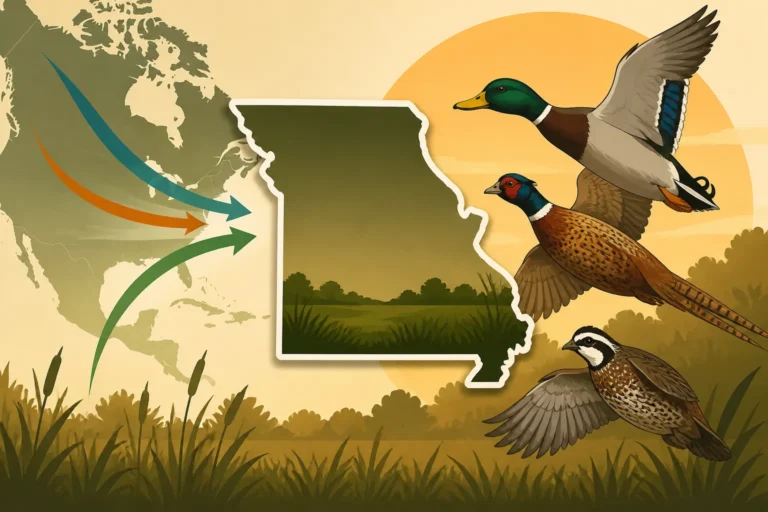
Missouri, tucked right in the heart of the country, plays a surprisingly crucial role in the grand spectacle of bird migration. We're not just some random spot on the map; we're a vibrant, vital stopover and wintering ground for countless species making their incredible journeys along the Mississippi Flyway. It’s this unique geographical position that creates such diverse and thrilling hunting opportunities for those of us who appreciate the art of wing-shooting.
The Mississippi Flyway's Influence
Imagine a superhighway in the sky, stretching from the arctic tundras all the way down to the Gulf of Mexico and beyond. That's essentially the Mississippi Flyway, and Missouri is a major service station along its route. Every fall and spring, millions of birds, from tiny warblers to majestic swans, funnel through our state, relying on our rivers, wetlands, and agricultural fields for food and rest. This constant flow means that even if a species doesn't nest here, we often get a crack at them during their travels.
This unique position means that hunter success often hinges on migratory timing and weather patterns far to our north. A sudden cold snap in the Dakotas can push a fresh wave of ducks and geese our way, while a mild autumn might delay the main push. It's a game of patience and watching the weather, not just in Missouri, but across the entire continent. You might be checking the forecast for your local duck hole, but a savvy waterfowl hunter is also keeping an eye on temperatures in Manitoba or Saskatchewan to anticipate when the next big push of birds will arrive. This creates a dynamic, ever-changing hunting environment that keeps things exciting, even if it adds a layer of unpredictability.
Key Migratory Species Beyond Doves
While doves might kick off the migratory bird season with a bang, they’re just the beginning of what Missouri has to offer. Our state is home to an impressive array of other feathered travelers that provide fantastic hunting, each with its own unique challenges and rewards. From the explosive flush of a woodcock to the acrobatic flight of a teal, there's always something new to pursue.
Of course, the headliners after doves are our ducks and geese. We see a remarkable variety of ducks, from the iconic greenhead mallards that everyone dreams of, to fast-flying teal, elusive wood ducks, and hardy divers like bluebills and canvasbacks that frequent our larger lakes and rivers. Geese, too, are a major draw, with giant Canada geese settling into our fields, and opportunities for specklebellies and the sheer spectacle of a snow goose conservation order hunt. But don’t overlook the smaller, often-forgotten species. Woodcock, with their long bills and erratic flight, offer a unique challenge in dense timber. And for those with quick reflexes, snipe darting over wet fields provide some of the fastest wing-shooting around. Each of these species offers a distinct experience, requiring different tactics, gear, and an understanding of their specific habitats and behaviors. It truly broadens the scope of hunting beyond just deer and turkey, allowing you to stay active in the field for much of the year.
Mourning Doves: The Ultimate Early Season Test
There's something incredibly special about dove season in Missouri. It's the unofficial kickoff to fall hunting, a social affair, and an absolute test of your wing-shooting skills. For many, it's a tradition, a chance to gather with friends and family, enjoy the late summer sun, and knock some rust off before the deer and duck seasons fully swing into gear.
Why Doves Are So Popular
The allure of dove hunting is multifaceted. First, it’s highly accessible. You don't always need vast private land; many conservation areas manage dedicated dove fields. Second, the action can be incredibly fast-paced. When the birds are flying, you're constantly swinging, shooting, and reloading. It's a true shotgun workout. Third, it's often a more relaxed, social hunt. You're typically spread out with fellow hunters, chatting between volleys, and enjoying the camaraderie. This is a stark contrast to the often solitary and quiet pursuit of deer or turkeys. The sheer number of birds and their acrobatic flight make for an exciting experience, whether you're a seasoned veteran or introducing a new hunter to the sport. It's easy to get discouraged with missed shots, but that's part of the fun – a friendly competition to see who can connect more often. For more about this, check out our guide on Hunting Missouri Dove Fields in September.
Finally, dove hunting doesn't require a mountain of specialized gear. A shotgun, some shells, a bucket to sit on, and a cooler for water and birds are often all you need. This low barrier to entry makes it perfect for new hunters and a fantastic way to introduce youth to the outdoors. The thrill of doves buzzing past and the challenge of hitting those fast-moving targets can quickly hook someone on hunting for life. It's an opportunity to create lasting memories without the intense commitment or expense that some other hunting pursuits demand.
Prime Dove Habitat and Scouting
Doves are creatures of habit, and understanding their daily routines is key to finding them. They need three main things: food, water, and roosting cover. In Missouri, food sources are primarily agricultural fields, especially those planted with sunflowers, wheat, or corn that have been harvested or disked. Doves love to feed on small seeds found on bare ground. They also gravitate towards gravel roads or areas where small grit is abundant, which aids in their digestion.
When scouting, look for these elements. Drive around likely areas, especially in the late afternoon, and watch for doves flying into fields or congregating on power lines. Pay attention to water sources—ponds, creeks, or even muddy puddles—as doves need to drink daily, especially in the heat of early September. Their flight paths to and from these water sources can reveal prime setup locations. Finally, identify roosting areas, typically dense timber or cedar groves, where they spend the night. Their flight patterns from roost to food to water form predictable travel corridors. Using an app like GoHunt, even though it's typically for big game, can still help you identify land features like water bodies, field edges, and timber blocks on public lands that might hold doves. Early morning scouting before opening day can give you a significant advantage, allowing you to pinpoint exactly where the birds are concentrating their efforts. Don't be afraid to ask local farmers either; they often know exactly where the doves are hitting.
Setting Up Your Dove Field
Once you've scouted and located a field where doves are actively feeding or flying, your setup strategy becomes paramount. The goal is to position yourself along a natural flight path or near a preferred feeding spot, maximizing your shot opportunities without "flaring" the birds too much. This isn't usually a blind-intensive hunt, but subtle cover can make a big difference.
Consider positioning yourself on the downwind side of a field, or along a tree line or fencerow that doves are using as a flyway. If you're on a wide-open field, a simple camouflaged bucket or a small pop-up blind can break up your silhouette. Decoys can be incredibly effective, especially spinning-wing models like a Mojo Dove, which can draw birds from a distance. Place decoys on short poles above the stubble or even on nearby power lines if safe and legal. Space out hunters appropriately to ensure safety and to cover different flight lanes. If you're hunting with a group, coordinating your positions to create a "kill zone" can really increase your collective success. Remember, doves are constantly moving, so adjust your position if the birds are consistently flying out of range or avoiding your setup. Sometimes moving just 20 or 30 yards can make all the difference.
Diving Into Missouri's Waterfowl World
After the doves have mostly moved on, a different kind of migratory magic begins to unfold in Missouri: waterfowl season. Our state transforms into a critical stopover for ducks and geese heading south, offering some truly world-class hunting opportunities, particularly in our famous managed wetlands and along the major river systems.
Duck Species and Their Migration Patterns
Missouri is a magnet for ducks along the Mississippi Flyway. While the green-headed mallard is arguably the king of Missouri duck hunting, we host a vibrant array of other species. Early in the season, you'll see fast-flying teal (blue-winged and green-winged), pintails, and gadwalls. As the colder weather pushes south, expect to see more widgeon, shovelers, and, of course, those coveted mallards. Wood ducks are also prevalent, especially in timbered bottoms, and offer a unique challenge with their incredible agility in the trees. Divers like scaup (bluebills), canvasbacks, and redheads primarily utilize our larger reservoirs and deep-water rivers.
The timing of their arrival and departure is heavily influenced by weather patterns. A strong cold front to our north can bring a "push" of new birds overnight, while prolonged mild weather can keep them further north. Understanding these patterns, combined with local scouting, is crucial. Hunters often watch migration reports and weather maps, knowing that a freeze-up in Iowa or Minnesota could mean a surge of ducks headed for Missouri's open water and thawed fields. Knowing your Missouri Duck Daily Bag Limit and specifically the Missouri Mallard Limit Within the Bag is critical for ethical hunting.
Goose Hunting Opportunities
Geese offer another incredible waterfowl opportunity in Missouri, with several species to target. Giant Canada geese are prevalent, often resident birds that are comfortable in our agricultural landscapes and larger reservoirs. These big birds provide excellent field hunting, often in cut corn or bean fields. As winter deepens, migratory Canada geese from further north join them, bolstering the numbers.
Beyond the Canadas, specklebellies (white-fronted geese) are highly prized by many hunters for their delicious meat and unique calls. They tend to travel in smaller flocks and often prefer specific feeding areas, making them a bit more challenging to decoy. Then there's the spectacular, and often overwhelming, snow goose conservation order. These hunts, which typically run from February through March, allow for extended hours, electronic calls, and no bag limits, aiming to reduce the overpopulation of these geese that are damaging arctic breeding grounds. For a deep dive into tactics, consider reading about Field Hunting Geese in North Missouri. Each species of goose demands a slightly different approach, from decoy spreads to calling techniques, adding fantastic variety to Missouri's waterfowl season.
Key Waterfowl Habitats
Missouri’s diverse geography provides a rich tapestry of waterfowl habitats. Our river systems, particularly the Missouri and Mississippi, serve as major migration corridors and offer expansive resting and feeding grounds. Hunters often find success jump-shooting small creeks or setting up on Hunting Missouri River Sandbars for Ducks where ducks stage.
However, the crown jewel of Missouri waterfowl hunting is often our network of managed wetland areas. Places like Duck Creek, Grand Pass, and Eagle Bluffs Conservation Areas are specifically designed to attract and hold ducks and geese, with meticulously managed water levels and food plots. These areas often operate on a draw system, requiring hunters to apply or participate in a morning lottery to secure a hunting spot, highlighting their popularity. Beyond these public hot spots, vast agricultural fields in north and central Missouri provide crucial food sources, drawing in thousands of geese and puddle ducks. Understanding the different Missouri Waterfowl Seasons and Duck Zones is critical, as dates can vary significantly between the Missouri North Duck Zone Dates, Missouri Middle Duck Zone Dates, and Missouri South Duck Zone Dates. Private impoundments and farm ponds also contribute significantly, providing opportunities for landowners and those with permission. Each habitat type requires its own scouting, setup, and calling strategies to be consistently successful.
Lesser-Known Migratory Birds: Woodcock and Snipe
While doves, ducks, and geese often steal the migratory bird spotlight, Missouri also offers unique and challenging opportunities for two often-overlooked species: woodcock and snipe. These birds may not be as numerous or as widely pursued, but they provide some of the most exciting and specialized wing-shooting experiences in the state.
The Elusive Timberdoodle
The American Woodcock, affectionately known as the "timberdoodle," is truly one of a kind. These plump, camouflaged birds with their ridiculously long bills are primarily nocturnal and spend their days probing damp soil for earthworms. They're migratory, passing through Missouri in the fall, and they offer a distinctive type of upland hunting. Their habitat preferences are very specific: young, brushy cover, often near damp stream bottoms or thickets of dogwood and plum, typically found in early successional forests. Finding them often means walking dense cover, and a good bird dog is almost essential to sniff out these well-hidden birds and retrieve them after the shot.
The challenge of woodcock hunting lies in their explosive, twisting flight through thick cover. They often flush at your feet, soaring vertically through the branches before leveling out. Connecting with them requires quick reflexes and a shotgun choked for close-range action. It’s an intimate hunt, focused on the dog work and the thrill of the flush, rather than decoy spreads or long-range calling. If you're looking to explore this unique pursuit, our article Woodcock and Snipe Along the River Bottoms can give you a head start. The woodcock season is relatively short in Missouri, usually aligning with parts of the upland bird seasons in late fall, so timing your hunt is key to catching their migration.
Snipe: A True Wing-Shooting Challenge
If you thought woodcock were fast, wait until you encounter a snipe! Wilson's Snipe are small, long-billed shorebirds that inhabit wet, muddy fields, shallow marshes, and flooded pastures. They're migratory and can be found across Missouri during their fall passage. Snipe hunting is a pure test of shotgunning skill, as these birds fly erratically, often zig-zagging unpredictably through the air at high speeds.
Hunting snipe typically involves walking slowly through their preferred wet habitat, flushing them as you go. They often hold tight until you're nearly on top of them, then explode into flight with a distinctive "scaipe" call. They are notoriously difficult to hit, earning them a reputation as one of the most challenging birds for even experienced wing-shooters. Many hunters find themselves emptying their guns only to watch the snipe fly away unscathed. Due to their small size and the challenge they present, snipe are not pursued as widely as doves or ducks, but for those who relish a serious wing-shooting workout, they offer an exciting and unique experience. A light, fast-swinging shotgun with an open choke and plenty of shells is highly recommended for these aerial acrobats.
Essential Gear and Regulations for Migratory Bird Hunters
Venturing into the world of migratory bird hunting in Missouri requires more than just a desire to hunt; it demands the right gear and a solid understanding of the rules. From the specific shotgun loads to the necessary permits, being prepared is key to a successful and legal hunt.
Shotguns, Ammunition, and Chokes
For doves, a 12- or 20-gauge shotgun is standard. Smaller shot sizes like 7.5 or 8 are ideal, with high brass shells for added knockdown power on those fast-flying birds. An improved cylinder or modified choke offers a good balance between spread and range.
When it comes to waterfowl, the rules shift considerably. Lead shot is strictly prohibited for ducks, geese, woodcock, and snipe. You'll need to use non-toxic alternatives like steel, bismuth, or tungsten-matrix shot. The specific shot size and choke depend on the species and conditions. For ducks, especially mallards, shot sizes 2, 3, or 4 steel are common, with modified or improved modified chokes. For larger geese, BB or BBB steel can be effective. For the smaller woodcock and snipe, 6 or 7 steel shot with an improved cylinder or skeet choke is usually preferred. It's crucial to pattern your shotgun with your chosen non-toxic loads before the season to understand its performance. Different brands and shot types can behave very differently in terms of pattern density and effective range.
Permits, HIP Registration, and Federal Duck Stamp
Navigating the permit requirements for migratory birds can feel like a maze, but it’s absolutely critical. First, every migratory bird hunter in Missouri needs a valid Missouri Small Game Hunting Permit, or a Missouri Combination Hunting and Fishing Permit. This is your basic state license.
Second, and this is where many new hunters get tripped up, you must register with the Harvest Information Program (HIP) annually. This is a federal requirement for anyone hunting migratory game birds. It’s free and typically done when you buy your state permit online or at a vendor. This data helps wildlife managers track harvest trends.
Third, if you plan on hunting ducks or geese, you are also required to purchase a Federal Migratory Bird Hunting and Conservation Stamp, commonly known as a Federal Duck Stamp. This stamp is not just a permit; it's a vital contribution to waterfowl conservation, with 98 cents of every dollar going directly to acquire and protect wetland habitats. Additionally, you'll need a Missouri Migratory Bird Hunting Permit. Yes, it’s a lot of stamps and registrations, but they all serve important purposes for conservation and management. For more details on these, read up on Missouri HIP Registration for Migratory Birds and the Missouri Federal Duck Stamp Requirement.
Decoys, Blinds, and Other Critical Equipment
The right gear can make or break your migratory bird hunt. For dove hunting, as mentioned, a simple bucket or stool and minimal camo are often sufficient, though spinning-wing decoys can be very effective.
For waterfowl, the equipment list grows significantly. Decoys are essential. Duck hunters often deploy spreads of mallard, pintail, or teal decoys, sometimes with motion decoys like jerk strings or spinners to add realism. Goose hunters use larger, more realistic full-body decoys or silhouette decoys, often in massive spreads for field hunting. Blinds are also critical for concealment. This could be anything from natural cover in a flooded timber hole to layout blinds in an open field for geese, or permanent pit blinds on managed wetlands. Waders are a must for duck hunting in flooded timber or marshes. Insulated, waterproof clothing is essential for cold, wet conditions. Callers are another vital tool, with various duck and goose calls available, from single-reed duck calls to deep honker calls for Canada geese. Finally, a good dog can significantly improve your retrieve rates and overall hunting experience, particularly in thick cover or cold water.
Conservation and Future of Migratory Bird Hunting in Missouri
The vibrant migratory bird hunting opportunities we enjoy in Missouri today are not by accident; they are the direct result of decades of dedicated conservation efforts, largely funded by hunters themselves. Understanding this connection is vital for appreciating the sport and ensuring its future.
The Role of Hunter Contributions
When you purchase a Missouri Federal Duck Stamp Requirement, a significant portion of that money goes directly to protecting and restoring wetland habitats. This isn't just for ducks; these wetlands benefit countless other species, including many non-game birds, amphibians, and fish. Similarly, excise taxes on firearms and ammunition, thanks to the Pittman-Robertson Act, contribute millions of dollars annually to wildlife conservation programs across the country, including those in Missouri.
Hunters are not just consumers of wildlife; they are its most dedicated funders and advocates. The data collected through mandatory programs like HIP registration also provides crucial information to wildlife biologists, allowing them to make informed decisions about bag limits, season lengths, and habitat management strategies. Without these direct and indirect contributions from hunters, the health of migratory bird populations and the habitats they rely on would be in a far more precarious state. It’s a powerful testament to the conservation ethic ingrained in the hunting community.
Habitat Management and Restoration
The Missouri Department of Conservation (MDC) and various conservation organizations like Ducks Unlimited and Delta Waterfowl play an enormous role in maintaining and restoring critical migratory bird habitat. This includes actively managing our extensive network of managed wetland areas, which are strategically located to intercept birds along the Mississippi Flyway. These efforts involve sophisticated water level management, planting specific food crops (like corn, milo, and moist-soil plants), and controlling invasive species.
Beyond large public areas, efforts are also made to work with private landowners to implement habitat-friendly practices, such as creating shallow water impoundments, planting native grasses, and maintaining riparian buffers along waterways. These habitat initiatives are crucial for providing diverse foraging, resting, and nesting sites, not only for ducks and geese but also for shorebirds, songbirds, and other wildlife. The ongoing work ensures that Missouri remains a welcoming and vital waypoint for the millions of birds that traverse our state each year, securing hunting opportunities for generations to come.
Navigating Seasons and Limits for Each Species
Understanding the specific season dates and bag limits for various migratory birds in Missouri is probably the most confusing aspect of this type of hunting. It's not a "one size fits all" scenario; each species, and sometimes even different regions for ducks, has its own set of rules.
Dove Season Dates and Bag Limits
Missouri's dove season typically kicks off on September 1st, marking the earliest start for most hunting seasons in the state. This is a day many hunters eagerly anticipate, gathering in dove fields across the state. The season generally runs for a generous period, sometimes extending into November, though the bulk of the hunting occurs in the first few weeks before birds migrate further south.
The daily bag limit for mourning doves is usually 15 birds, with a possession limit of 45. These limits are important to respect, as they are set based on population surveys and biological data to ensure sustainable hunting. Keep an eye on the current year's regulations published by the MDC, as dates and limits can sometimes have minor adjustments. For the most up-to-date information, specifically on the Missouri Dove Season Opening Date, always check the MDC website or their annual hunting regulations booklet before you head afield.
Waterfowl Zone Dates and Species-Specific Limits
Duck and goose seasons in Missouri are notoriously complex due to the state being divided into three distinct zones: North, Middle, and South. Each zone has its own specific opening and closing dates, designed to align with typical migration patterns in those areas. For example, the North Zone generally opens first, followed by the Middle, and then the South Zone, to capture the progression of the migration. This zonal system allows hunters to experience prime waterfowl hunting as birds move through the state.
Beyond zonal differences, bag limits are species-specific and can be quite intricate. The general daily bag limit for ducks is often 6, but this usually includes specific restrictions on certain species within that limit. For instance, you might only be allowed 4 mallards (with no more than 2 hens), 2 canvasbacks, 1 pintail, 2 redheads, etc. This is designed to protect species that are less abundant. Goose limits are usually more straightforward, often with separate limits for Canada geese, white-fronted geese (specklebellies), and a much more liberal or non-existent limit for light geese (snow, blue, and Ross's geese) during the conservation order. These regulations are updated annually, so consulting the MDC's "Migratory Bird and Waterfowl Hunting Digest" is non-negotiable before planning your hunt.
Woodcock, Snipe, and Other Migratory Bird Seasons
The seasons for woodcock and snipe are typically shorter and often overlap with each other and with portions of the duck season. Woodcock season usually runs for about 45 days in the fall, often starting in mid-October. The daily bag limit for woodcock is generally 3 birds, with a possession limit of 9.
Snipe season tends to be longer, often starting in early September and running through the fall, sometimes into December. The daily bag limit for snipe is typically 8 birds, with a possession limit of 24. These seasons are set to allow hunters to pursue these species during their peak migratory periods through Missouri. It's always best practice to double-check the current year's MDC regulations for exact dates and any potential changes, as these can vary slightly from year to year based on federal frameworks. While not as heavily managed with zones or complex species splits, knowing these dates is key to planning a successful hunt for these often-overlooked, yet highly rewarding, migratory birds.
Here's a quick reference table for general season information, but always confirm with the official MDC regulations for the current year, as dates and limits can change.
| Species | Typical Season Start | Typical Season End | Daily Bag Limit (General) | Notes |
|---|---|---|---|---|
| Mourning Dove | Sep 1 | Nov (Varies) | 15 | Fast-paced, popular early season hunt. |
| Ducks (Puddle) | North: Oct/Nov | Late Nov/Dec | 6 (Species-specific) | Mallards, Teal, Wood Ducks. Non-toxic shot required. |
| Ducks (Diver) | North: Oct/Nov | Late Nov/Dec | Included in duck limit | Scaup, Canvasbacks. Larger waters. Non-toxic shot required. |
| Canada Geese | Sep/Oct | Jan/Feb (Varies) | 3-5 (Varies by phase) | Resident & Migratory populations. Non-toxic shot required. |
| White-Fronted Geese | Oct/Nov | Jan/Feb (Varies) | 2 | "Specklebellies." Non-toxic shot required. |
| Snow Geese (Regular) | Oct/Nov | Jan/Feb (Varies) | 20 | Large flocks. Non-toxic shot required. |
| Snow Geese (Conservation Order) | Feb | Mar | No Limit | Electronic calls, extended hours, unplugged guns allowed. Non-toxic shot required. |
| American Woodcock | Mid-Oct | Late Nov/Early Dec | 3 | Timberdoodle. Dense, brushy cover. Non-toxic shot required. |
| Wilson's Snipe | Sep 1 | Mid-Dec | 8 | Erratic flight. Wet, muddy fields. Non-toxic shot required. |
Disclaimer
Please remember that hunting regulations, season dates, and permit requirements can change. Always consult the official Missouri Department of Conservation (MDC) website or their current year's hunting regulations booklet before planning any hunting trip to ensure you have the most accurate and up-to-date information. This guide provides general information and should not be considered a substitute for official regulations.