Missouri Bobwhite Population Trend
If you've spent any time hunting or even just driving the backroads of Missouri over the past few decades, you've probably noticed a stark and, frankly, heartbreaking change: the bobwhite quail population just isn't what it used to be. For those of us who remember hunting behind a good dog and hearing those explosive covey flushes, it's a tough pill to swallow. For newer hunters, the idea of truly abundant quail might seem like a distant dream. This guide is here to shed light on what happened, what the current trends look like, and what folks are doing to try and bring back this iconic Missouri game bird.
A Look Back: The Golden Age of Missouri Bobwhites
There’s a common lament among older hunters, a wistful shake of the head when you talk about quail. They speak of a time when coveys were seemingly everywhere, when a walk through a fencerow or a brushy field edge almost guaranteed a flush. This wasn't just nostalgia; it was the reality across much of Missouri for generations.
Memories of Abundance: Childhood Experiences and Explosive Coveys
For many, memories of quail hunting are deeply intertwined with childhood and simpler times. Imagine growing up in rural Missouri in the 1950s, 60s, or even 70s. You didn't need special leases or detailed scouting reports; you just needed a shotgun, a good pair of boots, and a willingness to walk. Grandfathers and fathers would take their kids out, and it wasn't a question of if you'd find birds, but how many coveys you'd stumble into.
Hunters often recall hunting small farms that were a patchwork quilt of crops, pastures, woodlots, and overgrown fencerows. These were the prime habitat. A sunny afternoon might yield half a dozen or more covey rises, each one a thunderclap of wings that would send your heart racing. The sound of a bobwhite whistle on a crisp autumn morning was as much a part of the landscape as the rustle of dry leaves. It was a time when even a "bad" day quail hunting still meant seeing plenty of birds and getting some good dog work in. It was a lifestyle, a cultural touchstone, not just a recreational activity.
The Shift: When and Why Things Started to Change
The gradual decline of the bobwhite quail didn't happen overnight, but rather unfolded slowly over several decades, almost imperceptibly at first. Many folks will tell you they started noticing fewer birds in the late 70s and 80s, with the trend accelerating into the 90s and 2000s. The primary driver of this change was a massive transformation in agricultural practices, famously known as "clean farming."
Back in the "golden age," farms were smaller and more diverse. Farmers left brushy field edges, allowed fencerows to grow thick with briars and saplings, and rotated crops more frequently, often leaving fallow fields or small patches of undisturbed cover. These seemingly messy areas were vital for quail. They provided escape cover from predators, nesting sites, brooding habitat for chicks, and a reliable source of insects and seeds. As farms became larger and more industrialized, efficiency became the name of the game. Fencerows were bulldozed to make way for bigger equipment and more acreage under cultivation. Pastures were intensively grazed, leaving little cover. Monoculture farming, focusing on vast fields of corn and soybeans, replaced diverse crop rotations. Pesticide and herbicide use increased, reducing insect populations critical for quail chicks and altering plant communities that provided food and cover. The landscape fundamentally changed, and with it, the quail habitat disappeared piece by piece.
The Hard Truth: Understanding Current Declines
It's tough to talk about, but the reality is that Missouri's bobwhite quail populations are a fraction of what they once were. Understanding the specific factors contributing to this decline is crucial for anyone hoping to see a resurgence. It’s not just one thing, but a confluence of environmental shifts and human land use decisions.
Habitat Loss and Fragmentation: The Biggest Culprit
If you were to point to a single overriding reason for the decline of bobwhite quail, it would undoubtedly be habitat loss and fragmentation. Think of a quail's ideal home: a mosaic of different cover types all within a short distance of each other. They need tall, dense grass for nesting, open herbaceous areas with lots of insects for brooding chicks, thick brushy cover for escape from predators and harsh weather, and areas with native seeds for food. This ideal scenario is increasingly rare.
Modern agricultural practices, while efficient for food production, often create vast, homogenous landscapes. A 100-acre cornfield might produce a lot of grain, but it offers almost nothing to a quail for much of its life cycle. Even when small patches of cover remain, they are often isolated, making it difficult for coveys to move safely between food, nesting, and escape cover. This "fragmentation" means that even if a small population survives in one area, it struggles to connect with other populations, leading to genetic isolation and a reduced ability to recover from setbacks. When you look at aerial photos on tools like GoHunt, you can really see how expansive and uniform some of these agricultural blocks have become, offering very little diversity or edge habitat crucial for upland birds. The subtle nuances of the landscape that once supported robust populations are now largely gone.
Predation and Other Factors: Coyotes, Raccoons, and Weather Extremes
While habitat loss is the foundation of the problem, other factors exacerbate the decline. Predation is a natural part of any ecosystem, but when quail numbers are already low due to lack of suitable cover, predation can have a disproportionately higher impact. Generalist predators like coyotes, raccoons, opossums, and even domestic cats and dogs can take a heavy toll on nests, chicks, and adult birds. Without adequate escape cover – those thick, thorny fencerows and brush piles – quail become easy targets.
Beyond predators, weather patterns play a significant role. Severe winters with prolonged snow cover can stress birds and make food inaccessible. More critically, wet, cold springs can devastate quail hatches. Young quail chicks are particularly vulnerable to hypothermia and diseases in damp conditions. A string of bad nesting seasons due to uncooperative weather can set back populations for years. Droughts, too, can impact insect populations that chicks rely on and reduce the quality of nesting cover. These environmental challenges, when combined with diminished habitat, create a "perfect storm" that makes it incredibly difficult for quail populations to rebound.
The Numbers Game: How MDC Monitors Populations and What Trends Show
The Missouri Department of Conservation (MDC) closely monitors bobwhite quail populations through various surveys, and the data paints a clear, if sobering, picture. One of the primary methods is the "call count survey," where trained observers listen for the distinctive "bob-white" call during early summer. This gives biologists an index of the breeding population. Another crucial tool is the "brood survey," which tracks the number of young quail seen with hens, offering insights into reproductive success and chick survival.
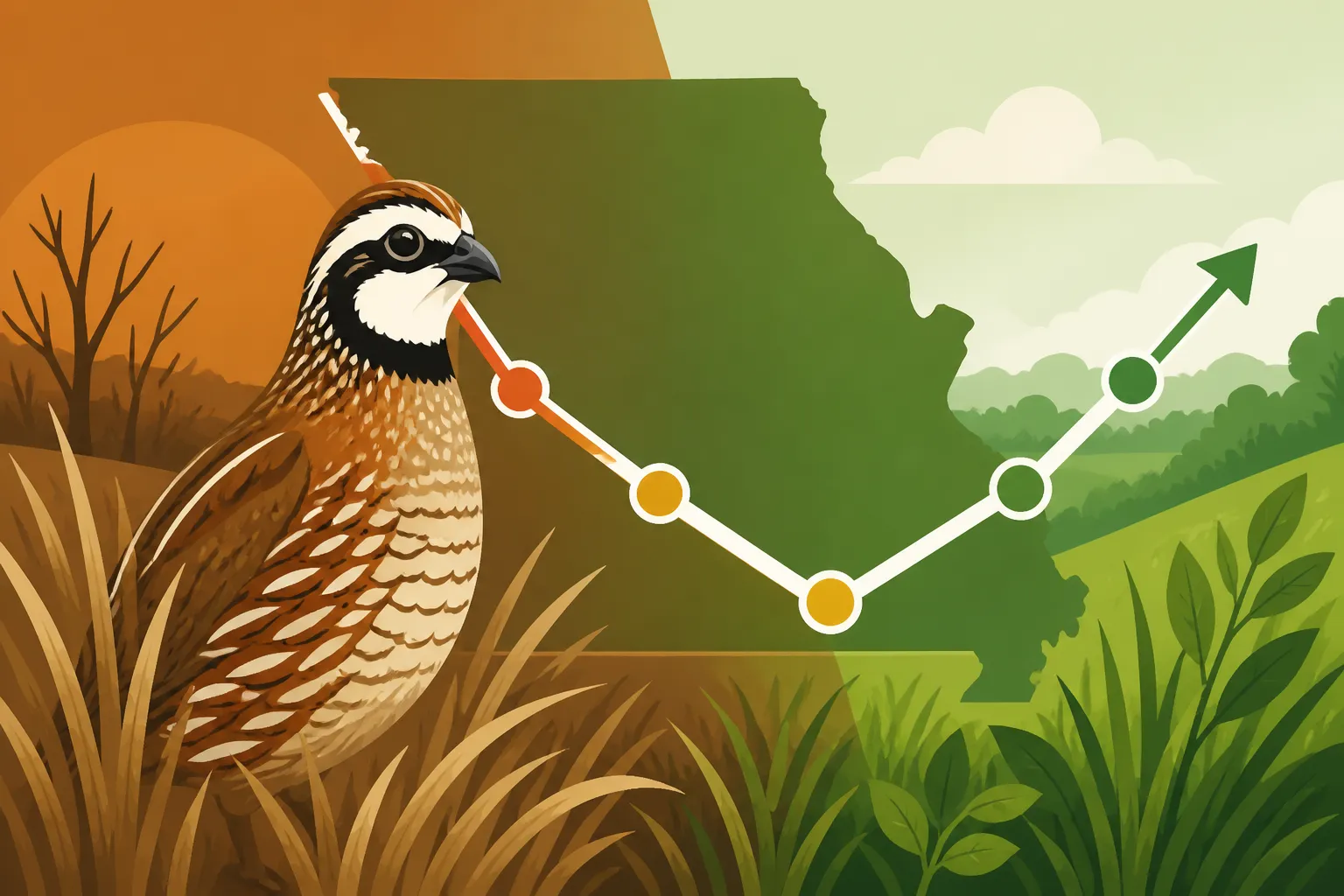
What these surveys consistently show is a long-term downward trend, particularly pronounced since the mid-20th century. While there are occasional year-to-year fluctuations – a good spring might bring a slight bump, for instance – the overall trajectory has been negative. The data confirms what hunters have observed on the ground for decades: fewer calling birds, fewer coveys, and smaller coveys. Biologists often look at Poult-to-Hen Ratios and What They Mean to gauge reproductive success, and low ratios indicate poor hatches or high chick mortality, both of which have been ongoing concerns. These numbers aren't just statistics; they represent a significant ecological shift and a real loss for Missouri's outdoor heritage.
Fighting Back: Missouri's Quail Restoration Efforts
Despite the challenges, many dedicated individuals and organizations in Missouri are working tirelessly to bring back the bobwhite. It’s a monumental task, but through focused habitat work, education, and collaboration, there’s a glimmer of hope for the future.
MDC Initiatives: Programs, Biologists, and Cost-Share Opportunities
The Missouri Department of Conservation (MDC) has long recognized the plight of the bobwhite and has numerous programs aimed at improving quail habitat. They employ private land conservationists and biologists who work directly with landowners, offering technical advice and management plans tailored to specific properties. These experts can help identify critical habitat needs and recommend practices like prescribed burning, disking, native warm-season grass plantings, and establishment of shrubby cover.
MDC also partners with federal programs like the Natural Resources Conservation Service (NRCS) to provide financial assistance and cost-share opportunities for landowners. Programs such as the Conservation Reserve Program (CRP), Environmental Quality Incentives Program (EQIP), and the Conservation Stewardship Program (CSP) offer incentives for converting marginal cropland to perennial cover, creating buffer strips, and implementing other quail-friendly practices. These initiatives are vital because so much of Missouri's land is privately owned. Understanding Missouri Quail Restoration Landscapes is key to seeing where these efforts are concentrated and making a difference. This direct assistance helps bridge the gap between knowing what to do and having the resources to actually do it.
The Role of Landowners: How Private Land Management is Crucial
Given that roughly 93% of Missouri's land is privately owned, the success of any statewide quail restoration effort absolutely hinges on the participation and dedication of private landowners. Farmers, ranchers, and rural property owners hold the keys to creating and maintaining the complex mosaic of habitats that quail need. It's not always easy, as land use decisions are often driven by economic realities, but many landowners are rediscovering the benefits of wildlife-friendly practices.
For example, a farmer might consider converting a small, unproductive corner of a field into a native grass buffer strip, or allowing a fencerow to grow out. A cattle producer might implement rotational grazing to allow pastures to recover and provide nesting cover. These decisions, when aggregated across many properties, can have a profound cumulative effect. Landowners who adopt these practices often find that they benefit not only quail but also other wildlife, improve soil health, and sometimes even enhance aesthetics. It’s a shift in mindset, recognizing that working with nature can be as beneficial as working against it.
Community and Hunter Involvement: Organizations, Education, and Citizen Science
Quail restoration isn't just a government or landowner effort; it's a community endeavor. Organizations like Quail Forever (QF) play a massive role, bringing together passionate hunters and conservationists to implement habitat projects on the ground. QF chapters often work locally to raise funds, provide equipment, and organize volunteer workdays to plant native grasses, conduct prescribed burns, or build brush piles. Their dedication provides a critical boost to habitat efforts.
Education is another key component. Workshops and field days help spread knowledge about effective habitat management techniques to landowners and interested citizens. Citizen science initiatives, where volunteers help with call count surveys or habitat monitoring, provide valuable data to biologists and foster a sense of shared responsibility. Hunters themselves, through their permit purchases and excise taxes on hunting equipment (thanks to the Pittman-Robertson Act), provide substantial funding for these very conservation programs. By engaging with these groups and learning about Finding Coveys on a Restoration Landscape, hunters can directly contribute to the future of Missouri's bobwhites.
Hunting for the Future: What You Can Do
As hunters, we have a unique stake in the future of bobwhite quail. We're often the first to notice changes in wildlife populations, and we have a deep passion for the land and its creatures. Our actions, both in and out of the field, can make a difference.
Supporting Habitat: Small-Scale Changes and Understanding What Quail Need
You don't need to own hundreds of acres to make a difference for quail. Even small properties or partnerships with neighboring landowners can create valuable habitat patches. The core principle is understanding what quail need and trying to provide it. This means diverse cover: areas of native warm-season grasses for nesting, thick, thorny shrubs and small trees for escape cover, and bare ground with forbs for insect production.
Consider creating small brush piles using downed timber or old Christmas trees – these offer immediate, effective escape cover. If you have any open ground, even a small strip, consider planting a diverse seed mix of native wildflowers and grasses, avoiding dense monocultures that don't offer brood cover. Work with local MDC private land specialists or organizations like Quail Forever to get advice tailored to your specific parcel. They can help you devise a plan that provides year-round needs for quail. When planning scouting trips, using mapping tools like GoHunt can help you identify potential areas on public land that might have undergone habitat improvements, or spots on private land that have the right blend of cover for Working Field Edges and Draws for Quail.
Here’s a quick overview of essential habitat features for bobwhite quail:
| Habitat Feature | Quail Need | Importance |
|---|---|---|
| Native Grasslands | Clump-forming, tall grasses (e.g., big bluestem) | Nesting cover, brood rearing, winter thermal protection |
| Brushy Cover | Dense shrubs, briars, small trees | Escape cover from predators, winter thermal cover, loafing areas |
| Annual Weeds/Forbs | Ragweed, partridge pea, legumes | Seed production (food), insect habitat (chick food), open understory |
| Crop Residue | Stubble fields, unharvested grains | Winter food source (if adjacent to cover) |
| Bare Ground | Scattered patches | Dusting, ease of movement for chicks foraging for insects |
| Water Source | Dew, insects, succulent plants, nearby small pond | Essential for survival, though direct free water isn't always critical |
Ethical Hunting and Conservation: Enjoying the Hunt While Advocating for the Species
Hunting bobwhite quail is a tradition deeply cherished in Missouri, and it's something we want to preserve for future generations. Ethical hunting means respecting the resource and understanding that current populations dictate our approach. This might mean adjusting expectations, focusing more on the dog work and camaraderie than on the size of the bag. Adhering to Missouri Quail Daily Bag Limit is not just a rule, but a responsibility.
Beyond the hunt itself, active participation in conservation is paramount. Join a local Quail Forever chapter, volunteer for habitat projects, or simply talk to your neighbors about the benefits of quail-friendly land management. Support organizations and policies that prioritize wildlife habitat. Remember that every hunting permit you buy, especially those for small game, directly contributes to conservation funding through the MDC. By being ambassadors for conservation, we can help ensure that the iconic "bob-white" call continues to echo across the Missouri landscape.
Utilizing Resources and Technology: Tools for Planning and Scouting
In today's world, we have more tools than ever to help us understand and engage with wildlife conservation. The Missouri Department of Conservation's website is a treasure trove of information, offering detailed maps of public hunting areas, habitat management guides, and seasonal forecasts. Using their Missouri Conservation Atlas is a great way to locate areas where quail restoration might be underway.
Digital mapping platforms like GoHunt are invaluable for pre-season scouting, allowing you to examine aerial imagery, topographical maps, and public land boundaries right from your computer or phone. You can identify potential habitat corridors, field edges, and brushy draws that might hold birds. These tools can help you plan your approach, understand property lines, and even track your movements in the field, helping you find those elusive coveys. Whether you're looking for Walking Missouri Quail Country or trying to understand the lay of the land for a new spot, technology, combined with boots on the ground, can greatly enhance your hunting experience and your understanding of quail habitat.
Disclaimer
This article is for general informational purposes only and does not constitute professional advice. Laws, prices and regulations vary by location and change over time. Consult a qualified professional for guidance on your specific situation.