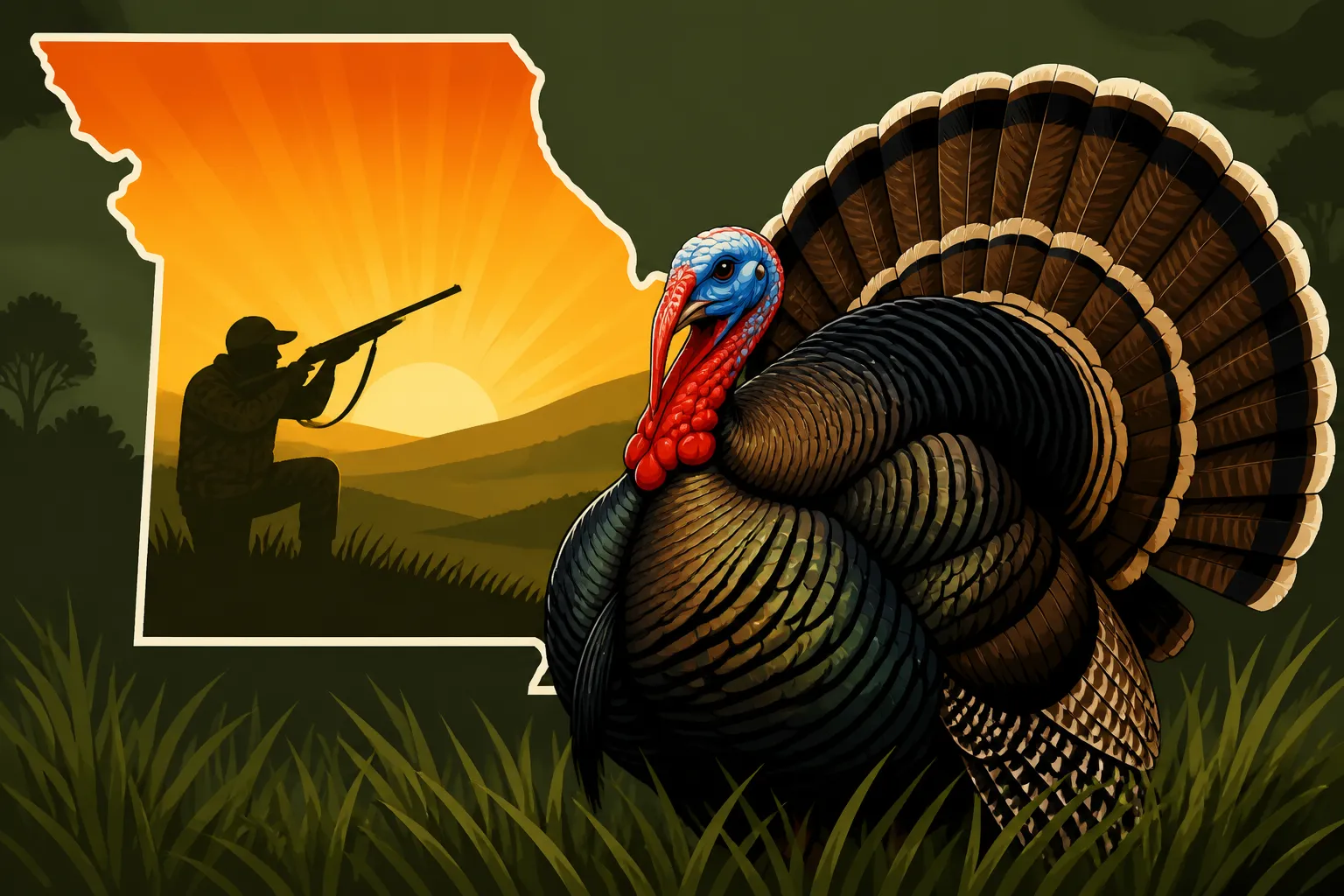
Missouri Record Book Gobblers
The thrill of chasing a Missouri gobbler is something every turkey hunter knows well. But for some, the quest goes beyond just filling a tag – it's about finding that truly exceptional bird, the kind that makes the record book. It's a challenging endeavor, one that requires immense patience, deep woods savvy, and a keen understanding of what separates a good tom from a legendary one. This guide will walk you through what it takes to find, harvest, and submit a Missouri record book gobbler.
Understanding the Missouri Record Book for Wild Turkeys
When we talk about a "record book gobbler" in Missouri, we're almost always referring to the National Wild Turkey Federation (NWTF) scoring system. This isn't just about weight; it's a comprehensive score that takes into account the bird's overall trophy characteristics. Many hunters get caught up in one aspect, like a monster beard, but a true record book bird is impressive in several categories.
The NWTF Scoring System Explained
The NWTF scoring system is universally accepted and provides a consistent way to rank wild turkeys. It combines three key measurements:
- Live Weight (in pounds and ounces): This is straightforward, but remember that turkeys can lose a significant amount of weight quickly after harvest.
- Total Beard Length (in inches, measured to the nearest 1/16th of an inch): If a bird has multiple beards, they are all measured and added together. This is where truly unique birds can rack up big points.
- Total Spur Length (in inches, measured to the nearest 1/16th of an inch): Each spur is measured from the point where it emerges from the scaled leg skin to its tip, along the outside curve. Again, both spurs are measured and added together.
The formula is: Weight (lbs) + (Beard Length x 10) + (Spur Length x 2). So, a bird with long spurs and a heavy body can score very well, even if its beard isn't the longest ever seen. A single long beard will score more points than spur length in the formula, but a bird with multiple beards can quickly climb the ranks. For example, a 23-pound bird with a 10-inch beard and 1.25-inch spurs would score 23 + (10 * 10) + (1.25 * 2) = 23 + 100 + 2.5 = 125.5 points. Understanding this formula is your first step to recognizing a potential record.
Typical Characteristics of a Trophy Gobbler
Beyond the raw numbers, there are visual cues that often point to a record book candidate. These birds are typically older, often 3.5 years old or more.
- Weight: While not the sole factor, a hefty bird is usually a good indicator. You're looking for gobblers well over 20 pounds, sometimes pushing 25 or even beyond in Missouri.
- Beard: A long, thick beard is obvious. What often surprises hunters is a bird with multiple beards. These aren't common, but when you find a tom sporting two, three, or even more beards, its score can skyrocket. You might think your 10-inch beard is impressive, but a multiple-bearded bird with three 6-inch beards instantly adds more points to its score.
- Spurs: Long, sharp, and curved spurs are the hallmark of an older, dominant tom. They'll often be dark, almost black, and dagger-sharp. Spurs of 1.25 inches or more are considered excellent, with anything over 1.5 inches being exceptional. These spurs are critical for fighting and establishing dominance, so they often tell the tale of a seasoned warrior.
Chasing these birds is a different game than simply trying to fill your tag during the Missouri Spring Turkey Season Structure. It demands a commitment to understanding the nuances of the NWTF scoring and what it truly means to find an old, wise tom.
Where Missouri's Biggest Gobblers Roam
You won't find record book gobblers just anywhere. They thrive in specific conditions where they can grow old, avoid predation, and access abundant food sources. Missouri, with its diverse landscape, offers pockets of prime habitat for these giants.
Habitat and Regional Hotbeds
Missouri’s diverse habitats, from the rugged Ozark forests to the agricultural plains of the north, all hold turkeys, but some areas are more conducive to growing truly large birds.
- Ozark Timber: While dense and often challenging, the vast timber tracts of the Missouri Ozarks offer older birds the seclusion they need to mature. Here, food sources like acorns, wild berries, and insects are plentiful. Areas with a good mix of mature timber and scattered clearings or food plots tend to produce exceptional birds. However, hunting pressure can be high in some accessible public land areas, pushing these birds deeper into the wilderness. If you're hunting in the Ozarks, understanding Still-Hunting a Missouri Ozark Hollow can be a crucial skill for locating these elusive birds.
- Northern and Central Missouri Farm Country: The rolling hills and agricultural lands of North Missouri are often overlooked for turkeys, but don't discount them. While timber blocks might be smaller, the incredible food sources from row crops like corn and soybeans provide excellent nutrition, which contributes to heavier body weights and stronger spur growth. These birds often use timbered draws and fencerows as travel corridors and roosting areas. If you can gain access to private land with good timber edges bordering crop fields, you're in a prime location.
The key to finding these trophy zones often lies in knowing where habitat quality meets lower hunting pressure, allowing birds to age gracefully. You can often glean insights from the Missouri Turkey Population Trends to identify areas with robust and healthy populations, which is a good starting point for trophy potential.
Public Land vs. Private Land Opportunities
This is the age-old debate for any trophy hunter.
- Private Land Advantage: Unquestionably, private land generally offers the best chance at a record book gobbler. Lower hunting pressure means birds are less wary and have a better chance to reach older age classes. Landowners who manage their property for wildlife, implement selective harvests, and provide consistent food and cover can create true turkey havens. If you have access to well-managed private ground, dedicate your efforts there. Building relationships with landowners and earning permission is often more fruitful than simply heading to the nearest public area.
- Public Land Challenge: Don't write off public land entirely, but be prepared for a different kind of hunt. Public areas often see significant hunting pressure, especially early in the season. This means gobblers become "educated" quickly. To find a record book bird on public land, you'll need to work harder and smarter. Look for areas that require significant walking, have difficult terrain, or are simply overlooked by most hunters. Deep timber blocks, river bottoms with tricky access, or even areas that require crossing water can hold less pressured birds. Utilizing mapping tools like GoHunt, which can layer public and private land boundaries, topography, and aerial imagery, is absolutely invaluable here. You can use such tools to identify those hard-to-reach pockets, potential roosting sites, or subtle changes in elevation that might steer other hunters away. Researching Missouri Conservation Areas Explained can help you pinpoint promising locations.
Finding these exceptional birds is truly a needle-in-a-haystack scenario, but understanding where the haystacks are richest is your first step. GoHunt's mapping capabilities can be a game-changer for scouting from afar, helping you identify those hidden gems before you even set foot in the woods.
Tactics for Targeting Trophy Toms
Harvesting a record book gobbler isn't just about finding them; it's about outsmarting an old, wise bird that has likely dodged many hunters before. These aren't your typical run-and-gun, aggressive calling birds.
Strategic Scouting and Pre-Season Prep
Before you even think about calling, effective scouting is paramount.
- Locate Roosting and Strutting Zones: Long before the season opens, get out and scout. Listen for gobbling at dawn and dusk. Use locator calls like an owl hooter or crow call to try and get shock gobblers to reveal their positions. Once you locate a roost, don't hunt it too hard. Instead, focus on finding their preferred strutting areas and feeding zones. Look for tracks, wing drags, and droppings in open fields, logging roads, or ridge tops. Knowing where a tom wants to be is half the battle. This kind of pre-season work can make all the difference, especially when combined with mapping tools that show topography and potential travel corridors.
- Observe Behavior and Patterns: Older toms are creatures of habit, but they are also incredibly cautious. Watch them from a distance using good binoculars. Does he always strut in the same field? Does he have a preferred entry and exit route from the roost? Does he have hens with him constantly, or does he sometimes wander alone? Understanding these patterns will inform your setup and calling strategy. Patience here is key; a few hours of quiet observation can save you days of fruitless hunting. Remember that during the Hunting the Peak Rut Week in Missouri these patterns might change as gobblers are more focused on breeding.
Low-Pressure Calling Strategies
Forget aggressive, incessant calling for these birds. Less is often more.
- Soft and Subtle: Older, pressured gobblers have heard it all. Instead of loud yelps and cutts, opt for soft clucks, purrs, and quiet tree yelps. Mimic a shy, receptive hen rather than an aggressive one. The goal is to pique his curiosity and make him come looking for you, rather than challenging him to come to a hen he expects to find easily. Sometimes, no calling at all is the best call. Let him gobble on his own, then offer a few soft sounds.
- Patience is Your Ally: This cannot be stressed enough. These hunts are often long. A record book gobbler might gobble on the roost, fly down, and silently circle your position for an hour before revealing himself. Don't fidget, don't stand up, and certainly don't call every five minutes. Set up in a comfortable spot, perhaps Setting Up Against a White Oak with good concealment, and be prepared to wait. He's heard aggressive calling and seen hunters bust. Make him believe you're just a quiet hen going about her business. This is especially true for Decoy Setups for Pressured Gobblers, where less can often achieve more.
Strategic Setup and Concealment
Your position is critical, especially when dealing with a wary tom.
- Maximize Concealment: Whether you're in a ground blind or free-standing, be absolutely hidden. Use natural cover to break up your outline. Wear full camouflage, including a face mask and gloves. Any flicker of movement or unnatural shape can send an old gobbler packing. If you're using a blind, ensure it's well-brushed in and has been left out for a few days to become part of the landscape.
- Optimal Shot Angles: Position yourself so you have clear shooting lanes in the direction you expect the bird to approach. Record book birds don't give you second chances. Practice shooting from your seated position, especially if you're using a shotgun, to ensure you're comfortable and accurate. Remember to consider Missouri Turkey Shooting Hours and ensure you have enough light for a clean shot. For bowhunters, the challenge is even greater, requiring precise angles and impeccable drawing technique, as discussed in Hunting Turkeys With a Bow.
Submitting Your Trophy: The Official Process
So, you’ve put in the work, outsmarted a magnificent Missouri gobbler, and now you believe you have a record book candidate. Congratulations! The final step is to officially enter your bird into the NWTF records. This process requires precision and adherence to specific rules.
Measuring and Documentation
Once you've harvested your bird, the clock starts ticking for proper documentation and measurement.
- Initial Measurements: While not official, taking preliminary measurements yourself can give you a good idea if you're in the running. Carefully measure the bird's weight, spur lengths, and beard lengths. For spurs, use a flexible tape measure to follow the outside curve from where it exits the leg skin to the tip. For beards, straighten them out without breaking and measure from the base to the longest tip.
- Photographic Evidence: Take clear, well-lit photos of the bird, especially close-ups of the beard(s) and spurs. Capture different angles and include a ruler or tape measure in some shots for scale. This documentation can be helpful for the official measurer and for your own records.
- Protecting the Evidence: The beard and spurs are fragile. If you're not getting it measured immediately, consider carefully removing the fan, beard, and spurs for preservation. Air-dry the beard to prevent rot, and keep the spurs attached to a section of leg bone if possible to prevent damage.
The Official NWTF Submission Process
The NWTF maintains specific guidelines for submitting your trophy.
- Locate an Official Measurer: The most crucial step is to find an NWTF-certified official measurer. These individuals are trained and authorized to take the official measurements needed for record book entry. You can typically find a list of certified measurers on the NWTF website or by contacting your local chapter. Do not attempt to have just any taxidermist or friend measure it officially; it must be a certified NWTF measurer.
- The Measurement Session: The measurer will take all necessary measurements (weight, beard length(s), spur length(s)) according to NWTF standards. They will also inspect the bird for any anomalies or signs of alteration. Be prepared for this to be a thorough process.
- Paperwork and Submission: After the measurements are taken, the measurer will help you complete the official NWTF submission form. This form will include all the bird's details, the measurements, and your contact information. There is typically a small fee associated with record book entries. Once complete, the form is submitted to the NWTF for review and official entry into their records. This process is part of the larger Missouri Record Book Program that recognizes outstanding harvests for various game species.
It's a process that requires attention to detail, but seeing your hard-earned trophy officially recognized alongside other magnificent birds is a rewarding capstone to a truly exceptional hunt.
Here's a quick comparison of average vs. record-book gobbler characteristics to give you a clearer picture:
| Characteristic | Average Missouri Gobbler | Missouri Record Book Gobbler (Minimum Tendency) |
|---|---|---|
| Age | 2-3 years | 3.5+ years, often 4-5 years |
| Weight | 18-21 lbs | 22+ lbs, some over 25 lbs |
| Main Beard | 8-9 inches | 10+ inches (single), or multiple shorter beards |
| Spur Length | 0.75-1.0 inch | 1.25+ inches, often 1.5+ inches |
| Overall Score | 80-100 points | 120+ points (using NWTF formula) |
Remember, these are general tendencies. An average-weight bird with an exceptionally long beard or multiple beards could still be a record book contender. The NWTF score is what truly matters.
Common Mistakes to Avoid
When you've done all the hard work, the last thing you want is to mess up the submission.
- Damaging the Beard or Spurs: Be extremely careful when handling and transporting your bird. A broken beard or spur can significantly reduce its score or even disqualify it. Protect these delicate parts.
- Inaccurate Self-Measurement: While useful for initial assessment, don't rely on your own measurements for the official entry. An NWTF measurer has specific tools and techniques to ensure accuracy and consistency.
- Procrastination: Don't delay finding a measurer. The fresher the bird, the more accurate the weight measurement. While spurs and beards can be measured later if preserved, getting the weight recorded properly early on is ideal.
- Not Understanding the Rules: Ensure you understand the specific NWTF rules regarding multiple beards, broken spurs, and other nuances. Your measurer can clarify any questions you have.
By following these steps and being meticulous, you can ensure that your magnificent Missouri gobbler receives the recognition it deserves in the record books, a testament to a truly memorable hunt.
Disclaimer
This article is for general informational purposes only and does not constitute professional advice. Laws, prices and regulations vary by location and change over time. Consult a qualified professional for guidance on your specific situation.