White-Fronted Geese in Missouri
For many Missouri waterfowlers, the sight of white-fronted geese, often affectionately called "specklebellies," can be a real head-scratcher. They're not as numerous as Canada geese, and they don't descend in the overwhelming blizzards of snow geese, making them a unique and challenging target. This guide is here to demystify these distinctive birds, helping you understand their patterns, how to identify them, and the best strategies to successfully hunt white-fronted geese in the Show-Me State.
Understanding White-Fronted Geese in Missouri
White-fronted geese are truly a special bird on the Missouri landscape, offering a different kind of challenge and reward than their more common cousins. Recognizing them and understanding their unique behaviors is the first step toward a successful hunt. These aren't just another goose; they're a nuanced part of the migratory mosaic that passes through our state.
Identifying "Specklebellies" in the Field
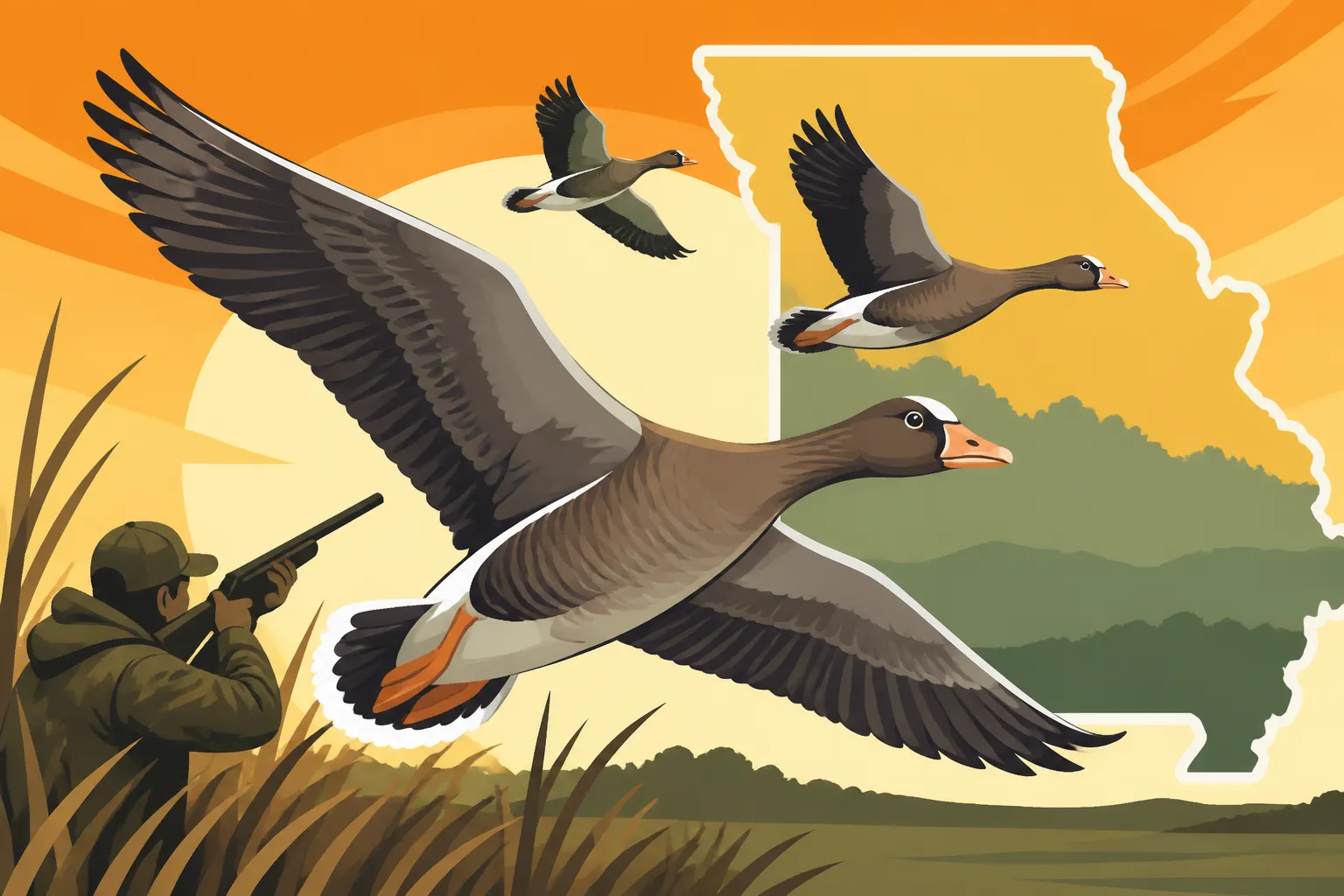
When a flock of geese is coming in, quick identification is absolutely critical, not just for knowing what you're shooting at, but for appreciating the bird itself. White-fronted geese stand out from the crowd with several key characteristics. First, their size is generally somewhere between a large duck and a Canada goose – a mid-sized bird, not quite as bulky as a mature honker. The most defining feature, and the one that gives them their popular nickname "specklebelly," is the mottled black barring across their chest and belly. This isn't just a faint shadow; it’s a distinct pattern of dark blotches against a lighter, often white, belly.
Beyond the belly, look for their bill, which is typically a bright pink or orange, contrasting sharply with their otherwise grayish-brown body. Their legs and feet are also a vibrant orange. Their head and neck are brown, lacking the distinct black neck and white chin strap that defines a Canada goose. Perhaps even more telling than their visual appearance is their voice. White-fronts have a very distinctive, high-pitched "ki-yi" or "laughing" call that is unmistakable once you've heard it. It's nothing like the deep honk of a Canada or the constant chatter of snow geese. Learning this call by ear can often be your first clue that a flock of specklebellies is in the air.
Correct identification isn't just about showing off; it's about adhering to regulations and appreciating the nuances of waterfowl hunting. Knowing your target helps you avoid accidentally taking a protected species or exceeding the bag limit for a particular goose. Plus, there's a certain satisfaction that comes from picking out a "speck" from a mixed flock of high-flyers, knowing precisely what you're after. These birds offer a unique trophy for the Missouri waterfowler who takes the time to learn their ways.
Migration Patterns and Timing
White-fronted geese are true travelers, undertaking epic migrations from their Arctic breeding grounds in places like Alaska and northern Canada. Their journey brings them down the central and Mississippi Flyways, and Missouri sits squarely in the path of many of these intrepid birds. Understanding when and why they move through our state is paramount for any hunter hoping to intercept them.
Typically, the vanguard of white-fronts begins to arrive in Missouri around late October, often spurred on by the first significant cold fronts pushing south from the northern plains. The peak of their migration through the state generally occurs throughout November and into early December, coinciding with the main push of other waterfowl species. This is when you'll see the largest numbers of these birds, often mixed in with Canada geese or even some snow geese. However, their presence can be highly dependent on weather patterns. A mild autumn might delay their arrival, while an early, severe cold snap up north can send them flooding into Missouri ahead of schedule. As winter progresses, many white-fronts continue their journey further south, heading towards their traditional wintering grounds along the Gulf Coast, particularly in Louisiana and Texas.
While many pass through, some smaller populations of white-fronted geese may decide to spend part or even all of the winter in Missouri if food sources are abundant and harsh weather is intermittent. If conditions remain mild, they can linger well into January. Conversely, as spring approaches, you might witness smaller reverse migrations in late February and March as they begin their journey back to the breeding grounds. Keeping an eye on weather forecasts in Manitoba, Saskatchewan, and even further north can give you valuable clues about when to expect the next wave. Websites and apps like GoHunt can provide valuable insights into real-time bird movements and wintering ground conditions, helping you predict when the "specks" might be pushing into our neck of the woods.
Preferred Habitats in Missouri
White-fronted geese, much like other goose species, have specific habitat preferences that dictate where you'll find them in Missouri. They are primarily driven by two critical needs: abundant food sources and safe roosting areas. If you can locate these two elements, you're well on your way to finding the birds.
For feeding, white-fronts are big fans of agricultural fields. They thrive on waste grain, particularly corn and soybeans, left over after harvest. As the season progresses, they'll also seek out winter wheat fields and other green browse. Unlike some ducks that might prefer small, isolated pockets, white-fronts often feed in large, open fields where they have clear sightlines to detect predators. You'll frequently find them in the vast agricultural landscapes of northern and central Missouri, often alongside Canada geese or even snow geese. Prime areas include the regions around major conservation areas that manage land for waterfowl, and privately owned farmlands that rotate crops. Field Hunting Geese in North Missouri means understanding these agricultural patterns.
When it comes to roosting, white-fronts prefer large, open bodies of water where they feel secure from predators. This can include large reservoirs, the expansive stretches of the Missouri and Mississippi rivers, or the large wetland complexes managed by the Missouri Department of Conservation (MDC) and federal agencies. Think of places like Grand Pass Conservation Area, Swan Lake National Wildlife Refuge, and other similar water-rich areas. These roosting sites provide a safe haven overnight and a place to loaf during the middle of the day. The trick for hunters is to identify the fields they are using, which are often within a reasonable flight distance of these major water bodies. It's a classic pattern: roost on big water, fly to feed in nearby fields, then return to the water. Understanding this daily routine is crucial for setting up a successful hunt. You can often see them working the Missouri River Sandbar Access if your hunting zone is along the river.
Hunting Strategies for White-Fronted Geese
Hunting white-fronted geese requires a somewhat different approach than hunting Canada geese. They tend to be warier, less tolerant of hunting pressure, and respond to different cues. Success with specklebellies often hinges on meticulous preparation, precise execution, and a deep understanding of their unique behaviors. It's a game of finesse, not just brute force.
Decoy Spreads and Calling Techniques
When it comes to decoys for white-fronted geese, less is often more. Unlike the massive spreads you might deploy for snow geese, or even the moderately large spreads for Canadas, white-fronts often respond best to smaller, more natural-looking setups. Think family groups. A spread of a dozen to two dozen realistic full-body or shell decoys, arranged in loose family clusters with ample landing zones, can be far more effective than a sprawling field of plastic. Motion decoys, even subtle ones like a flagger or a few rotary-wing decoys mixed in, can add crucial realism to draw their attention. The key is to make your spread look inviting and natural, as if a small group of birds has confidently landed to feed.
Calling is perhaps the most distinctive aspect of hunting white-fronts. Their high-pitched "ki-yi" or "laughing" call is unique and requires dedicated practice to master. It's not a deep, resonant honk; it's a more nasal, quick succession of notes. You'll want a dedicated white-front call, as a Canada goose call simply won't cut it. Start with short, sharp clucks to get their attention, then transition into the characteristic laughing sequence. Often, they'll respond well to a "come back" call – two short, sharp "ki-yi" notes followed by a longer, drawn-out "ki-yi." Listen carefully to the birds as they approach and try to mimic their cadence and intensity. White-fronts are often responsive to calling, but they can also be very shy if they hear something unnatural. Using data available through services like GoHunt might even offer insights into regional population trends and preferred calling cadences based on reports, giving you an edge in mimicking what local birds are responding to.
Scouting for Success
If there's one golden rule for hunting white-fronted geese, it's that scouting is absolutely non-negotiable. These birds are incredibly wary and are less forgiving of mistakes or hunting pressure than many other waterfowl species. They are quick to abandon a field if they feel disturbed, making thorough pre-hunt reconnaissance essential. You can't just pick a random field and hope for the best; you need to know exactly where they want to be.
Your scouting mission should focus on two main objectives: locating feeding fields and identifying their daily flight patterns. This means dedicating time, often several days before your hunt, to observe from a distance. Get out early in the morning, well before shooting light, and stay until after dark. Drive back roads, use a good pair of binoculars or a spotting scope, and look for where the geese are landing and feeding. Pay close attention to the specific parts of the field they prefer – is it near a fencerow, in the middle, or on a slight rise? Note the direction they come from and go to, as this will help you understand their Reading Roost-to-Field Flight Lines. Knowing exactly where they want to be will help you determine the best placement for your blinds and decoys.
It's also crucial to identify their roosting areas. While you won't hunt them directly on the roost (and it's often illegal or impractical), knowing where they spend the night helps confirm their daily travel routes. Large reservoirs or wide stretches of the Missouri River are common roosting spots. Observing their morning fly-out and evening fly-in patterns will give you invaluable information about which fields they're targeting. Remember, white-fronts will often abandon a heavily pressured field. So, the fresher your scouting information, the better your chances. This deep dive into Scouting Missouri Public Land Before Season (and private land, if you have access) will pay dividends.
Field Versus Water Hunting
The choice between field hunting and water hunting for white-fronted geese in Missouri largely depends on the birds' habits, available access, and your equipment. For the most part, field hunting is the predominant and most effective method for targeting specklebellies.
Field hunting requires excellent concealment and a well-placed decoy spread. White-fronts typically feed in open agricultural fields, making layout blinds or natural cover in fencerows, standing corn, or cut crop stubble your best friend. They have exceptional eyesight and will shy away from anything unnatural. Digging a pit blind, if permissible and practical, offers the ultimate concealment, but high-quality layout blinds brushed in with local vegetation can be equally effective. The goal is to disappear completely into the landscape. Once concealed, your decoy spread and calling become paramount to drawing them into gun range. Many hunters find success when utilizing Layout Blinds in Harvested Fields for this exact purpose.
Water hunting for white-fronts is less common but can be productive under specific circumstances. Sometimes, white-fronts will loaf or feed in shallow water areas within wetland complexes or even small ponds, especially if they feel unpressured. If you’re duck hunting in a flooded timber hole or a shallow wetland marsh, you might occasionally have specklebellies decoy into your duck spread. However, actively targeting them over water is generally more challenging because their primary feeding grounds are dry fields. If they are consistently using a particular shallow water body that offers good concealment and safety, it can be a unique and rewarding hunt. The main takeaway is that while white-fronts are waterfowl, their behavior often dictates a field-first approach to hunting them in Missouri.
Key Considerations for Missouri White-Fronted Goose Hunters
Successfully hunting white-fronted geese in Missouri isn't just about knowing where they are or how to call them in; it's also about understanding the rules, having the right gear, and approaching the hunt with a strong sense of ethics and respect for the resource. These factors can make or break your experience, ensuring both legality and enjoyment.
Regulations and Bag Limits
Navigating the rules and regulations set by the Missouri Department of Conservation (MDC) is paramount before you ever step foot into a field or marsh. Regulations for waterfowl, including white-fronted geese, can be dynamic, changing from year to year based on population surveys and management goals. Always consult the current year's Missouri Migratory Bird and Waterfowl Hunting Digest, which is available online through the MDC website or at permit vendors.
Specifically for white-fronted geese, pay close attention to the established seasons and daily bag limits. These are typically set as part of the broader goose seasons, but white-fronts often have a distinct, more conservative bag limit compared to Canada or snow geese. You'll need a valid Missouri hunting permit, a Missouri Migratory Bird Hunting Permit (which includes HIP registration), and a Federal Duck Stamp. All these permits are non-negotiable. Missouri Goose and Snow Goose Seasons will detail when you can hunt, and Missouri Federal Duck Stamp Requirement and Missouri HIP Registration for Migratory Birds cover essential permits. Furthermore, remember that all migratory bird hunting in Missouri, including geese, requires the use of non-toxic shot. This means steel, bismuth, or other approved alternatives, as lead shot is prohibited. Ignoring these regulations not only puts you at risk of fines and permit revocation but also jeopardizes the future of waterfowl hunting for everyone.
Gear Essentials
Having the right gear is crucial for a comfortable, effective, and safe white-fronted goose hunt in Missouri. Since you'll primarily be field hunting, proper concealment is at the top of the list.
A high-quality layout blind is often indispensable. Choose one that blends seamlessly with the typical crop stubble or field edges in your hunting area and make sure to thoroughly brush it in with natural vegetation from the immediate surroundings. If you're hunting in areas with taller cover, a ghillie suit or natural blind built into a fencerow might be more appropriate. Beyond concealment, consider your decoy spread. As mentioned earlier, a smaller spread of realistic full-body or shell white-front decoys is usually best, supplemented with some motion if possible. A dedicated, high-quality white-front call is a must-have; practice with it extensively before the season to master their distinctive "ki-yi" vocalizations.
Missouri weather during goose season can be notoriously unpredictable, swinging from mild to freezing in a matter of hours. Layered clothing that is both warm and waterproof is essential. Think good base layers, insulating mid-layers, and a durable, waterproof outer shell. Layering for a Missouri Deer Stand principles apply perfectly here. Insulated, waterproof boots are also critical to keep your feet dry and warm during long sits. A reliable 12-gauge shotgun, patterned with your chosen non-toxic loads, is standard. Finally, for scouting, a good pair of binoculars or a spotting scope will be invaluable for locating birds without disturbing them. Services like GoHunt can sometimes offer insights into popular gear choices or reviews, helping you select the right equipment for your needs. A solid pair of Binocular Choice for Missouri Whitetails is a great start.
Respecting the Resource
True sportsmen understand that hunting is a privilege, not a right, and that respecting the resource is fundamental to its continued enjoyment. This means more than just following the letter of the law; it means upholding ethical standards that honor the birds we pursue and the lands we hunt.
One key aspect of respecting the resource is striving for clean, ethical kills. Aim for vital areas, use appropriate loads and chokes, and only shoot at birds within your effective range. Avoid "sky-busting," which often results in wounded birds that are difficult to recover. Speaking of recovery, always ensure that every bird you shoot is retrieved. This might mean having a well-trained retriever or being prepared to track a downed bird diligently. No bird should be wasted. When hunting on private land, always obtain explicit permission from the landowner before hunting, and be a good guest. Leave no trash, respect their property, and consider offering some of your harvest as a token of appreciation. For public lands, practice good etiquette: share the space with other hunters, avoid setting up too close to others, and pack out everything you pack in.
Finally, remember that your participation in hunting, including purchasing permits and stamps, directly contributes to wildlife conservation efforts. The funds generated go towards habitat restoration, research, and management programs that benefit not just white-fronted geese, but countless other species. By being a responsible and ethical hunter, you play a vital role in ensuring that future generations will also have the opportunity to pursue these magnificent "specklebellies" in Missouri.
White-Fronted Goose vs. Other Common Geese in Missouri
To help you quickly distinguish white-fronted geese from other species you might encounter in Missouri, here's a comparative table highlighting their key characteristics.
| Characteristic | White-Fronted Goose ("Specklebelly") | Canada Goose | Snow Goose |
|---|---|---|---|
| Size | Medium | Large | Medium to Large |
| Body Color | Grayish-brown | Grayish-brown to Black | White (blue phase is dark mottled) |
| Belly Markings | Distinctive black bars/splotches | No black bars, sometimes lighter belly | Usually clean white (blue phase is mottled) |
| Bill Color | Pinkish-orange | Black | Pinkish with "grinning patch" |
| Leg/Feet Color | Orange | Black | Pinkish-orange |
| Head/Neck | Brown head, no white chin strap | Black neck, white chin strap | White head (blue phase dark) |
| Call | High-pitched "laughing" or "ki-yi" | Deep "honk" or "h-ronk" | High-pitched "kow-wow" or "gabble" |
| Typical Habitat | Open agricultural fields (waste grain), large water | Fields, varied water, parks, urban areas | Open fields, large wetlands, coastal areas |
Disclaimer
This article is for general informational purposes only and does not constitute professional advice. Laws, prices and regulations vary by location and change over time. Consult a qualified professional for guidance on your specific situation.