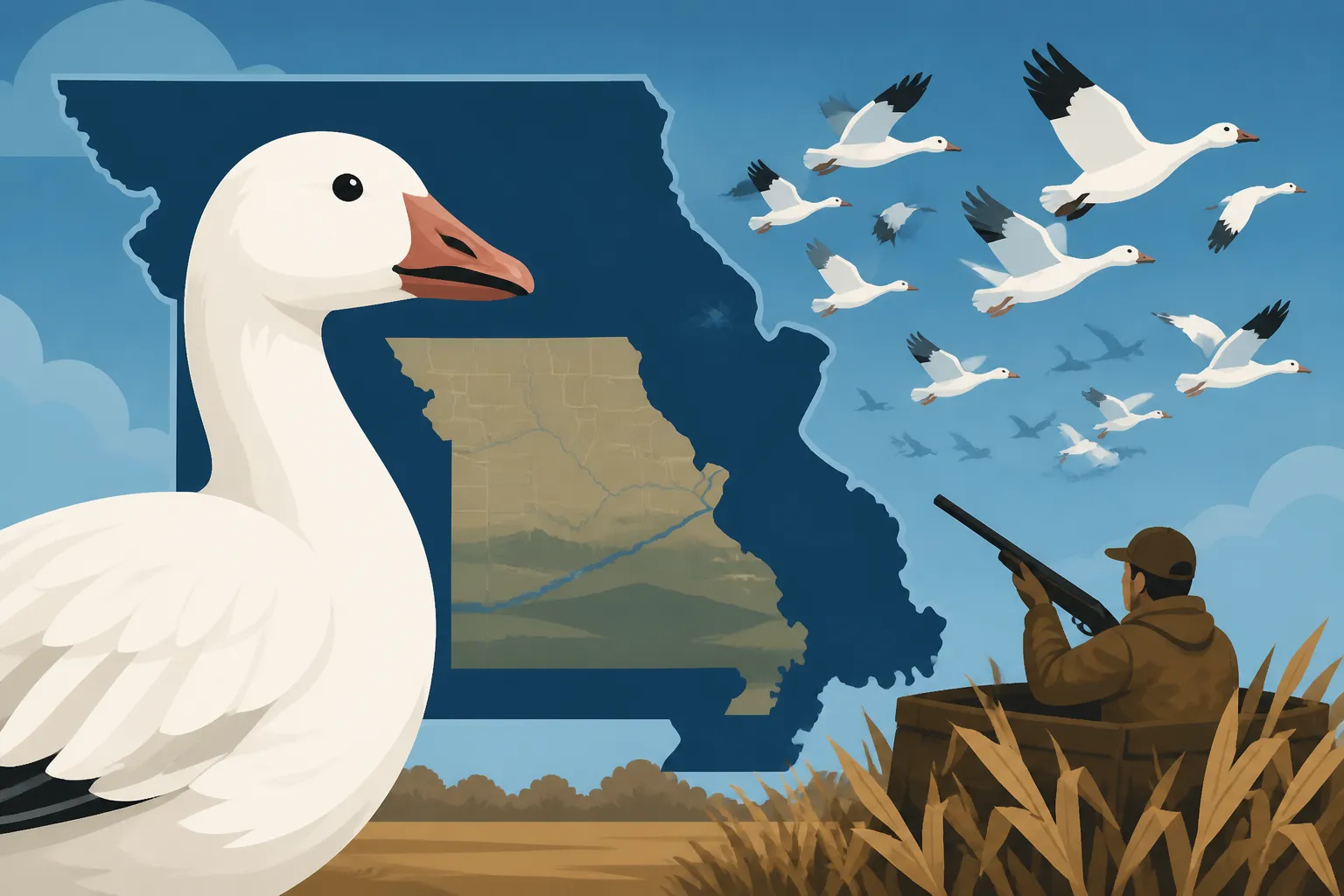
Snow Goose Numbers in Missouri
If you've ever driven through rural Missouri in late winter or early spring and seen a distant field shimmering white, or heard what sounds like a thousand barking dogs descending from the sky, then you've witnessed the incredible phenomenon of snow geese. These birds move through our state in numbers that can truly boggle the mind, offering both an amazing wildlife spectacle and a unique hunting challenge. But understanding why they come here and how many you might see can feel like trying to predict the weather. This guide will help you unpack the complex factors that influence snow goose numbers in Missouri, giving you a better grasp of these fascinating migrants.
The Annual Migration Spectacle: Why Snow Geese Choose Missouri
Missouri sits at a critical crossroads for migratory birds, especially those following the mighty Mississippi Flyway. For snow geese, our state isn't just a fly-over zone; it's a vital pit stop on their incredible journey, and understanding why they commit so heavily to Missouri helps explain the massive numbers we often witness.
Missouri's Place on the Central Flyway
Imagine a vast, invisible highway stretching from the Arctic tundra all the way down to the Gulf Coast. That's essentially the Central Flyway, and Missouri is strategically located right in the heart of it for many waterfowl species, including snow geese. As they depart their northern breeding grounds, often in the Canadian Arctic, they begin a long trek that requires frequent refueling stops. Our state, with its expansive agricultural fields and numerous water bodies, offers precisely what these energy-demanding travelers need.
What makes Missouri so attractive is a combination of abundant food and relatively consistent water sources. Our diverse farming landscape, particularly the vast corn and soybean fields of northern and central Missouri, provides a bounty of waste grain after harvest. These fields are literal buffets for snow geese, allowing them to replenish their fat reserves crucial for continued migration or overwintering. Even when temperatures drop, if fields remain accessible and unfrozen, the geese will linger. They also seek out large bodies of water – everything from major rivers like the Missouri and Mississippi, to large reservoirs, and especially the numerous managed wetland areas across the state – for safe roosting spots at night. These areas offer protection from predators and a place to rest undisturbed, away from human activity.
The Urge to Migrate and Wintering Habits
The annual migration of snow geese is driven by instinct, a deep-seated urge to move from their harsh Arctic breeding grounds to more hospitable wintering areas. While many snow geese push further south into states like Arkansas, Louisiana, and Texas, a significant portion chooses to shorten their journey and spend considerable time, or even the entire winter, right here in Missouri. This decision is heavily influenced by weather conditions further north and the availability of resources here. If early winter is mild in Missouri and food is plentiful, many will stop and hold, swelling our state's numbers.
Their wintering habits in Missouri are often quite predictable once you understand them. During the day, massive flocks, sometimes numbering in the tens of thousands, will fan out across agricultural fields, grazing voraciously on waste grain. As dusk approaches, these same enormous flocks will lift off, creating a cacophony of sound and a swirling blizzard of white as they make their way to large, open water bodies for safety. Understanding these daily movements—from roost to feed and back again—is key to predicting where you might find them and is an important part of scouting, whether you're a birdwatcher hoping for a photograph or a hunter planning a spread of decoys. Tracking these patterns can be greatly aided by tools that show public land and water access points. Field Hunting Geese in North Missouri and Reading Roost-to-Field Flight Lines delve deeper into how to capitalize on these movements.
Understanding Missouri's Snow Goose Population Dynamics
Missouri's relationship with snow geese is a story of abundance, management challenges, and fluctuating numbers, all influenced by broad ecological factors and human intervention. These aren't just any birds; they are a species whose populations have exploded to a degree that is both remarkable and problematic.
Historical Boom and Current Abundance
For decades, wildlife biologists have observed a dramatic and sustained increase in the populations of lesser snow geese, particularly the mid-continent population that moves through Missouri. This isn't a small bump; it's a significant boom that has seen their numbers grow exponentially. The primary driver behind this population explosion is thought to be the vast expansion of agricultural lands in the Great Plains, which provides an almost unlimited food supply for them during migration and winter. They essentially adapted brilliantly to a changing landscape.
While this abundance is impressive, it's not without its drawbacks. Such high numbers of snow geese exert immense pressure on their fragile Arctic breeding grounds. They can literally strip the tundra bare, destroying vegetation that takes decades to recover and impacting other species that rely on that habitat. Here in Missouri, while they clean up waste grain, their sheer numbers can sometimes cause localized crop damage if they hit fields before or during harvest, or if specific fields become a concentrated feeding ground. The current abundance reflects a success story in terms of species resilience, but also a significant conservation challenge in managing their ecological impact across their entire range.
Factors Influencing Local Numbers
While the overall population trend for snow geese has been upward, the specific numbers you encounter in Missouri can vary wildly from year to year, and even week to week, due to several key factors. It's not a static scenario; it's a dynamic, ever-changing picture.
One of the biggest influencers is weather patterns. A mild winter across the northern states might mean fewer snow geese push all the way into Missouri, as they find sufficient food and open water further north. Conversely, a sudden cold snap and heavy snow cover in Iowa or Nebraska can trigger a mass exodus, driving huge numbers of birds into Missouri in a matter of days. Freezing temperatures that lock up water bodies will push them out of specific roosting areas, forcing them to find new ones. Sustained cold can deplete food sources, prompting them to move further south. Cold Weather Sitting Strategy is often paramount when the geese are present.
Habitat changes also play a role. While agriculture generally benefits snow geese, shifts in crop rotation, harvesting schedules, or local wetland management can influence where they decide to concentrate. Managed wetland areas, in particular, aim to provide habitat for a variety of waterfowl, and the management decisions regarding water levels and food plots can attract or deter large snow goose flocks.
Finally, hunting pressure can be a significant factor in local dispersal. Snow geese are smart birds, and consistent hunting pressure in one area will often cause them to move to less disturbed locations, even within the same county or region. They learn quickly, becoming warier and changing their feeding and roosting patterns to avoid hunters. This means that while numbers might be high, their distribution can be unpredictable. This leads to unique hunting challenges and the need for adaptable strategies, which is why the Missouri Light Goose Conservation Order exists, allowing for extended seasons and methods to help manage these prolific birds.
Here's a quick look at how various factors influence snow goose presence in Missouri:
| Factor | Impact on Missouri Numbers | Details |
|---|---|---|
| Weather | Highly Variable (Increase/Decrease) | Mild winters north may mean fewer birds pushing south; severe northern weather drives large numbers into MO. Cold fronts and ice can push them further south or force them to specific open water. |
| Food Availability | Major Attractor (Increase) | Abundant waste grain in agricultural fields (corn, soybeans) provides critical energy for migration and overwintering. A good harvest year often means more residual food. |
| Water Roosts | Essential for Presence (Increase) | Large, open water bodies (rivers, reservoirs, managed wetlands) are necessary for safe night roosting. Availability of open water dictates where they can stay during colder periods. |
| Hunting Pressure | Local Dispersal (Variable) | Intense, consistent hunting pressure in one area can cause flocks to abandon that area for less disturbed ground, even if food is still present. Can redistribute birds across a region without necessarily reducing overall numbers. |
| Conservation Order | Management Tool (Aims to reduce overall population) | Allows for liberal hunting opportunities (extended seasons, no daily bag limits, electronic calls, unplugged guns) to help manage the super-abundant mid-continent population and mitigate habitat damage on breeding grounds. Affects hunter opportunity more than immediate MO numbers. |
Tracking and Observing Snow Goose Numbers
Understanding the broad trends of snow goose populations is one thing, but knowing where they are right now in Missouri is another. For hunters and bird enthusiasts alike, effective scouting and information gathering are paramount to making the most of their time in the field.
Conservation Efforts and Surveys
Wildlife agencies, including the Missouri Department of Conservation (MDC), monitor snow goose populations as part of larger waterfowl management efforts. While snow geese are incredibly numerous, understanding their distribution and overall population health is crucial. Biologists use various methods to estimate these numbers, including aerial surveys flown over key wintering areas and migration corridors. These surveys provide broad estimates of the number of birds present at a given time across larger regions, giving insight into how many are actually hitting the state.
Beyond aerial surveys, hunter harvest data is also a critical piece of the puzzle. Every time a hunter checks in a snow goose, that data contributes to understanding harvest rates and trends. This helps inform management decisions, particularly for the special Missouri Light Goose Conservation Order which aims to reduce the overall population. By combining these different data sources, conservation agencies can form a more complete picture of snow goose numbers, both on a regional and continental scale. While these numbers aren't usually available in real-time for specific fields, they provide a valuable context for understanding the species' status.
Practical Tips for Finding Flocks in Missouri
Finding snow geese in Missouri often comes down to persistent scouting and a good understanding of their habits. These birds are highly visible and vocal, which are definite advantages. Your eyes and ears are your best scouting tools.
First, listen for their distinctive calls. A distant field with tens of thousands of snow geese sounds like a bustling dog kennel, a constant cacophony of barks, yelps, and honks. This can carry for miles on a calm day. Second, look for large white patches in fields, especially after corn or bean harvest. Their bright white plumage stands out, even from a distance. Often, they'll be in fields that are relatively undisturbed, near major water sources for roosting. You might also see them in flight, long wavy lines or massive swirling tornadoes of white, moving between roosting and feeding areas.
When it comes to figuring out where to look, and critically, where you can legally access, that's where modern mapping tools can be a game-changer. Services like GoHunt provide detailed satellite imagery and property line overlays, helping you identify potential feeding fields, nearby water bodies, and crucially, public land access points or properties where you might seek permission. You can analyze terrain, spot potential approach routes, and even mark observations directly on the map. This kind of detailed information is invaluable for narrowing down your search, whether you're looking for a hunting spot or simply a great place to observe these magnificent birds. Remember, seeing them is one thing; getting close enough for a shot or a clear photograph often requires strategic planning based on accurate spatial data. Checking out Hunting a Missouri Fencerow Between Fields can also offer insights into finding accessible edges where geese might feed.
Management and Hunter Opportunity
The sheer numbers of snow geese have necessitated specific management strategies, creating unique opportunities and challenges for hunters in Missouri. It's a prime example of wildlife abundance directly impacting conservation policy and hunting regulations.
The Light Goose Conservation Order
The impressive growth in snow goose numbers, while a testament to their adaptability, has led to significant ecological concerns on their Arctic breeding grounds. To address the potential for irreversible habitat degradation caused by overgrazing by too many geese, a special federal framework known as the Light Goose Conservation Order was established. Missouri, like many other states along the flyways, participates in this order.
What does this mean for Missouri? It translates into incredibly liberal hunting regulations specifically for snow geese, designed to increase hunter harvest and help reduce the overall population. During the Conservation Order, which typically runs in late winter and early spring, hunters enjoy:
- Extended Seasons: The hunting period is much longer than regular waterfowl seasons, often spanning several months.
- No Daily Bag Limit: You read that right – there's no cap on how many snow geese you can harvest in a single day.
- Expanded Methods: Hunters are often allowed to use unplugged shotguns (meaning they can hold more than three shells) and electronic calls, which mimic the loud, complex vocalizations of a snow goose flock.
This order is a unique response to an overpopulation issue and stands in stark contrast to the highly regulated seasons for other waterfowl like mallards or Canada geese. It's a direct effort to use hunting as a primary management tool to alleviate the environmental pressure these birds exert on their northern homes. For hunters, it represents an unparalleled opportunity to experience fast-paced, high-volume action. For full details on dates and specific regulations, always consult the Missouri Goose and Snow Goose Seasons publication from the MDC.
Challenges and Rewards for Hunters
Hunting snow geese, particularly during the Conservation Order, is an experience unlike almost any other in the waterfowl world. While the liberal limits sound easy, it presents its own set of formidable challenges, but the rewards are equally grand.
One of the biggest hurdles is the sheer volume of gear required. To effectively decoy large flocks of snow geese, hunters often deploy spreads of hundreds, if not thousands, of decoys. These can range from simple silhouettes and windsocks to full-bodied "sentry" decoys. Setting up and tearing down such an enormous spread is physically demanding work, especially in muddy fields or adverse weather. Blinds are another consideration, as these birds are incredibly wary. Layout blinds, designed to conceal hunters lying flat in fields, are a common choice, as covered in Layout Blinds in Harvested Fields.
Beyond the gear, these birds are incredibly intelligent and prone to flaring away from anything that looks out of place. Calling effectively requires skill, and even with electronic calls, replicating the nuanced sounds of a convincing flock is an art form. Success often hinges on finding the "X" – the specific field or spot where the geese want to be – and getting there before anyone else, preparing for their arrival. This involves endless scouting, observing flight patterns, and understanding their preferred feeding areas. This is where tools like GoHunt, with its detailed maps, can become crucial for pre-season scouting and identifying potential access points for these large setups.
Despite the challenges, the rewards are immense. Witnessing thousands of snow geese cup their wings and descend into your decoy spread, the air filled with their calls and the rush of their wings, is an adrenaline-pumping experience that few other hunts can match. It's a chance to engage with a truly wild and abundant resource, contribute to conservation efforts, and fill your freezer with delicious wild game. It's a testament to the thriving populations that call Missouri a temporary home on their incredible journey.
Disclaimer
This article is for general informational purposes only and does not constitute professional advice. Laws, prices and regulations vary by location and change over time. Consult a qualified professional for guidance on your specific situation.