Which Turkey Subspecies Missouri Holds
There’s a common misconception that because states often have diverse wildlife, Missouri must be home to a smorgasbord of wild turkey subspecies. Many passionate turkey hunters, especially those new to our beautiful state or who have hunted elsewhere, often wonder if they might encounter a Merriam's, a Rio Grande, or perhaps even some kind of hybrid while out in the timber. It’s an understandable question, given the widespread distribution of wild turkeys across North America. This guide will cut through the speculation and dive deep into the fascinating reality of Missouri's wild turkey population, focusing on the specific subspecies that makes its home in our woods and fields, and why understanding it is key to your hunting success.
Understanding Missouri's Wild Turkey Heritage
Missouri's wild turkey story is a testament to dedicated conservation efforts and the incredible resilience of a truly iconic game bird. It wasn't always the turkey hunting paradise we know today. There was a time, not so long ago, when hearing a gobble echo through the Missouri hills was a rare and treasured sound, a far cry from the vibrant, widespread populations we enjoy now.
The Ghost of Seasons Past: The Eastern Wild Turkey's Journey
To truly appreciate the turkey we have, it helps to understand where we've been. In the early 20th century, due to unregulated hunting and massive habitat destruction from logging and agricultural expansion, wild turkeys in Missouri were nearly wiped out. Imagine a spring woods with no gobbling, no drumming – just silence where a vibrant population once thrived. It’s a sobering thought, one that really drives home the importance of conservation. Thankfully, through arduous trap-and-transfer programs initiated in the mid-20th century, primarily led by our dedicated conservation department, the Eastern wild turkey was meticulously reintroduced and nurtured back to health. These efforts were a monumental success, slowly but surely bringing the gobbling thunder back to our landscapes. This intensive focus on restoring the native Eastern subspecies shaped the genetics of our current flock.
Why Subspecies Matter to Hunters
For the casual observer, a turkey is a turkey. But for a hunter, understanding the specific subspecies you're pursuing can be incredibly insightful. Different subspecies can exhibit subtle differences in appearance, vocalizations, preferred habitats, and even their behavior patterns. While the core instincts of a wild turkey remain consistent, these nuances can influence everything from your scouting strategy to your calling techniques. Knowing what to expect from the specific turkeys in your hunting area helps you become a more effective and successful hunter. It’s about more than just a permit; it's about connecting with the animal on its own terms.
The Dominant Force: Missouri's Eastern Wild Turkey
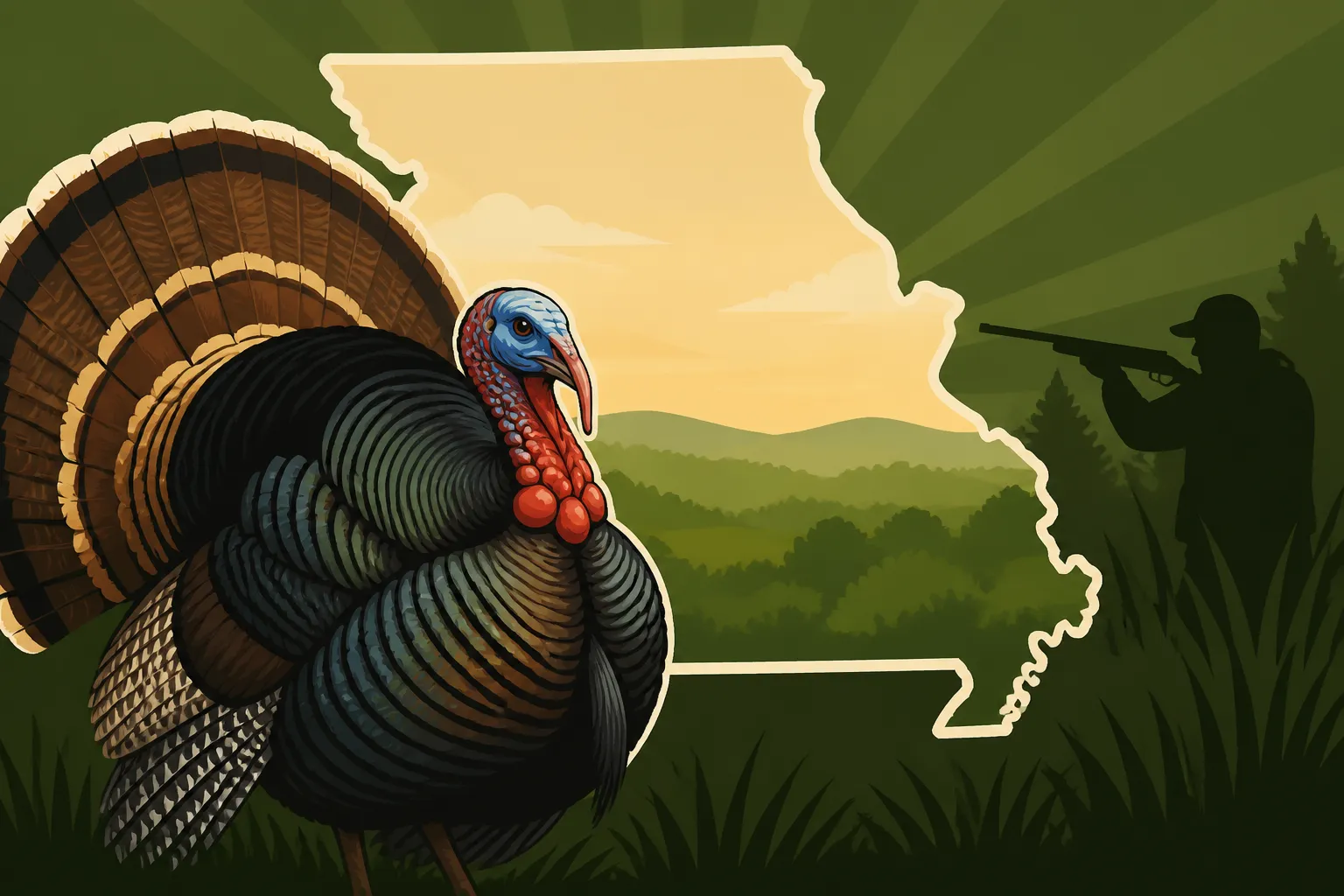
Without further ado, let's get right to it: Missouri is almost exclusively home to the Eastern wild turkey (Meleagris gallopavo silvestris). This is the grand patriarch of wild turkeys, the most widely distributed and abundant subspecies in North America. When you're hearing a gobble down in the Ozarks or watching a flock strut across a northern Missouri field, you are looking at an Eastern.
Key Characteristics and Identification
The Eastern wild turkey is truly a magnificent bird. They are known for their striking iridescent plumage, which can appear coppery, green, red, and bronze in the sunlight, giving them a rich, dark overall appearance. One of the most distinctive identification markers, particularly for hunters who might be trying to differentiate from other subspecies they've seen in other states, are the tail feathers. Easterns typically have dark, rich chestnut or chocolate-brown bands on the tips of their tail feathers and upper tail coverts. This contrasts with the buff or white tips found on Merriam's turkeys, or the distinct tan tips of Rio Grandes.
Their vocalizations are classic, featuring that loud, resonant gobble that can carry for impressive distances on a still spring morning. They also utilize a wide array of yelps, clucks, purrs, and putts, each with specific meanings in their complex social structure. They are robust, powerful birds, with adult gobblers often tipping the scales at 20-25 pounds, sometimes even more, and sporting impressive spurs and beards.
Preferred Habitats Across Missouri
The adaptability of the Eastern wild turkey is one of the main reasons it thrives so well throughout Missouri's incredibly diverse terrain. While they are often associated with dense, mature hardwood forests, they actually prefer a mosaic of habitats. This includes large tracts of timber, particularly oak-hickory forests that provide abundant mast crops for food, interspersed with open areas like agricultural fields, pastures, and regenerating timber cuts. These open areas are crucial for nesting, brooding young poults, and strutting displays.
You'll find Easterns from the rugged, rocky hillsides and hollows of the Ozarks, where they masterfully navigate the challenging topography, to the flat, rich farm country of northern Missouri. In these agricultural regions, they utilize creek bottoms, timbered draws, and fencerows as travel corridors and roosting sites, venturing into crop fields to feed on waste grain. This incredible versatility allows them to maintain healthy populations across nearly every county in the state, offering fantastic opportunities for hunters throughout our varied landscapes.
Adapting to Missouri's Diverse Landscapes
It’s truly remarkable how the Eastern wild turkey has adapted to Missouri's varied environments. In the deep Ozark timber, you might find them sticking to the ridgelines and benches, utilizing natural funnels and saddles for travel. Learning to understand Wind and Thermals in Ozark Hills is crucial here, as turkeys, like deer, use these to their advantage. In contrast, if you’re hunting in the northern counties where row crops dominate, you’ll see them using those isolated woodlots and creek lines as sanctuaries. They become experts at crossing open fields, often sticking to low spots or waiting for opportune times. This adaptation means that while they are all the same subspecies, their localized behavior can differ significantly. A gobbler in a dense Mark Twain National Forest block might respond differently to calls than one working a fencerow bordering a cornfield.
Are Other Subspecies Present in Missouri?
This is where we cut straight to the chase for many hunters who have heard whispers or seen pictures of other turkey subspecies. Despite common inquiries and anecdotes, the answer is a resounding "no" for established, wild populations.
Debunking Myths: Merriams, Rio Grandes, and Hybrids
Missouri's wild turkey flock is overwhelmingly, if not exclusively, comprised of Eastern wild turkeys. You will not find naturally occurring, established populations of Merriam's, Rio Grande, Florida (Osceola), or Gould's wild turkeys in Missouri. Any reports of these other subspecies being sighted are typically misidentifications, escapees from private game farms, or very rare, isolated incidents that do not represent a breeding, sustainable population.
For instance, a hunter might spot a turkey with lighter-tipped tail feathers and mistakenly identify it as a Merriam's. However, coloration can vary somewhat among Easterns due to age, diet, genetics, or even sun bleaching. A mature Eastern gobbler might have a more pronounced white barring on its wing feathers, leading to confusion with a Merriam's. Similarly, a turkey seen near open rangeland might remind someone of a Rio Grande, but if you're in Missouri, it's still an Eastern that has adapted to that specific habitat. There aren't any documented, free-ranging hybrids either, as intentional cross-breeding in the wild is extremely rare and typically unsustainable. Wildlife agencies, like those in Missouri, have meticulously managed turkey populations to maintain the genetic integrity of the native Eastern subspecies.
The Role of Restoration and Stocking Efforts
The reason for this single-subspecies dominance goes back to those incredible restoration efforts. When Missouri's wild turkey numbers plummeted, the reintroduction programs focused specifically on trapping and relocating pure Eastern wild turkeys from areas where their populations were still strong, primarily within Missouri and neighboring states. There was a conscious and strategic decision to rebuild the native Eastern population using native stock, rather than introducing other subspecies that might not thrive as well in Missouri's unique environment or could dilute the genetic pool of our indigenous birds.
This focused approach proved incredibly successful, leading to How Missouri Restored Its Wild Turkeys to a robust and healthy state across the vast majority of our counties. Therefore, when you're purchasing your Missouri Spring Turkey Permits and Limits or planning your hunt, you can be confident you'll be pursuing the magnificent Eastern wild turkey.
Hunting Strategies Tailored for Missouri's Easterns
Knowing you're after an Eastern wild turkey helps you refine your hunting approach. While fundamental turkey hunting tactics apply across the board, understanding the Eastern's behavior in Missouri's specific landscapes can give you an edge.
Reading the Timber and Listening for Calls
Easterns are masters of the timber. They often roost in tall trees along creek bottoms, on ridgelines, or within deep woods. Roost Hunting Missouri Gobblers is a classic strategy, listening for that first morning gobble to pinpoint their location before they hit the ground. Once on the ground, they can be notoriously shy and cover ground quickly. You’ll need to understand how to read the terrain – identifying potential strut zones, travel corridors, and feeding areas within the timber.
Your calling strategy needs to be adaptable. Easterns can be vocal, especially early in the season or during the peak rut, but they can also go quiet, especially if pressured. A good starting point is often soft tree yelps and clucks from your mouth call or slate, increasing volume and intensity as the morning progresses. You might find that Spring Turkey Calling in Missouri Timber requires a softer touch than open-field calling. It’s a dance of listening, calling, and repositioning. Using a mapping tool, perhaps one with features like those offered by GoHunt, can help you analyze terrain features and plan your approach to a bird once you've heard him gobble.
Patience and Persistence in the Spring Woods
Hunting Easterns in Missouri often demands a healthy dose of patience and persistence. They aren't always quick to commit, especially if they've been called to repeatedly or are henned up. There will be days when they gobble their heads off on the roost, fly down, and then go silent, following a real hen off into the distance. This is where validating frustration comes in; it happens to the best of us! When Missouri Gobblers Go Quiet, it can be incredibly challenging, but it's part of the game.
Sometimes, the best approach is to be patient, stay hidden, and wait for them to come to you, especially if you’ve set up in a known travel corridor or strutting zone. Other times, a more aggressive "run-and-gun" approach, as discussed in Run-and-Gun Turkey Tactics in the Missouri Ozarks, might be necessary, especially on public land where you need to locate unpressured birds. Carrying the right set of calls – a box call, a slate, and various mouth calls – allows you to adapt to the bird's mood and the situation. Don't be afraid to change tactics if what you're doing isn't working; adaptability is key when chasing Missouri Easterns.
Comparing Turkey Subspecies (Missouri Focus)
Here's a quick overview of the most commonly discussed turkey subspecies, highlighting why the Eastern is Missouri's primary resident.
| Subspecies | Primary Range | Tail Feather Tips | Body Plumage Coloration | Habitat Preference | Presence in Missouri |
|---|---|---|---|---|---|
| Eastern | Eastern U.S., Canada | Chestnut/Brown | Dark, iridescent bronze | Mixed hardwoods, pine forests, agricultural edges | Abundant |
| Merriam's | Western U.S. | Cream/Buff | Blue/Purple iridescent | Mountainous pine forests, Ponderosa pine | Not established |
| Rio Grande | Central & Southern Plains | Tan | Coppery/Green iridescent | Brush country, mesquite, riparian areas | Not established |
| Florida (Osceola) | Southern Florida | Dark Brown | Dark, green/red iridescent | Swampy, palmetto, pine flatwoods | Not established |
| Gould's | Arizona, Mexico | White | Coppery/Green iridescent | Mountain pine-oak forests | Not established |
As you can see, the Eastern wild turkey is perfectly suited for Missouri's landscape and is the bird you will encounter here. While it's fun to learn about the others, your focus for successful hunting in Missouri should remain squarely on understanding and adapting to the Eastern. This knowledge, coupled with an understanding of specific tactics like Turkey Tactics for Crop Country or using Turkey Decoys That Work on Pressured Birds, will undoubtedly improve your odds. Tracking population trends and harvest numbers, which GoHunt can help you research, also gives valuable insight into local conditions.
In the end, hunting Missouri's Eastern wild turkeys is a rich and rewarding experience. They are challenging birds, full of cunning and instinct, and they make for an unforgettable spring tradition.
Disclaimer
This article is for general informational purposes only and does not constitute professional advice. Laws, prices and regulations vary by location and change over time. Consult a qualified professional for guidance on your specific situation.