Setting a Goose Spread in Cut Corn
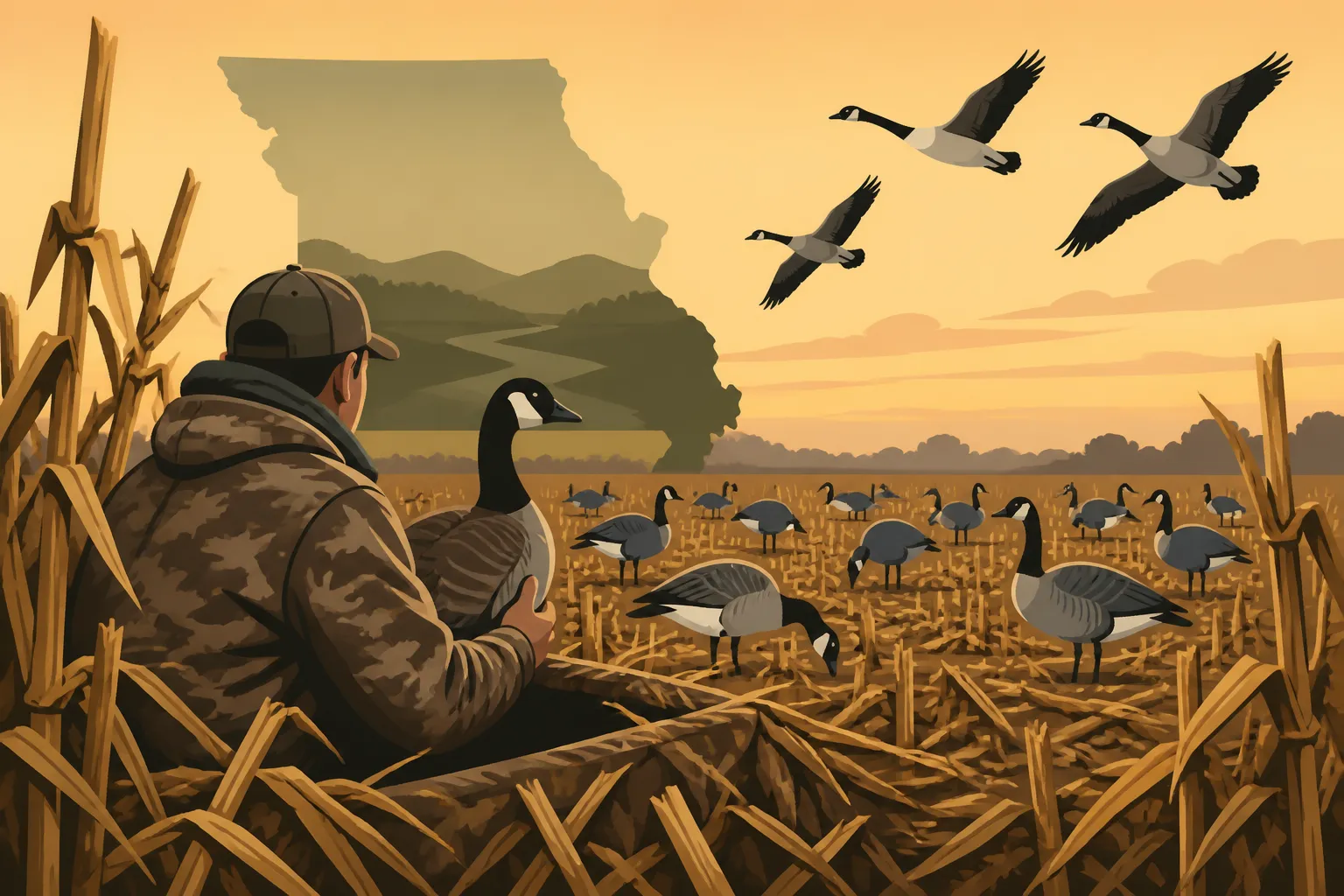
There’s nothing quite like the sight of a flock of Canada geese, wings set, backpedaling over a perfectly laid spread in a cut cornfield. But let’s be honest, getting them to commit can be one of the most frustrating challenges in Missouri waterfowl hunting. These birds are sharp, often heavily pressured, and they’ve seen every trick in the book. This guide is all about breaking down the art and science of setting a goose spread in cut corn, ensuring you're not just throwing decoys out, but strategically creating an irresistible invitation that even the wariest honkers can't ignore.
Understanding Goose Behavior in Cut Corn
Hunting geese in cut cornfields isn't just about finding birds; it's about understanding why they're there and what makes them feel safe enough to land. These highly intelligent birds are constantly assessing their surroundings, and a successful spread mimics their natural feeding and resting patterns perfectly.
Why Geese Love Cut Corn
Cut cornfields are an absolute magnet for geese, particularly Canada geese, and often snow geese during the conservation order. The primary draw, of course, is food. After harvest, a significant amount of waste grain is left on the ground, providing an easily accessible, high-energy buffet that fuels their migration or sustains them through Missouri's cold winter months. This isn't just a casual snack; it's a critical food source.
Beyond the caloric appeal, cut cornfields offer fantastic visibility. Geese are highly wary, and for good reason—they're constantly on the lookout for predators. An open, flat field of stubble allows them a panoramic view, giving them ample warning of any approaching danger. This sense of security is paramount. They’ll often choose fields that offer this wide-open feel, even if there are other food sources nearby. Think about how they often land far from tree lines or thick cover, preferring the wide-open middle of a field where they can see everything. The type of cut corn matters too. Freshly cut fields might have more grain, but fields that have been through a few rains or even a light disking can still hold plenty of feed and often look more natural after some bird traffic. They might loaf in certain areas, even if they aren't actively feeding, simply because it's a safe, familiar spot.
Reading the Field and the Birds
Before you even think about throwing out your first decoy, scouting is absolutely non-negotiable. This isn't a suggestion; it's a fundamental step that will make or break your hunt. You need to become a goose detective, identifying exactly where the birds want to be. This means spending time observing from a distance—a good pair of binoculars or a spotting scope is your best friend here. Look for consistent flight lines—where are they entering and exiting the fields? Are they coming in low over a specific tree line or taking a higher approach from a particular direction?
Pay close attention to their preferred landing zones. Geese don't just land anywhere; they often commit to specific areas within a field where they feel safest and most comfortable. This might be a slightly higher rise, a dip that offers a little protection, or simply an area they've used before. You're looking for their "X" – the exact spot they consistently touch down. Wind direction is another critical factor, as geese, like all birds, almost always land into the wind. This means their approach will be directly against the prevailing breeze, and your spread needs to be set up to accommodate that. Understanding the wind's impact on their flight is crucial for placing your landing zone effectively.
Furthermore, observe what the geese are doing when they're on the ground. Are they actively feeding with heads down, or are they mostly loafing, standing around, and preening? Are they in tight family groups or more spread out? All these subtle cues provide invaluable information for replicating a natural scene with your decoys. Tools like GoHunt can be incredibly helpful for scouting by allowing you to view satellite imagery and property boundaries from home, giving you a head start on understanding the lay of the land before you even step foot in it. You can mark potential flight paths and observe potential obstacles or safe havens from afar, saving precious time in the field. This detailed reconnaissance is the difference between an educated guess and a strategic setup. For more general advice on preseason scouting, consider reading about Scouting Missouri Public Land Before Season.
Decoy Types and Their Strategic Placement
Once you've done your homework and identified the prime location and typical goose behavior, it's time to assemble your decoy army. Not all decoys are created equal, and understanding the strengths and weaknesses of each type will allow you to craft the most convincing spread possible.
The Decoy Arsenal: Full-Bodies, Shells, and Silhouettes
Every goose hunter dreams of a field full of expensive, hyper-realistic full-body decoys. And for good reason – they are, without a doubt, the most convincing option, especially for wary birds.
- Full-Body Decoys: These are the Cadillacs of goose decoys. They offer a complete 3D profile, incredible realism, and often come with flocked heads or bodies that reduce glare. When geese are circling overhead, full-bodies create a lifelike impression that can seal the deal. They're excellent for smaller, more quality-focused spreads where every decoy counts. The downside? They are bulky, heavy, and expensive. Transporting a large spread of full-bodies can feel like a full-body workout in itself, especially if you're hiking into your spot across a muddy field. Companies like Avian-X and Tanglefree make some fantastic full-body options that are widely used by serious goose hunters.
- Shell Decoys: A more budget-friendly and slightly more portable option, shell decoys consist of the top half of a goose body. They sit on stakes or a base, giving a good profile from a distance, especially when viewed from above. They're great for adding numbers to a spread without breaking the bank or your back. While not as realistic as full-bodies up close, they can be highly effective in conveying quantity, which is a big draw for migrating geese. You can often stack them, making transport a bit easier than full-bodies.
- Silhouette Decoys: These are the most portable, easiest to deploy, and most affordable option. Silhouettes are flat, two-dimensional cutouts of geese, usually made of corrugated plastic. They shine when you need to create the illusion of a massive flock quickly. From a distance, especially in low light or fog, a large spread of silhouettes can look incredibly lifelike, indicating safety and numbers to passing birds. However, up close or from certain angles, their flat profile can give them away. They're fantastic for bulking up a spread, extending the "wings" of your formation, or creating the impression of many birds feeding on the edges.
A mixed spread is often the most effective approach. Use full-bodies in the most critical areas, closest to your blind and landing zone, where realism matters most. Then, fill in the bulk with shells and silhouettes to create that crucial impression of a large, safe flock.
Crafting the Optimal Spread Layout
This is where the art truly comes into play. You’re not just scattering decoys; you’re telling a story that makes an approaching flock feel secure. The goal is to create a pattern that mimics natural feeding or resting geese while subtly guiding incoming birds right into your "kill hole" – the sweet spot where you want them to commit within shooting range.
Common formations include:
- The J-Hook or U-Shape: This is a classic for a reason. You create a main body of decoys (the J or U) with an open area at the curve. The "hook" or open end of the U is placed downwind of your blind, forming your kill hole. Geese will naturally want to land into the wind, often setting down into the open space of your J or U, giving them space to land without running into other "geese." This creates a natural approach path.
- The Blob/Cluster: Sometimes, especially with less pressured birds, a more natural, irregular cluster of decoys can be effective. Geese often feed in loose groups or family units. This spread focuses on creating several smaller, irregular clusters with open lanes between them for birds to land. This can be particularly effective when trying to mimic specific behavior you've observed during scouting.
- Family Groups: Geese are highly social and often stick together in family units. When placing full-bodies, try to group 3-5 decoys together, facing slightly different directions, as if they're feeding or resting. This adds to the realism.
Regardless of the formation, pay attention to spacing. Geese aren't packed shoulder-to-shoulder, nor are they miles apart. Aim for a natural spacing, usually 2-5 feet between decoys, with more dense clusters near the landing zone and more spread out birds on the periphery. Don't be afraid to leave some bigger gaps, mirroring how birds might spread out to feed.
Adding motion can be a game-changer. Even a slight breeze can make your spread come alive with motion decoys. Goose flags, operated by hand, can mimic landing birds or birds flapping their wings, catching the attention of distant flocks. Sillosocks or other wind-activated decoys can add subtle movement without constant human intervention. Remember, the more realistic and active your spread appears, the more confident those high-flying geese will be.
Finally, always remember the "X" factor. Your decoys should be placed around the precise spot where you observed geese consistently landing or feeding during your scouting. If you know they love a specific rise in the field, build your spread to highlight that rise, making it their natural approach. Don't fight where they want to be; enhance it.
Blind Concealment and Calling Strategies
Having the perfect spread is only half the battle. If the geese can see you, they're gone. And if you can't communicate with them effectively, they'll often just keep flying. This section delves into making yourself invisible and talking their language.
Disappearing in the Cut Corn
Geese have incredible eyesight. What looks like good camouflage to you might be a glaring anomaly to a goose circling from 200 feet up. Blinds, therefore, need to be absolutely flawless in their concealment.
- Layout Blinds: These are the most common choice for field hunting. They allow you to lie flat, almost completely concealed in the stubble. The key to making them effective is brushing them in meticulously. Don't just set it down and assume the camo pattern is enough. Gather local vegetation—corn stalks, stubble, weeds from the field edges—and weave it into the stubble straps of your layout blind. The goal is to break up the perfectly straight lines and hard edges of the blind. Think like a goose: does this look like a natural lump in the field, or does it look like something that doesn't belong?
- A-Frame Blinds: For hunters who prefer to sit upright or who are hunting with a group, A-frame blinds can be a good option. These typically consist of a frame covered with a camo fabric that you then brush in heavily. They need significantly more brushing than a layout blind but can provide more comfort and space. Place them along fencerows or natural contours if possible, to help them blend. For more on using blinds in agricultural settings, check out Layout Blinds in Harvested Fields or Brushing In a Blind on a Field Edge.
- Natural Cover: Sometimes, the best blind is no blind at all. If there’s a ditch, a deep tractor rut, or a thick fencerow that offers natural concealment and is in the right spot, utilize it. Just be sure you can comfortably and safely shoot from your position without exposing yourself.
Always consider the sun. If possible, set up with the sun at your back. This not only puts the sun in the birds' eyes as they approach but also keeps your blind from casting harsh, tell-tale shadows that can spook them. Remember, any glint from a gun barrel, a face, or even shiny boots can ruin a hunt. Face masks and gloves are essential. If you're using GoHunt for scouting, you can even use its mapping features to anticipate sun angles relative to potential blind locations, helping you choose the best spot to remain concealed.
Effective Goose Calling in the Field
Calling geese is as much about timing and subtlety as it is about technique. You’re trying to build trust, not scare them off with an aggressive cacophony.
-
Understanding Goose Vocalizations: Geese have a diverse vocabulary. Learn the basic calls:
- Honk: The primary call, often used to communicate location and express excitement.
- Cluck: A shorter, sharper sound, used for reassurance or to gather attention.
- Murmur/Feed Call: A soft, continuous series of clucks and groans, mimicking feeding birds, which signals safety.
- Greeting Call: A longer, drawn-out series of honks and clucks, used to attract distant birds.
-
When to Call Aggressively vs. Softly:
- Distant Birds: Start with a louder, more enthusiastic greeting call or a series of honks to grab their attention. Once they acknowledge you (turn their heads, change flight path), ease up.
- Approaching Birds: As they get closer, transition to softer clucks and feed calls. This indicates contentment and safety within your spread. If they start to circle, use short, reassuring clucks.
- Committing Birds: When they are locked in and cupping their wings, it’s often best to go silent or use very soft murmurs. Let the visual of your spread do the work. Over-calling here can spook them.
-
Reading Bird Reactions: Watch the birds closely. If they flair or seem hesitant, you might be calling too much or too aggressively. If they turn toward you and descend, your calling is working. Adapt your calling to their response. It's a conversation, not a monologue.
-
Calling Cadence: Avoid constant, repetitive calling. Geese aren't always honking non-stop. Mimic natural pauses and fluctuations. A few short honks, a pause, then some clucks can be more effective than a long, unbroken sequence.
-
Using Different Calls: Many goose hunters carry multiple calls—a short reed for sharp, precise clucks and honks, and perhaps a longer flute call for deeper, more resonant sounds. This variety can add realism to your calling, making your "flock" sound bigger and more diverse. While the principles of calling are similar across species, geese often respond differently than ducks. Consider how Duck Calling in Timber Versus Open Water compares to the open field environment for geese.
Advanced Tactics and Field Considerations
Even with the best spread and calling, goose hunting in Missouri's cut corn can throw curveballs. Adapting to conditions and being prepared for anything will increase your odds of success.
Wind, Weather, and Pressure Adaptations
Mother Nature and previous hunting pressure are two of the biggest variables you'll face in the field. Ignoring them is a recipe for a slow day.
- Wind Direction is Everything: As mentioned, geese land into the wind. If the wind shifts during your hunt, you need to adjust your setup. This might mean physically moving your kill hole, or at least mentally re-evaluating where birds will approach from. A strong crosswind can make birds drift, so adjust your anticipated shooting lanes accordingly. Always set your blinds so that birds are landing into the wind and directly over your "kill hole."
- Hunting in Fog, Rain, or Snow: These conditions can be both challenging and incredibly productive.
- Fog: Limits visibility, making calling even more critical. Geese will often fly lower in fog. A small, super-realistic spread with constant, soft feed calls can bring them in close before they see you.
- Rain: Can drive birds to feed aggressively as they try to fuel up before a cold front. Focus on motion and feed calls. Decoys can get wet and lose some realism, so consider decoys with flocked surfaces.
- Snow: Fresh snow can be fantastic. Geese stand out, and their food source can be harder to find, making your spread more appealing. However, snow can also cover your decoys, so you might need to brush them off. White snow goose decoys become invisible in heavy snow; use darker Canada goose decoys, or ensure your white decoys are visible.
- Dealing with Pressured Birds: Missouri geese, especially those that have been hunted for a while, become incredibly wary. They've seen it all.
- Smaller, More Natural Spreads: Sometimes, less is more. A dozen high-quality, full-body decoys mimicking a small, contented family group can be more effective than a massive, sprawling spread that looks "too good to be true" to pressured birds.
- Less Calling: Over-calling will often spook pressured birds. Focus on subtle, reassuring clucks and murmurs. Let them work, and only call when they need a little coaxing.
- Relocating: If birds aren't committing after a few attempts, don't be stubborn. Be ready to pick up and move to another part of the field, or even another field entirely, if scouting indicates a shift in their patterns. Sometimes a change of scenery is all it takes.
Decoy Maintenance and Transport
Your decoys are an investment, and taking care of them ensures they remain effective season after season.
- Keeping Decoys Clean: Mud, dust, and grime dull the realism of your decoys. Periodically wipe them down, especially the flocked heads and bodies of full-bodies. A clean spread looks more inviting.
- Repairing Damaged Decoys: Don't let a broken head or a missing stake sideline a decoy. Many repairs are simple with a little epoxy or a replacement part. A well-maintained decoy arsenal looks professional and convincing.
- Efficient Transport Methods: Moving dozens of decoys can be a real pain. Decoy bags, sleds, or even an ATV with a trailer can make the job easier. Organize your decoys by type (full-bodies, shells, silhouettes) for faster setup and takedown. Remember, the easier it is to get your spread out and put it away, the less likely you are to dread those early mornings.
Safety and Regulations
Always prioritize safety and adherence to Missouri's hunting regulations.
- Legal Shooting Hours: Know the legal shooting hours for migratory birds in Missouri. Typically, this is one-half hour before sunrise to sunset, but always double-check the current regulations from the Missouri Department of Conservation (MDC).
- Hunter Orange Requirements: While not typically required for waterfowl hunting within a blind, if you are walking to or from your blind during firearm deer season (like Missouri's November Firearms Portion), you may need to wear hunter orange. Always consult the current MDC regulations to be safe.
- Nontoxic Shot Rules: For all waterfowl hunting in Missouri, nontoxic shot is legally required. This means no lead shot. Options include steel, bismuth, and tungsten-based loads. This rule applies statewide, not just on managed wetlands, so ensure your shells are compliant. For specific rules on different areas, you can review details like Nontoxic Shot Rules on Missouri Wetlands.
- Federal Duck Stamp and HIP Registration: Remember, if you are 16 years of age or older, you need a valid Missouri Federal Duck Stamp Requirement to hunt waterfowl. You also must be registered with the Harvest Information Program (HIP) annually, a process covered in Missouri HIP Registration for Migratory Birds. These are crucial steps before heading out to the field.
By meticulously planning your spread, perfecting your concealment, and mastering the subtle art of goose calling, you'll be well on your way to more successful hunts in Missouri's cut cornfields. It takes effort, but the reward of those honkers cupping their wings over your decoys is absolutely worth it.
Here's a quick comparison of decoy types:
| Decoy Type | Realism (Visual) | Portability (Weight/Bulk) | Cost (Per Decoy) | Recommended Use |
|---|---|---|---|---|
| Full-Body | Excellent | Low | High | Primary landing zone, small, convincing spreads |
| Shell | Good | Medium | Medium | Adding numbers, mid-range of spread |
| Silhouette | Fair (from angles) | High | Low | Bulking numbers, extending edges of spread |
Disclaimer
Hunting regulations, seasons, and permit requirements in Missouri can change. Always consult the latest official publications from the Missouri Department of Conservation (MDC) before planning any hunting trip. This guide is for informational purposes only and does not supersede state or federal regulations.