Rabbit and Squirrel Numbers
Hunting small game in Missouri, especially rabbits and squirrels, can feel like a roll of the dice sometimes. One year, your favorite brush pile might be bursting with cottontails, and the next, it's eerily quiet. Similarly, the oak flats can be swarming with squirrels or seem devoid of life. This guide is here to demystify those fluctuations, diving deep into the population dynamics of Missouri's rabbits and squirrels so you can understand what's really happening out there and hopefully find more success in the field.
Understanding Missouri's Cottontail Rabbit Dynamics
There's nothing quite like walking through a frost-covered field, anticipating the explosion of a cottontail from a thicket. But those moments of excitement can be few and far between if the rabbit numbers are down. Understanding the natural ebb and flow of these resilient creatures is key to consistent success.
The Ups and Downs of Rabbit Numbers
Cottontail rabbits are, by nature, prolific breeders. They have short gestation periods and can produce multiple litters throughout the spring and summer, especially when conditions are favorable. This high reproductive rate is their primary defense mechanism against the myriad threats they face. When you have mild winters, abundant rainfall leading to lush vegetation, and decent escape cover, you often see a boom in rabbit numbers. Conversely, harsh winters with deep snow and prolonged ice cover, or extremely wet springs, can decimate young rabbits, leading to noticeable dips in the population. It's a constant balancing act dictated by Mother Nature.
Habitat is King for Missouri Rabbits
You can have perfect weather, but if a rabbit doesn't have a place to live, eat, and hide, it won't survive. Missouri cottontails thrive in edge habitats – those transitional zones where fields meet timber, or where brushy fencerows slice through open ground. Think about old farmsteads, reverting pastures, and timber edges that have grown up into briar patches and sumac thickets. These areas provide the perfect blend of succulent forage and dense overhead and horizontal cover to escape predators. If you're wondering why your old hunting spot seems dead, it might be that the habitat has changed. Maybe the fencerow was cleaned out, or the field grew into mature timber, losing that crucial edge. For more on finding these prime areas, consider checking out the guide on Working Field Edges and Draws for Quail, as many of the principles apply directly to rabbit habitat as well.
Predation and Disease Pressures
Despite their breeding prowess, rabbits are a foundational prey species, meaning almost everything eats them. Coyotes, foxes, bobcats, hawks, owls, and even house cats all rely on rabbits as a food source. When predator populations are high, or when escape cover is scarce, rabbit numbers can suffer significantly. Beyond predators, diseases like tularemia and fibromatosis can also impact local rabbit populations. While you won't necessarily see these diseases explicitly, a sudden drop in numbers in an otherwise good habitat might be a subtle sign. It’s part of the tough life a cottontail leads, and a significant reason why their numbers can fluctuate so dramatically from year to year.
Key Factors Influencing Missouri Rabbit Populations
Delving deeper into the environmental factors can really help paint a clearer picture of why certain years or areas are better than others. It's more than just a guess; there's science behind the cycles.
Weather's Impact on Rabbit Survival
Missouri weather is notoriously fickle, and rabbits feel the brunt of it. A mild winter with minimal snow and ice allows more adult rabbits to survive into the breeding season, leading to a strong initial cohort of young. A wet, cold spring, however, can be disastrous for newborn rabbits, which are born blind and helpless in shallow nests. Heavy rains can flood nests, and prolonged cold can lead to hypothermia. Conversely, a hot, dry summer can stress rabbits and reduce the quality of their forage. A good rabbit year often follows a stretch of "just right" weather: mild winter, warm and dry spring, and a consistent, but not overly wet, summer. Understanding the local weather patterns for the last 12-18 months can give you a real leg up on predicting where the rabbits might be thriving.
Agricultural Practices and Rabbit Habitat
Missouri is a big agricultural state, and farming practices directly influence rabbit populations. Fields of alfalfa, clover, or winter wheat provide excellent forage. Unmowed field borders, overgrown terraces, and brushy fencerows offer crucial cover. However, as farms become more efficient, these "weedy" areas often disappear. Clean farming, where every inch is tilled or sprayed, eliminates the vital habitat rabbits need. A field that was once a rabbit haven might become a desert if its edges are routinely mowed or sprayed. Hunters often find more rabbits around smaller, less intensely farmed tracts or where landowners intentionally leave cover strips. This is also why areas with good deer cover, like those mentioned in Hunting a Missouri Fencerow Between Fields, can also be rabbit hotspots.
The Role of Cover and Forage
It almost goes without saying, but rabbits need consistent access to both food and cover, often within very close proximity. They won't venture far from dense escape cover to feed. This is why you often find them Rabbit Hunting Brush Piles or in briar thickets right next to a lush green field. The ideal habitat provides a mosaic of different plant types: tall grasses and weeds for concealment, brambles and shrubs for security, and tender young shoots or crop fields for food. If either the cover or the food source diminishes, so too will the rabbit numbers in that specific location. Thinking about how these elements connect on a landscape, perhaps with the aid of a scouting tool like GoHunt, can reveal patterns in rabbit distribution.
Missouri's Squirrel Populations: A Tale of Two Species
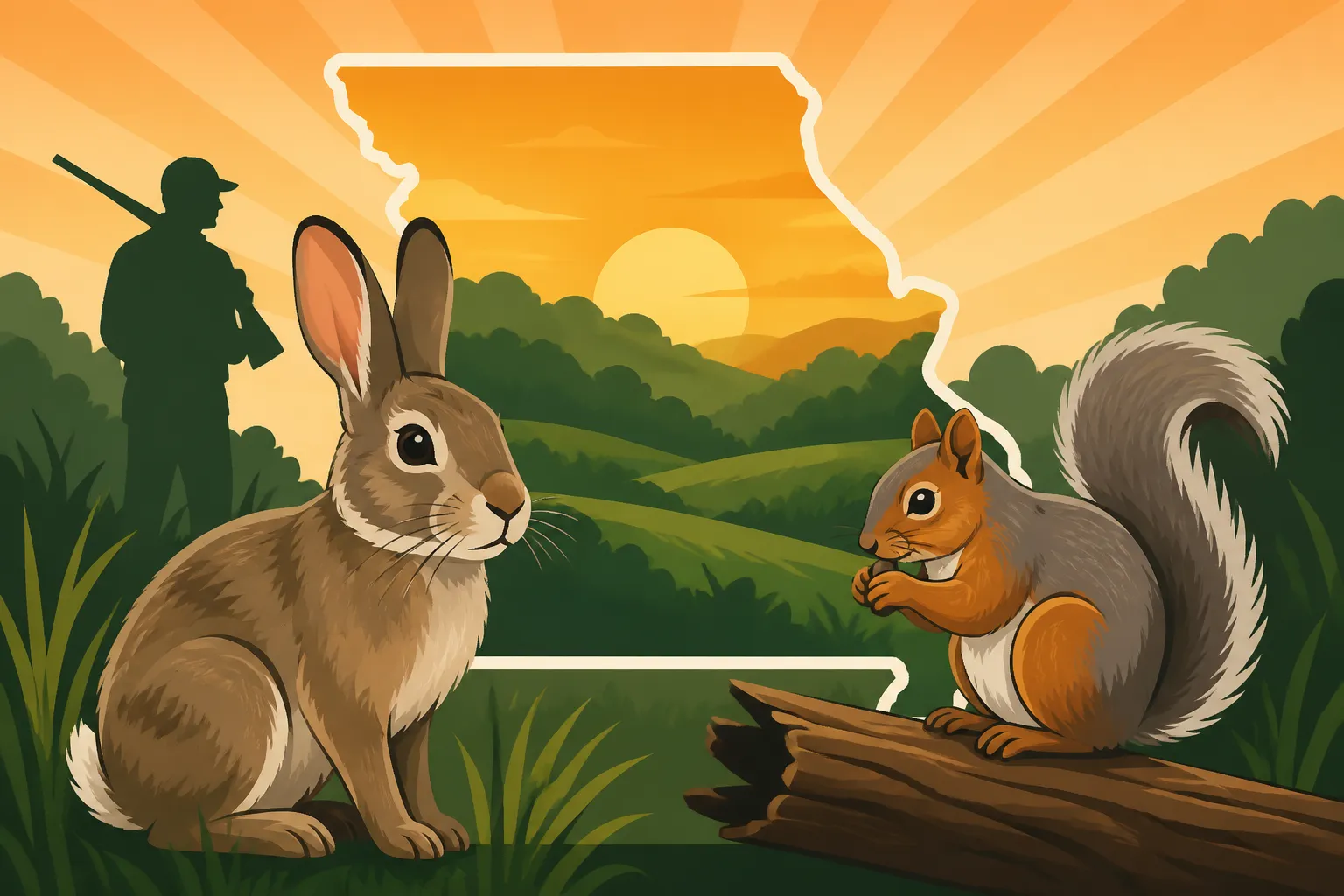
When we talk about squirrel hunting in Missouri, we're primarily focused on two species: the gray squirrel and the fox squirrel. While they share some similarities, their preferred habitats and population dynamics can be quite distinct, leading to different hunting strategies.
Gray Squirrels: Timber Dwellers
Gray squirrels are the quintessential forest dwellers. They prefer large, mature tracts of hardwood timber, especially those with a strong component of oak and hickory trees. These are the squirrels you'll often find deep in the Ozarks or in extensive river bottom timber. They are highly arboreal, spending most of their time in the trees, making nests in tree cavities or constructing leaf nests high in the canopy. Their diet relies heavily on mast crops, particularly acorns and hickory nuts, but they also eat buds, fungi, and occasionally insects. A healthy population of gray squirrels indicates a healthy, mature forest ecosystem. If you're scouting for grays, you'll want to focus on areas that fit the description in Squirrel Hunting in Oak Hickory Timber.
Fox Squirrels: Edge and Open Timber Favorites
Fox squirrels, on the other hand, are a bit more adaptable and often found in more open timber, woodlots, and along the edges of fields. They're larger than gray squirrels and often have a more reddish-brown coat. You'll find them just as readily in a small block of timber in northern Missouri farm country as you would in an expansive Ozark forest, provided there are scattered trees and food sources. While they also eat mast, they're more opportunistic, consuming a wider variety of foods including corn, soybeans, and even insects found on the ground. They're not as strictly arboreal as grays and are often seen foraging on the ground or running across open areas. This preference for edges means they can thrive in areas where gray squirrels might struggle, giving hunters different options across the state.
Long-Term Trends in Squirrel Numbers
Like rabbits, Missouri's squirrel populations experience fluctuations, though often driven by slightly different factors. For both species, the availability of mast crops from the previous year is a huge predictor of current year numbers. A bumper crop of acorns and hickory nuts one fall means squirrels go into winter well-fed and survive better, leading to higher reproductive success the following spring. Conversely, a mast failure can lead to widespread starvation, reduced breeding, and significant population declines. Habitat loss, especially the clearing of mature forests, also plays a long-term role in overall squirrel numbers. Despite these challenges, squirrels remain one of Missouri's most consistently available small game animals, providing opportunities through Missouri's Long Squirrel Season Explained.
What Drives Missouri Squirrel Abundance
Understanding the specific environmental triggers that dictate squirrel numbers can transform a casual outing into a strategic hunt. It's all about connecting the dots between nature's cycles and what you see in the woods.
The Mighty Mast Crop Connection
This is arguably the single most important factor for squirrel populations in Missouri. Mast refers to the nuts and fruits produced by trees, particularly oaks and hickories. When these trees have a "mast year" – a season with abundant production – squirrels thrive. They gorge themselves, cache food for winter, and enter the lean months in prime condition. This leads to higher survival rates and more successful breeding in the spring. If, however, there's a mast failure due to late frosts, drought, or an off-cycle year, squirrels face intense competition and often struggle to find enough food. The following year's squirrel numbers will almost certainly reflect that hardship. When scouting, pay close attention to the abundance of acorns and hickory nuts from the previous fall, and look for signs like Reading Cuttings Under an Oak to confirm squirrel activity.
Forest Health and Habitat Suitability
Beyond just mast, the overall health and structure of the forest dictate how many squirrels an area can support. Mature forests with a diverse age class of trees, plenty of snags (dead standing trees), and downed logs provide not only food but also critical den sites, nesting locations, and escape cover. Old-growth timber, while rarer, is especially productive for squirrels due to the abundance of large cavity trees. Timber harvesting practices can impact squirrel numbers; selective cutting that leaves mature mast-producing trees and den trees is generally better than clear-cutting large tracts. A healthy forest, characterized by a variety of tree species and good structural diversity, provides consistent resources, leading to more stable squirrel populations over time. This kind of robust habitat supports robust populations.
Predators and Competition for Resources
Like rabbits, squirrels are part of the prey base for many predators, including raptors, bobcats, and coyotes. While predation might not have the same dramatic impact on overall squirrel numbers as mast crop failures, it's a constant pressure. Additionally, squirrels face competition from other wildlife, especially deer and wild turkeys, for mast crops. In years of mast scarcity, this competition can become intense, further stressing squirrel populations. Disease can also play a role, although it's less commonly observed as a widespread issue for squirrels compared to some other game species. All these factors contribute to the complex web of ecological pressures that influence whether a timber block is teeming with bushy-tails or feels surprisingly empty.
Hunting Implications and Management for Small Game
Understanding these population dynamics isn't just academic; it directly influences how and where you hunt. By being attuned to the natural world, you can become a more effective and ethical small game hunter.
Finding the Hotspots Based on Population Trends
Knowing the factors that influence rabbit and squirrel numbers allows you to make more informed decisions about where to hunt. For rabbits, focus on areas with excellent, diverse edge habitat – brushy fencerows, regenerating clearcuts, and areas with dense briar patches bordering crop fields. After a mild winter and a good growing season, you might expand your search to slightly less dense cover. Conversely, after a harsh winter, concentrate your efforts on the thickest, most protected cover available. For squirrels, identify prime mast-producing timber. After a strong mast year, squirrels will be more widespread. After a mast failure, they'll concentrate in areas where food is still available, even if it's scarcer. Using tools like the Missouri Conservation Atlas or even scouting apps like GoHunt can help you pinpoint these prime areas by overlaying timber types, field edges, and topography. You can often find areas specifically managed for small game by checking out the area brochures for Missouri Conservation Areas Explained.
Conservation Efforts for Rabbits and Squirrels
Missouri's conservation efforts are vital for maintaining healthy small game populations. For rabbits, habitat management is paramount. This includes prescribed burning, disking, and selective brush hogging to create and maintain early successional habitats that cottontails love. Leaving un-mowed field borders and creating brush piles are simple yet effective techniques. For squirrels, forest management practices that promote diverse age classes of mast-producing trees, protect den trees, and encourage healthy timber stands are crucial. These efforts often go hand-in-hand with larger conservation goals for other species, demonstrating how interconnected our ecosystems truly are. If you're interested in helping, consider getting involved with local conservation groups or learning more about programs that incentivize habitat improvements on private land.
Ethical Harvesting and Future Abundance
Given the high reproductive rates of rabbits and, to a lesser extent, squirrels, hunting typically has a minimal impact on overall healthy populations. Responsible hunting practices are always important, but these species are well-adapted to dealing with natural mortality factors, including harvest pressure. The challenge for hunters isn't usually over-harvesting but rather finding enough accessible, high-quality habitat that supports robust numbers. By understanding population dynamics, respecting season limits, and focusing on habitat improvement, hunters play a vital role in ensuring that future generations can enjoy the timeless traditions of hunting Missouri Small Game and Rabbits. Your efforts in the field and your support for conservation contribute directly to the abundance you see, or don't see, in the woods and fields each season.
Disclaimer
This article is for general informational purposes only and does not constitute professional advice. Laws, prices and regulations vary by location and change over time. Consult a qualified professional for guidance on your specific situation.