Why Missouri Turkey Numbers Fell
Many Missouri turkey hunters have noticed it over the last decade or so – those booming spring mornings just don't seem quite as common, and the longbeards feel harder to come by. It's a frustrating shift, especially for those of us who grew up hearing tales of a robust and seemingly endless turkey population. This guide aims to peel back the layers and explore the multifaceted reasons behind the observed decline in Missouri's wild turkey numbers, offering insights into the ecological shifts and management challenges at play.
Understanding the Historical Context of Missouri's Wild Turkey Flock
To truly grasp why Missouri's turkey numbers have dipped, it's essential to look back at where we started and how far we've come. The story of the wild turkey in Missouri is one of the greatest conservation success stories, a testament to dedicated effort, but it also provides crucial context for understanding current challenges.
The Incredible Comeback Story
It’s hard to imagine now, but the majestic wild turkey was practically wiped out in Missouri by the early 20th century. Habitat destruction, unregulated hunting, and market hunting had taken their toll, leaving only scattered, isolated pockets of birds in the most remote corners of the Ozarks. The woods were quiet. However, through incredible vision and persistent efforts by the Missouri Department of Conservation (MDC) and collaborating partners, a massive restoration program began in the mid-1900s. This involved trapping turkeys from healthy populations (often from other states like Arkansas and Florida, believe it or not!) and relocating them to suitable habitats across Missouri. It was a painstaking process, but it worked. We have a separate, detailed piece on How Missouri Restored Its Wild Turkeys that dives into this incredible journey.
For decades, these efforts paid off handsomely. We saw an exponential growth in turkey numbers, spreading them into every county. This reintroduction wasn't just about putting birds on the ground; it was also about creating vast expanses of protected and managed habitat, ensuring the turkeys had the resources they needed to thrive. The success was so profound that Missouri became a destination for turkey hunters and a model for other states. It's a foundational part of our hunting heritage here, and understanding this initial triumph helps us appreciate the complexity of the current situation. The birds that were trapped and released, and their descendants, formed the robust populations we enjoyed for so long. For those interested in the genetics, it's worth noting Where Missouri's Restoration Birds Came From to see the diverse origins of our flock.
Early Successes and Peak Populations
By the late 1980s and into the 1990s and early 2000s, Missouri's turkey population was booming. Hunters reveled in abundant birds, and it wasn't uncommon to hear multiple gobblers sounding off from different ridges on a spring morning. What contributed to this incredible success after the initial restoration? Several factors converged to create nearly ideal conditions. First, vast amounts of suitable habitat were available and relatively undisturbed, providing ample nesting, brooding, and roosting cover. Timber management practices often favored the turkeys, creating a mosaic of mature woods and regenerating clearings.
Secondly, predation, while always present, seemed to be in balance with high poult production. Hens were successfully hatching and raising large broods of young. This meant that even with some predation, enough young birds survived to replenish and grow the overall population. Finally, hunting regulations were carefully managed, allowing the population to grow while still providing exciting opportunities for hunters. The excitement of spring turkey season became deeply ingrained in Missouri culture, a rite of passage for many. It was a golden era for turkey hunting, one that set a high bar for what we came to expect from our flocks. It was during these years that the population reached its peak, demonstrating the incredible resilience and reproductive potential of wild turkeys when conditions are favorable.
Key Environmental and Habitat Factors Contributing to the Decline
While the boom times were glorious, the pendulum has started to swing, and recent decades have brought new challenges that have chipped away at those once-robust turkey numbers. It's rarely one single issue, but rather a confluence of environmental pressures and changes in the landscape.
Habitat Fragmentation and Loss
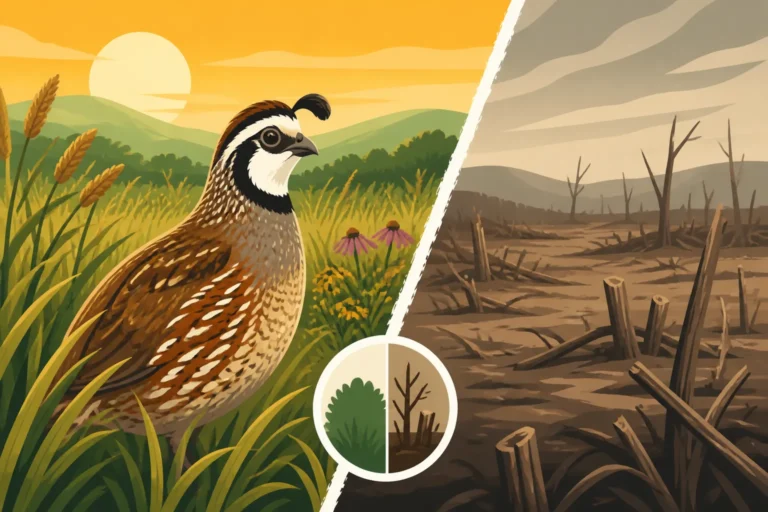
One of the most significant, yet often subtle, contributors to the decline is the ongoing loss and fragmentation of critical habitat. Turkeys, especially hens and poults, need specific types of cover to thrive. They need dense, low-growing vegetation for nesting, mature trees for roosting, and diverse open areas with insects for poults. Unfortunately, Missouri's landscape is constantly changing. As human populations grow, development encroaches on wild spaces. Farmland, housing developments, and infrastructure can carve up large tracts of timber and open ground, isolating turkey populations and making it harder for them to find everything they need within a safe range. This is an issue that also heavily impacts other upland species, as detailed in our article on Habitat Loss and Missouri Quail.
Beyond direct loss, changes in agricultural practices also play a role. While row crops can provide some food, vast monocultures lack the diverse understory needed for nesting and brooding. When timber is clear-cut without careful management for wildlife, or when mature forests become too dense with little undergrowth, the quality of turkey habitat diminishes. Without that mosaic of cover types—open fields bordering diverse timber with good understory—hens have fewer safe places to nest, and poults struggle to find food and evade predators in sparse cover. These changes often force turkeys to use marginal habitats, increasing their vulnerability.
Weather Extremes and Poult Survival
Another major factor, often discussed among hunters, is the impact of unpredictable and sometimes extreme weather, particularly during the crucial nesting and brooding seasons in spring and early summer. Wild turkey poults are incredibly vulnerable during their first few weeks of life. They are small, covered in down, and highly susceptible to cold, wet conditions. A prolonged period of heavy rain and low temperatures shortly after hatching can be devastating, leading to high mortality rates among young birds.
We often talk about Poult-to-Hen Ratios and What They Mean because it's a direct indicator of reproductive success. If hens are hatching clutches but losing most of their poults to adverse weather, the recruitment of new birds into the population suffers dramatically. This means fewer jakes the following spring and fewer two-year-old gobblers the year after that. When these poor hatches occur year after year, the impact compounds, slowly eroding the overall population. Even just a few degrees difference in temperature or a couple of extra days of rain during that critical period can drastically reduce survival. Our article on Weather in the Weeks After the Hatch goes into more detail on how these conditions can make or break a turkey's first few weeks.
Predation Pressures on Nests and Poults
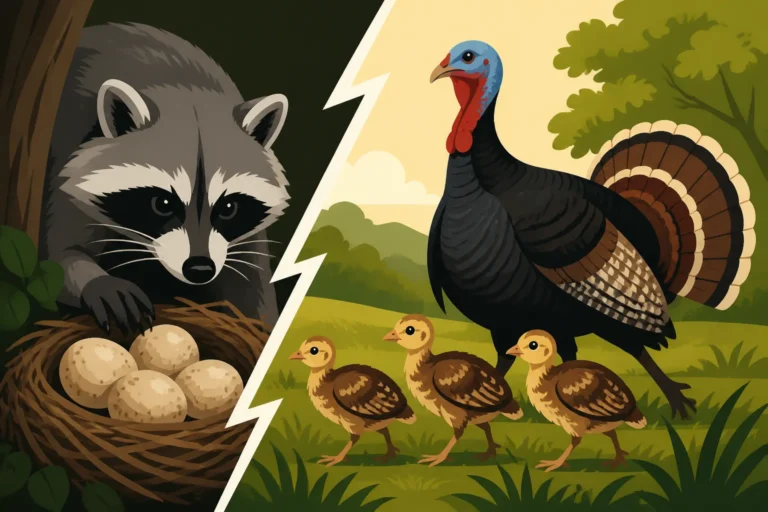
While predation is a natural part of any ecosystem, some evidence suggests that increased predator populations, particularly mesopredators like raccoons, opossums, and skunks, combined with poorer habitat conditions, can exacerbate turkey declines. These opportunistic predators are highly efficient at finding and destroying turkey nests, eating eggs, and preying on young poults. Coyotes, bobcats, and even feral hogs in certain areas can also be significant predators of both adult turkeys and poults.
It’s not necessarily that there are "too many" predators in all areas, but rather that when turkey populations are already stressed by habitat loss or poor weather, the impact of predation becomes more pronounced. If hens have fewer safe nesting sites due to habitat fragmentation, their nests become easier targets. Similarly, if poults lack dense cover to hide in, they are more vulnerable to various predators. This combination creates a "perfect storm" where even normal predator activity can have an outsized negative effect on turkey recruitment. The constant threat of predation, especially during the nesting and brood-rearing phases, makes it tough for the young birds to make it to adulthood.
Disease and Management Considerations
Beyond environmental challenges, the health of the flock and how we manage hunting seasons also play roles in the complex picture of turkey population trends. Understanding these elements is crucial for a holistic view.
Avian Diseases and Their Impact
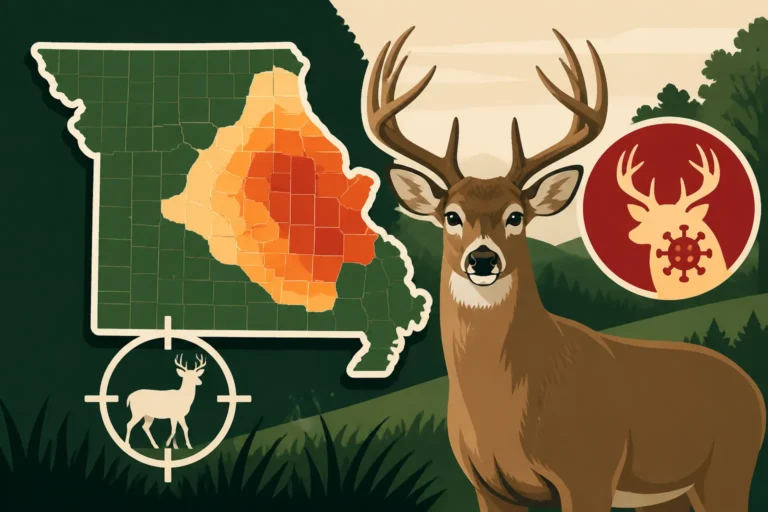
While not as widely publicized or as dramatically impactful as Chronic Wasting Disease (CWD) in deer, various avian diseases can affect wild turkey populations. Blackhead disease, for example, is a parasitic disease that can be lethal to turkeys, particularly poults. It's often spread through contact with domestic poultry or contaminated soil and can persist in the environment. While not typically causing widespread die-offs like some viral diseases, endemic low-level infections can weaken birds and contribute to reduced survival rates, especially when birds are already stressed. Other respiratory or parasitic issues, while less common for mass mortality events, can still impact the overall vigor and reproductive success of a flock over time.
Wildlife agencies like the MDC constantly monitor game populations for signs of disease, understanding that a healthy population is a resilient one. Early detection and understanding of disease prevalence are important components of long-term conservation strategies. Fortunately, widespread, acute disease outbreaks haven't been identified as a primary driver of the broad decline in Missouri, but it remains a background factor in the overall health of the state's wild turkeys. Keeping abreast of Missouri Wildlife Disease Monitoring is key for researchers and managers.
Evolving Hunting Pressure and Hunter Behavior
Missouri has a long and proud tradition of turkey hunting, and hunter numbers have generally remained high even as bird numbers have fluctuated. While hunting is often a critical management tool for wildlife populations, concerns sometimes arise about its potential impact, particularly on mature gobblers. Missouri's hunting seasons are designed to allow for sustainable harvest, but changes in hunter numbers, access, and tactics can indirectly influence populations. For example, some argue that increasing pressure on gobblers, especially early in the season, could potentially affect breeding dynamics, though research on this is ongoing and complex. Our state has a unique structure for spring hunting, which you can learn more about in Missouri Spring Turkey Season Structure.
Over the years, regulations have been adapted to respond to population trends. This includes adjustments to bag limits, season lengths, and even youth portions. These changes are data-driven, based on factors like population surveys and harvest reports. Hunters themselves also play a role; responsible hunting practices and understanding the biology of the birds are paramount. For those who enjoy hunting in the fall, our guide on Fall Turkey Hunting Tactics provides insights into that often-underutilized season, which also has specific regulations designed to protect hen populations. While hunting is tightly regulated and not seen as the primary cause of decline, it's a factor that is always considered in concert with habitat and environmental influences.
The Role of GoHunt and Data Collection
In an era where every bit of information helps, tools that aid hunters in understanding the landscape and animal behavior become increasingly valuable. Platforms like GoHunt, while primarily focused on mapping and planning, also empower individual hunters to become more informed observers of the resource. By allowing hunters to diligently log their sightings, encounters, and successes (or lack thereof), GoHunt can provide a personal perspective that, when aggregated, contributes to a broader understanding of localized trends.
Imagine tracking your scouting trips over several years using GoHunt's robust mapping features. You might notice areas where you once routinely heard gobblers are now silent, or where brood sightings have dwindled. While GoHunt isn't a state agency's official data collection tool, its ability to overlay property lines, public land boundaries, and even historical aerial imagery can help hunters identify potential habitat changes in their areas of interest. This kind of detailed personal observation, combined with the comprehensive data GoHunt offers on land features, can sharpen a hunter's awareness of changes in the turkey landscape. Such tools allow for a more nuanced approach to scouting and strategizing, helping hunters adapt to changing conditions and better understand the overall Missouri Turkey Population Trends in their specific hunting spots. This collective hunter knowledge, even if informal, can sometimes highlight patterns that warrant closer attention.
What Can Be Done: Looking Ahead
Understanding the reasons behind the decline is the first step; the next is to explore what actions can be taken to help Missouri's wild turkey populations recover and thrive once again. This requires a multi-faceted approach involving both public and private efforts.
Habitat Improvement on Private and Public Lands
Given that habitat loss and fragmentation are significant drivers of the decline, large-scale habitat improvement is arguably the most critical component of any recovery strategy. This means focusing on creating and maintaining diverse habitats that provide for all stages of a turkey's life cycle. On private lands, landowners can be encouraged to implement practices such as prescribed burning to manage undergrowth, timber stand improvement to create a mix of mature and regenerating trees, and the establishment of native grasses and forbs to create ideal brood-rearing cover. Reducing the impacts of extensive row-crop agriculture by planting field borders and maintaining hedgerows can also provide valuable cover and travel corridors.
On public lands, the MDC and other agencies are actively engaged in these same practices. Projects like thinning timber, conducting controlled burns, and planting diverse food plots are designed to enhance habitat quality. Hunters and conservationists can get involved through volunteer efforts, assisting with habitat projects on local conservation areas. Even small efforts on private parcels, when combined, can create a significant positive impact across the landscape. The goal is to restore the rich tapestry of habitat that allowed turkeys to flourish during their peak.
Supporting Conservation Efforts
Ultimately, the future of Missouri's wild turkeys rests on continued, robust conservation efforts. This isn't just about what state agencies do; it's about the collective action of hunters, landowners, and the general public. Supporting organizations dedicated to wild turkey conservation, such as the National Wild Turkey Federation (NWTF), through membership, donations, or volunteer work, provides crucial funding and manpower for habitat projects, research, and advocacy. These groups often work directly with landowners and state agencies to implement on-the-ground conservation measures.
Furthermore, hunter dollars, through the purchase of permits and licenses, directly fund the Missouri Department of Conservation's wildlife management efforts. Understanding Missouri Turkey Population Estimate and how MDC monitors these numbers, as well as How MDC Counts Deer and Turkeys, helps hunters appreciate the science behind the management decisions. By staying informed, participating in surveys, and adhering to regulations, hunters play an integral role. It’s about being good stewards of the land and its wildlife, recognizing that the health of the turkey population is a shared responsibility. By working together, we can hope to see those gobblers sounding off more frequently in the Missouri spring woods once again.
Disclaimer
This article is for general informational purposes only and does not constitute professional advice. Laws, prices and regulations vary by location and change over time. Consult a qualified professional for guidance on your specific situation.