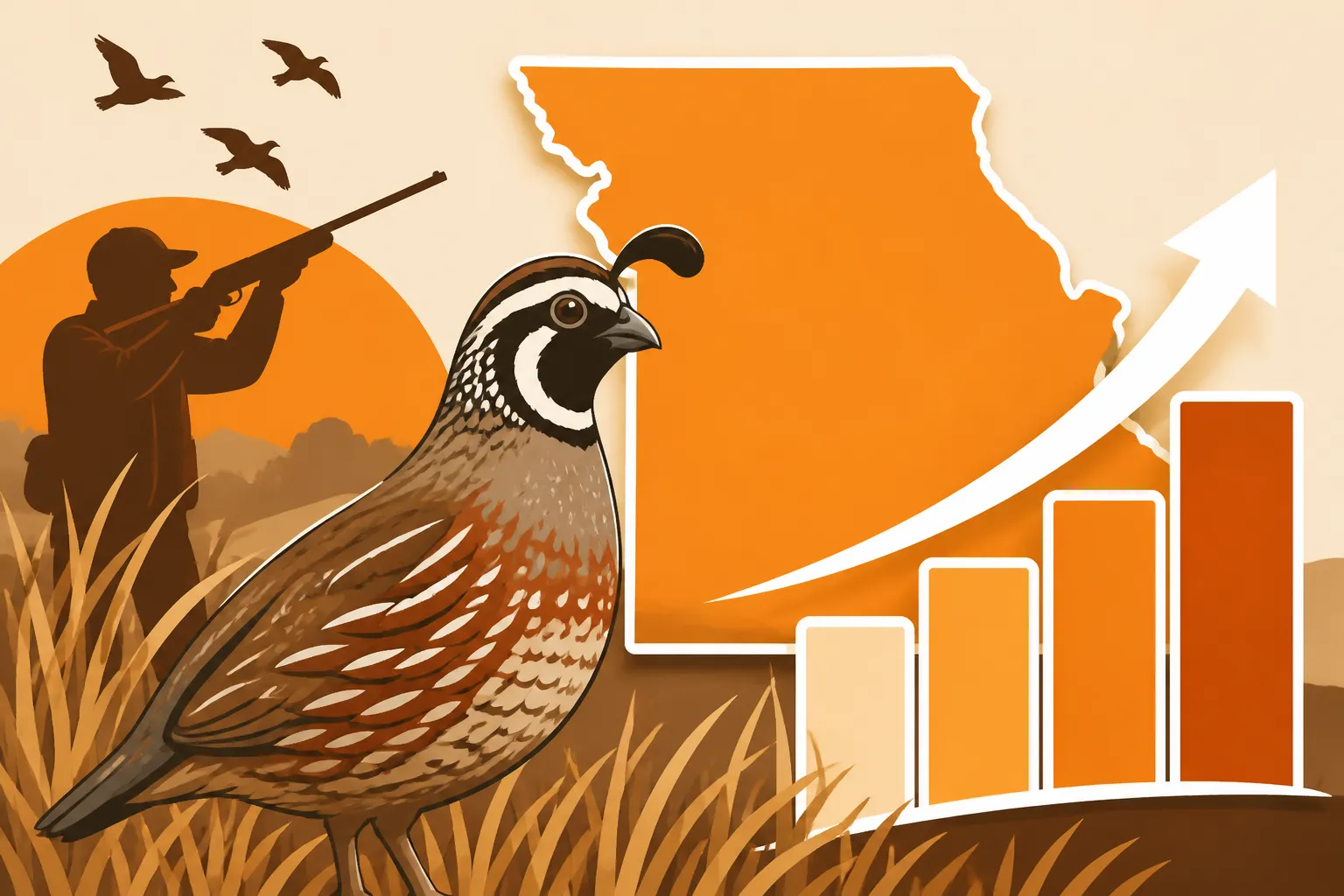
Missouri Quail Harvest Numbers
For many of us who cherish the tradition of chasing bobwhite quail across Missouri's diverse landscapes, there's often a quiet frustration – or sometimes a not-so-quiet one – about how hard it can be to find birds. You want to know if it's just your bad luck, or if the overall picture for quail hunting is shifting. This comprehensive guide will peel back the layers of Missouri's quail harvest numbers, explaining what they mean, what influences them, and how understanding these trends can help you have more successful days afield, even when the numbers aren't what they once were.
Understanding Missouri's Quail Harvest Data
When you hear talk about "harvest numbers," it's easy to jump straight to the idea of a simple count of birds taken. But the truth is, these figures are much more than just tallies. They're a vital piece of the puzzle that helps wildlife biologists and managers understand the health of our quail populations, assess the impact of various factors, and make informed decisions about future seasons and conservation strategies. For hunters, knowing how these numbers are gathered and what they truly represent can provide valuable context for your own experiences in the field.
The Purpose of Harvest Monitoring
The primary goal of monitoring quail harvest isn't just to track how many birds hunters shoot; it's to get a pulse on the overall population trend. Think of it like a doctor checking your blood pressure – it’s one indicator among many that points to your general health. For quail, harvest data, when combined with other surveys like covey counts and breeding bird surveys, helps the Missouri Department of Conservation (MDC) estimate population sizes, reproductive success, and overwinter survival. If harvest numbers plummet, it signals a potential problem, prompting biologists to investigate habitat conditions, weather impacts, or disease outbreaks. This monitoring is crucial for setting Missouri Quail Season Dates and bag limits that ensure sustainable hunting opportunities for future generations, rather than just reacting to anecdotal reports from hunters. Without this comprehensive data, it would be much harder to make management decisions that truly benefit the quail and the hunting community.
How Harvest Data is Collected
Collecting statewide harvest data for a species like the bobwhite quail isn't as straightforward as counting deer checked through Telecheck. Quail hunting often involves multiple small game species, and hunters may not always report individual species taken. Historically, and still largely today, harvest data for small game like quail comes primarily from hunter surveys. After the season closes, a statistically significant sample of hunters who purchased small game permits receive questionnaires. These surveys ask about the number of days they hunted, the counties they hunted in, and the number of quail (and other small game) they harvested. The MDC then extrapolates these responses to estimate the total statewide harvest. This method provides a reliable estimate, though it's important to remember it’s an estimate based on self-reported data, not an exact count. Factors like hunter participation, which can fluctuate with interest and perceived bird numbers, also play into the final published harvest figures. It’s an imperfect system, but it’s the best way to get a broad picture of what happened across the state.
What Quail Harvest Numbers Really Tell Us
Quail harvest numbers, at their core, reflect two main things: the size of the quail population and the amount of hunting effort. If the population is robust and many hunters are out, harvest numbers will likely be higher. Conversely, if the population is down, or if fewer people are hunting because they perceive there are fewer birds, the harvest numbers will drop. What they don't tell us, however, is the full story of why. A low harvest number doesn't automatically mean hunters are less skilled; it could mean harsh winter weather impacted overwinter survival, or a wet spring led to poor nesting success. It also doesn't necessarily indicate a lack of birds in your specific hunting spot. Local populations can boom or bust independently of broader trends. Therefore, while statewide harvest numbers provide a critical overview, individual hunters need to combine this information with their own scouting and local observations. It’s about understanding the macro trend while still focusing on the micro reality of your specific hunting grounds.
Analyzing Historical Quail Harvest Trends
Missouri has a rich history of quail hunting, but like many states in the Midwest, our bobwhite populations have faced significant challenges. Looking at historical harvest trends paints a clear picture of these changes, highlighting periods of abundance, steep declines, and occasional, hopeful upticks. It’s a sobering look at a cherished game bird, but understanding these trends is essential for anyone passionate about hunting Northern Bobwhite Quail in Missouri.
The Long-Term Decline in Missouri
If you've been hunting quail in Missouri for more than a couple of decades, you've likely witnessed the long-term decline firsthand. Many hunters who grew up in the 60s, 70s, and even early 80s recall days when finding multiple coveys wasn't just common, it was expected. The state's quail population trend has been on a downward trajectory for many years, largely paralleling changes in agricultural practices and overall Habitat Loss and Missouri Quail. Fields that once offered a mosaic of cover – fence rows, brushy draws, small crop fields, and diverse native grasses – have been consolidated into larger, more monoculture operations. This loss of suitable habitat, especially reliable nesting and overwintering cover, is the single biggest driver of the quail's struggle. The harvest numbers from decades past, though not directly comparable with today's figures without specific context, were undoubtedly much higher, reflecting a landscape far more amenable to quail. This decline isn't unique to Missouri; it's a regional issue across much of the bobwhite's range, leading to fewer hunting opportunities and significantly lower overall harvest totals compared to historical highs.
Fluctuations and Recent Bright Spots
While the overall trend has been downward, it hasn't been a steady, straight line into oblivion. There have been fluctuations, and even some encouraging bright spots in more recent years, often tied to specific weather patterns. For instance, a mild winter followed by a dry, warm spring and summer can lead to an excellent hatch and high poult survival, resulting in more birds on the ground by fall. These favorable conditions can lead to a noticeable bump in harvest numbers for a season or two. Conversely, severe winters with heavy snow and ice, or prolonged wet and cold springs, can devastate populations, leading to lower harvests. Areas with active habitat management, such as those within the MDC's Missouri Quail Restoration Landscapes program, also tend to show more consistent, if still modest, improvements. Hunters on these managed areas might experience better success, even when the broader statewide numbers are struggling. These localized successes offer a glimmer of hope and demonstrate that habitat work truly makes a difference in specific areas, even if it hasn't fully reversed the statewide Bobwhite Quail Decline in Missouri.
Regional Differences Across the State
Missouri is a diverse state, from the rolling farmlands of the north to the rugged Ozark hills and the agricultural flatlands of the Bootheel. It stands to reason that quail populations, and thus harvest numbers, vary significantly by region. North Missouri, particularly the unglaciated plains, often holds the highest potential for quail, especially in areas with a mix of row crops, fallow fields, and undisturbed grass and brush. This region typically accounts for a larger portion of the state's total quail harvest when compared to, say, the heavily forested Ozarks. In the Ozarks, quail are more patchily distributed, often found along creek bottoms, old logging roads, and forest edges where some clearings and native grasses persist. The Bootheel, with its intensive agriculture, presents its own challenges, but some areas with strong cover still support huntable populations. These regional variations mean that while statewide numbers provide an average, your actual hunting experience will be heavily influenced by the specific county and habitat type you choose. Tools like GoHunt can be invaluable here, allowing you to scout satellite imagery for regions that exhibit the habitat characteristics quail need, such as good edge cover and a mix of agriculture and native grasses.
Key Factors Influencing Annual Quail Harvest
Understanding the big picture of quail harvest numbers means looking beyond just how many birds hunters took. It requires delving into the fundamental ecological factors that dictate whether a quail population thrives or struggles. These elements – primarily habitat and weather – are the true drivers behind the annual fluctuations we see in the field.
Habitat Quality and Quantity
Without good habitat, you simply won't have quail, regardless of how great the weather is. Habitat is the cornerstone of quail survival and reproduction. Ideal quail habitat is a patchwork of native grasses for nesting and brooding, dense brushy cover for protection from predators and winter weather, and food sources like seeds and insects. When any part of this mosaic is missing or fragmented, quail numbers suffer. This is why Habitat Loss and Missouri Quail is such a critical issue, directly impacting harvest potential. The reduction of fence rows, conversion of diverse pastures to monoculture crops, and the general "tidying up" of the landscape have eliminated vital cover. Even on public lands, the type and quality of habitat directly correlate with covey abundance. Areas managed with prescribed burns, disking, and native grass plantings consistently hold more birds. Hunters who utilize mapping tools like GoHunt often spend hours before the season looking for these specific habitat elements—edge cover, brushy draws, and old fields—which can be a strong predictor of where they might find birds, far more so than just historical harvest data.
| Habitat Component | Quail Benefit | Impact on Harvest |
|---|---|---|
| Native Grasses | Nesting, brooding, insect production (chick food), escape cover | Higher nesting success, more chicks surviving to maturity, increased huntable populations. |
| Brushy Thickets | Thermal cover (winter), predator protection, escape routes | Better overwinter survival, reduced predation, birds holding tighter for dogs, increasing hunter success. |
| Diverse Cropland Edges | Food (waste grain, weed seeds), bugging areas, travel corridors | Ample food supply, better body condition, more available calories through winter. |
| Fallow Fields/Old Fields | Variety of food, diverse insect populations, secondary nesting sites | Expanded foraging opportunities, additional nesting/brooding areas, more available birds. |
| Woodland Edge/Thinning | Escape cover, some food, transition zones | Creates valuable "edge effect," increasing overall habitat diversity and bird numbers in those transition areas. |
Weather Patterns and Their Impact
Mother Nature plays an enormous, often unpredictable, role in quail populations. Weather impacts every stage of a quail's life cycle. A mild winter, for instance, means less stress on adult birds, leading to better survival rates into the breeding season. Conversely, a harsh winter with deep snow and prolonged ice can lead to significant mortality, as birds struggle to find food and shelter, directly reducing the number of birds available for the next fall's harvest.
Spring and summer weather are even more critical for reproductive success. A warm, dry spring often translates to better nesting conditions, higher clutch success, and fewer chicks lost to hypothermia or drowning. On the flip side, a cold, wet spring can be devastating for young chicks, which are highly susceptible to exposure. Prolonged drought can also negatively affect insect populations, which are a vital food source for growing quail chicks. Missouri has seen its share of these ups and downs, and hunters who pay attention to regional weather patterns often have a better idea of what to expect come October. Knowing if the spring was favorable for nesting can provide a more immediate forecast for the upcoming season than looking solely at past harvest numbers.
Predation and Other Ecological Pressures
While habitat and weather are the biggest factors, predation also plays a role in Missouri quail, especially when populations are already stressed by poor habitat. Predators like coyotes, bobcats, raccoons, and raptors are always present, and their impact can be magnified when quail lack adequate escape cover. If a covey has no dense thicket to dive into when a hawk flies over, or if nesting hens are exposed in sparse cover, predation rates can increase. This isn't usually the cause of quail decline, but rather an intensifier of problems already created by poor habitat. Diseases, though less commonly cited for widespread bobwhite decline, can also periodically impact local populations. Additionally, factors like pesticides in agricultural areas can affect insect populations, thus reducing food availability for chicks. It's a complex web of interactions, and while hunters can't control most of these pressures, understanding them helps frame the challenges facing our cherished bobwhites and why those harvest numbers sometimes feel so low.
Maximizing Your Chances: Using Data for Better Hunts
Given the challenges facing Missouri's quail, it's more important than ever for hunters to be strategic and adaptable. While the statewide Missouri Quail Harvest Numbers might tell a broad story, how you prepare and hunt can significantly influence your personal success. It's about working smarter, not just harder, and making every moment in the field count.
Pre-Season Scouting and Planning
Long before opening day, smart quail hunters are already putting in the work. This isn't just about reading harvest reports; it's about connecting the dots between those trends and the actual landscape. Start by identifying areas with a history of quail activity or those that have undergone habitat management. The MDC's website often provides county-level information or reports on habitat projects that can point you in the right direction. Utilize tools like the Missouri Conservation Atlas or advanced mapping apps like GoHunt to pore over satellite imagery. Look for those crucial habitat components we discussed earlier: field edges, brushy draws, native grass patches, and areas with diverse cover types. Pay attention to how these areas connect, thinking about travel corridors and escape routes.
Consider the Missouri Quail Season Dates and the weather leading up to them. If it was a good hatch year, you might find more birds in younger, more open cover early in the season. If not, focus on prime, dense cover. Even if you don't find a single covey during a summer scout, you can identify potential hotspots and save valuable hunting time. Remember, the Missouri Quail Daily Bag Limit is designed to ensure sustainable hunting, but your goal is to locate quality areas, not just any area.
In-Season Adaptations and Strategies
Once the season starts, don't be afraid to adjust your plans based on what you're seeing (or not seeing). If you're Walking Missouri Quail Cover With a Dog and consistently coming up empty in one type of cover, switch it up. Birds are creatures of habit but also opportunistic, moving to where food and cover are most readily available. Early in the season, when temperatures might still be warm, quail may stick closer to water sources or denser shade. Later in the season, after cover has thinned or after a cold snap, they'll gravitate towards heavier, thermal cover like plum thickets or cedar groves.
Pay attention to hunting pressure. Areas that get hit hard on opening weekend might be better left alone for a week or two to let the birds settle. Consider expanding your search to less accessible areas; often, the hardest places to reach hold unpressured birds. Learn how to Working Field Edges and Draws for Quail, paying close attention to transitional zones where different cover types meet. Your dog's behavior is your best indicator – trust their nose. Successful quail hunting is an ongoing learning process, and every trip provides valuable information for the next. The best hunters aren't just reacting; they're constantly observing and adapting to the birds and their environment.
Supporting Quail Conservation Efforts
Ultimately, the long-term future of Missouri quail hunting depends on the health of the habitat, and that's where every hunter can make a difference. Understanding Missouri Quail Harvest Numbers should motivate us to be advocates for conservation. This might mean supporting organizations that work on habitat restoration, volunteering for local habitat projects, or even implementing small-scale habitat improvements on your own land or with landowner permission. Simple practices like leaving brush piles, planting native grasses, or managing field edges for wildlife can have a surprisingly positive impact.
Being an ethical hunter is also a form of conservation. Respecting bag limits, practicing good sportsmanship, and ensuring clean harvests all contribute to a positive image of hunting and help ensure the resource is managed responsibly. By actively participating in habitat efforts and promoting sound conservation, we can all play a part in trying to bring those quail numbers back up, ensuring future generations can experience the thrill of a covey rise. Perhaps by working together, we can turn the tide and see more consistent bright spots in those annual harvest reports.
Disclaimer
This article is for general informational purposes only and does not constitute professional advice. Laws, prices and regulations vary by location and change over time. Consult a qualified professional for guidance on your specific situation.