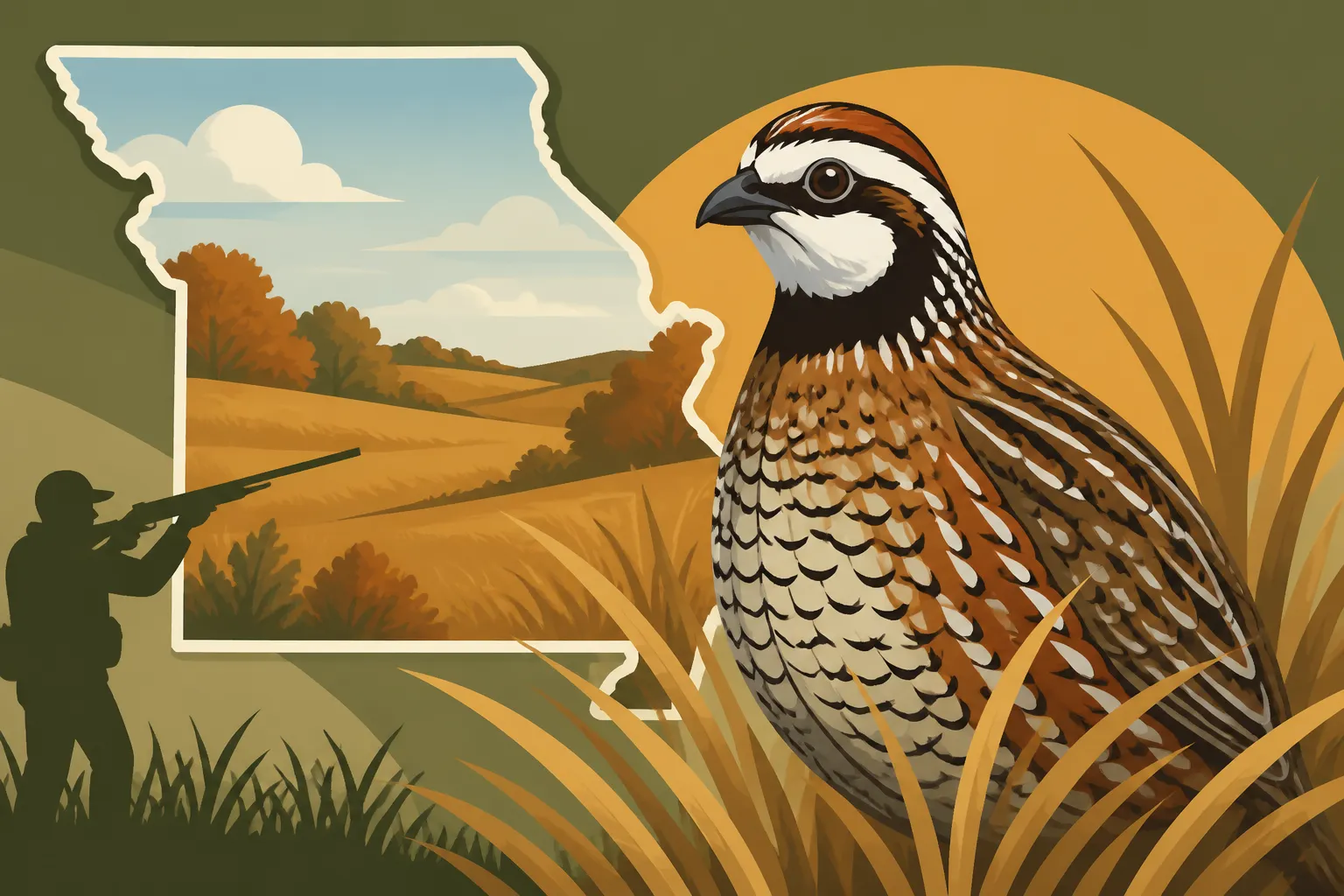
Northern Bobwhite Quail in Missouri
Oh, the sound of a bobwhite whistle drifting across a frosty field at dawn – there's really nothing quite like it, is there? For so many of us who grew up hunting in Missouri, that distinct call was once a common soundtrack to autumn. But if you've been in the field lately, you know that sound has become a lot rarer, leading to plenty of frustration and disappointment for those of us who cherish chasing these incredible birds. This guide is dedicated to bringing you a comprehensive look at the Northern Bobwhite Quail in Missouri: understanding their history, where they are now, what challenges they face, and what we can all do to help ensure this iconic game bird thrives for generations to come.
The Haunting Echo: Understanding the Bobwhite's Decline
It’s no secret that the glory days of knee-high quail coveys exploding from every fencerow are largely a thing of the past across much of Missouri. This isn't just a nostalgic feeling; the numbers truly reflect a dramatic decline. Many of us who remember hunting with our fathers and grandfathers can attest to the abundance that once existed, and the current scarcity can be disheartening. The drop in Northern Bobwhite Quail populations isn't unique to Missouri, but it's particularly felt here, given our state's rich history as prime quail country.
A Look at Historical Abundance
Back in the mid-20th century, Missouri was a quail hunter's paradise. Picture endless small farms with diverse crops, brushy draws, ungrazed fencerows, and small timber blocks mixed together. This patchwork landscape provided an ideal mosaic of food, cover, and nesting habitat. Hunters routinely reported flushing multiple coveys in a single outing, sometimes dozens, across a few hundred acres. This wasn't just anecdotal; scientific surveys from that era supported these observations. The population seemed almost limitless, a true testament to how perfectly the landscape aligned with the bobwhite's needs.
The common understanding was that the quail population would always rebound, even after harsh winters or heavy hunting pressure. Farmers often practiced less intensive agriculture, allowing for more "edge" habitat – the critical transition zones between fields and forests that quail absolutely thrive in. Fields were smaller, tillage less aggressive, and herbicides not as widespread, all contributing to a rich buffet of seeds and insects. These conditions fostered incredibly robust quail numbers, making a limit of birds a realistic goal on most hunts.
Key Factors in Population Decline
So, what changed? Unfortunately, a perfect storm of factors has led to the significant downturn in quail populations. The primary culprit is undoubtedly habitat loss and degradation. As agriculture industrialized, small, diverse farms gave way to massive monoculture operations. Fencerows were cleared to make larger fields for efficiency, brushy draws were "cleaned up," and pastures were intensively grazed or converted entirely to row crops. This eliminated the crucial year-round food, nesting cover, and escape cover that bobwhites need to survive.
Beyond habitat, increased predation plays a role. While predators are a natural part of any ecosystem, the loss of dense cover makes quail more vulnerable to everything from coyotes and foxes to raccoons and raptors. Weather patterns also have a huge impact. Extremely wet springs can devastate nesting success and poult survival, while severe winters, especially with deep snow, can limit food access and lead to starvation. It's a complex web of environmental pressures that our quail are struggling to navigate, and the cumulative effect has been devastatingly clear to anyone who's spent time pursuing them.
What Covey Counts Reveal
The Missouri Department of Conservation (MDC) has long tracked quail populations through various surveys, including roadside covey counts and hunter harvest surveys. These data sets paint a stark picture. From peak numbers in the 1950s and 60s, a steady, often steep, decline began in the 1970s and has continued, albeit with some minor fluctuations, to the present day. While there might be local bright spots or areas where numbers seem to hold their own, the overall statewide trend has been undeniably downward.
These annual reports, which track metrics like the number of coveys heard per mile or the average number of birds per covey, serve as a sober reminder of the challenges ahead. They also highlight the direct correlation between good habitat and strong quail numbers. Areas that maintain diverse, robust cover and food sources almost invariably show better counts than those dominated by intensive agriculture. Understanding these trends is the first step in addressing the problem, providing critical information for conservation efforts and for hunters trying to find those elusive birds. You can always check the latest Covey Counts and What They Show reports on the MDC website to get a current picture.
Where Quail Still Whisper: Current Strongholds and Habitat
Despite the overall decline, Northern Bobwhite Quail aren't completely gone from Missouri. There are still pockets, certain regions, and specific habitat types where you can find these cherished birds. It often requires more dedicated scouting and a keen eye for ideal cover, but the reward of a wild covey flush is still very much alive. Knowing where to focus your efforts is half the battle in today's quail hunting landscape.
Northern and Western Missouri Quail Range
Historically, some of the best quail hunting in Missouri was found in the northern and western parts of the state. These regions, characterized by rolling prairie, diverse agricultural lands, and abundant edge habitat, were bobwhite strongholds. Today, while numbers are down everywhere, these areas still tend to hold the highest concentrations of remaining quail, particularly in counties that have retained more diverse farming practices or where significant conservation efforts are underway.
Think of the counties bordering Iowa and Kansas, where properties might still have brushy fencerows, small native grass fields, and a mix of timbered draws cutting through crop fields. These are often the places where you'll hear that familiar whistle. The challenge is that these areas also tend to be highly productive agricultural land, so finding permission on private property or locating public lands with adequate habitat can be a puzzle. Services like GoHunt can be incredibly useful for scouting these areas from afar, helping you identify potential properties with the right mix of cover and food sources before you ever set foot on the ground. It’s about looking for those nuanced differences in land use.
Ozark Glades and Timber Edges
The Ozarks, with its rugged terrain and extensive timber, isn't typically thought of as prime quail country. However, specific habitats within the Ozarks can hold surprisingly good numbers of birds. Look for glade ecosystems – open, rocky areas with sparse timber and native warm-season grasses. These unique habitats, often managed with prescribed fire, provide excellent quail cover and insect populations. Additionally, the edges where timber meets old fields, power line cuts, or even managed food plots can be productive.
Hunting these areas often requires a different approach than the rolling farm fields of northern Missouri. The terrain is tougher, and coveys tend to be more spread out or concentrated in very specific pockets. But for those willing to put in the legwork, the Ozarks can offer a rewarding experience. It's about thinking outside the traditional quail box and focusing on the unique ecological niches that provide for them. For those interested in deeper dives into these areas, articles like "Missouri's Restored Wild Turkey Flock" often discuss overlapping habitat improvements that benefit both species.
Critical Habitat Components for Quail Survival
No matter where you're hunting, understanding what constitutes good quail habitat is paramount. Bobwhites are creatures of edge and diversity. They need a mosaic of different cover types within a small area, ideally within a few hundred yards of each other. This includes dense nesting cover (like native warm-season grasses or old field successions), brood-rearing cover (areas with abundant insects and overhead protection from raptors, often found in early successional vegetation), escape cover (thick brushy thickets, briar patches, plum thickets), and reliable food sources (weed seeds, waste grain, insects).
A typical quail "honey hole" might include a field of standing corn or milo (food), bordered by a brushy fencerow (escape cover), which transitions into a field of native grasses like switchgrass or big bluestem (nesting/roosting cover), all within a short distance. The absence of just one of these components can severely limit a covey's ability to survive and thrive. This is why widespread agricultural intensification has been so detrimental – it simplifies the landscape, removing these crucial elements.
The Comeback Kids: Missouri's Quail Restoration Landscapes
While the news about quail has been tough, there's a beacon of hope shining brightly in Missouri: the dedicated efforts of the MDC and various private landowners in creating "quail restoration landscapes." These are areas where intensive habitat management is actively bringing back the diverse cover that bobwhites need. For hunters, these places represent some of the best opportunities to find wild birds today.
What a Quail Restoration Landscape Is
A quail restoration landscape isn't just a randomly managed field; it's a strategically planned and actively managed area designed to provide the entire suite of habitat needs for Northern Bobwhite Quail throughout their life cycle. These landscapes often span multiple properties, involving partnerships between private landowners and conservation agencies, or are found on larger public conservation areas. The goal is to create that vital mosaic of nesting cover, brood cover, escape cover, and food sources, often mimicking the diverse small farm landscapes of the past, but on a larger, more integrated scale.
Key components of these landscapes often include establishing native warm-season grasses (which provide excellent nesting and roosting cover), creating shrubby hedgerows and thickets (crucial escape cover), planting diverse food plots (such as milo, sunflowers, or various legumes), and implementing prescribed burning or disking to set back succession and promote desirable plant growth. The management is active, ongoing, and tailored specifically to the needs of quail, making them truly special places for the birds and for hunters. If you're looking for where the birds are, these are your best bets. You can find out more about What a Quail Restoration Landscape Is by exploring the MDC's resources.
Where Missouri's Restoration Landscapes Are
The MDC has focused its efforts on several key regions across the state, identifying areas with suitable soils and willing partners to establish these restoration landscapes. These aren't always located in the traditionally "best" quail counties, but rather where the greatest impact can be made through dedicated habitat work. North-central and western Missouri often feature prominently, but efforts are state-wide. For example, specific Conservation Areas (CAs) like Bob Brown CA or Union Ridge CA are well-known for their quail management, offering hunters a chance to experience managed quail habitat firsthand.
Often, these areas are collaborative, encompassing tracts of public land managed by the MDC alongside adjacent private land where landowners are participating in federal programs like the Conservation Reserve Program (CRP) or state-specific initiatives. Finding these areas requires a bit of research, but the MDC website and local conservation agents are excellent resources. Using mapping tools, you can often identify these managed areas by their characteristic patchwork of different cover types, standing out from surrounding monoculture fields.
Finding Coveys on a Restoration Landscape
Hunting a restoration landscape requires patience and a good understanding of quail behavior. While the habitat is improved, the birds are still wild and can be tricky. When approaching these areas, focus on the edges where different habitat types meet. Quail rarely spend all their time in one type of cover; they move between them for different needs. Look for the transition zones between native grass fields and brushy draws, or where a food plot borders a thicket. These "soft edges" are prime locations for coveys to hold.
Walk slowly and deliberately, paying attention to wind direction, as dogs will work best scenting into the wind. If you have a good bird dog, trust their nose. They'll often indicate birds long before you see them. Without a dog, it becomes a much tougher game, but you'll need to grid-search areas thoroughly, paying close attention to any sudden flushes or signs of activity. Remember, quail are masters of camouflage, so they'll often hold tight, only flushing at your feet. Being ready for that explosive rise is key. Knowing how to predict where coveys might be found is crucial, which is why resources like "Finding Coveys on a Restoration Landscape" can be so helpful.
Hunting the Little Dynamos: Tactics for Missouri Quail
Chasing Northern Bobwhite Quail is a truly classic upland hunting experience, but it takes specific tactics, especially with today's lower populations. It’s not just about walking fields anymore; it’s about reading the cover, working with (or without) a dog, and being ready for that sudden, exhilarating explosion of feathers. The satisfaction of connecting on a covey flush is something every upland hunter cherishes.
Walking Missouri Quail Cover With a Dog
For many, quail hunting is dog hunting. A well-trained bird dog is undoubtedly the most effective tool for finding quail in Missouri's varied cover. The dog's superior sense of smell can locate birds that a human would walk right past, and their ability to "point" allows the hunter to prepare for the flush. When Walking Missouri Quail Cover With a Dog, it's essential to work in a systematic pattern, ensuring you cover likely habitat thoroughly without leaving gaps. Start by working the edges of fields, especially where taller cover meets shorter vegetation, or where food plots transition into escape cover.
Pay close attention to your dog's body language. A change in gait, a raised head, or a sudden pause can indicate that they're "birdy." Once on point, approach cautiously, flanking the dog if possible to put the birds between you and the dog, which often results in clearer shots. Be ready for multiple birds to flush simultaneously or in quick succession. After the shot, command your dog to retrieve promptly, ensuring every bird is found. Early season hunts can be tough on dogs due to heat, so always carry water and monitor your dog for signs of overheating.
Working Field Edges and Draws for Quail
No matter if you're hunting with a dog or going it alone, focusing on field edges and draws is a tried-and-true tactic for Missouri quail. Quail thrive in "edge" habitat, the transition zones where different cover types meet. Think of where a cornfield borders a brushy creek bottom, or a native grass field meets a timber line. These are natural travel corridors and holding areas for coveys. Walk these edges slowly, pausing frequently, as quail often hold tight.
Draws and fencerows, even narrow ones, act as linear habitats that birds use for travel, roosting, and escape. When working a draw, consider the wind and try to push birds towards thicker cover or open areas where shots might be clearer. If hunting without a dog, you'll need to be exceptionally methodical, often walking in a zigzag pattern to try and kick up birds. The key is never to give up on a piece of cover, no matter how small or unassuming it looks, as quail can pack into surprisingly tight spaces. Services like GoHunt can help you identify these specific linear features and edges on aerial maps, allowing you to plan your approach even before you get to the field.
Hunting Missouri Quail Without a Dog
While challenging, hunting quail without a dog is certainly possible, though it demands a different strategy and a lot more footwork. The core principle remains the same: find good habitat. Without a dog's nose, you become the primary scout, relying on your eyes and ears. Look for obvious signs of quail activity, though these are rare. More importantly, focus on cover that forces birds to flush. This means concentrating on small, dense patches of cover, briar thickets, plum hedges, and heavy fencerows where birds can't run indefinitely.
Walk slowly, often pausing for several seconds in likely spots. This "stop-and-go" method can sometimes make nervous birds flush, as they might be less likely to tolerate a stationary hunter than a moving one. Try to zig-zag through cover rather than walking in a straight line, as this can increase your chances of stepping close enough to a covey. Be ready for the sudden flush; without a dog's point, every step could be the one that sends a covey skyward. It’s hard work, but connecting on a covey flush when Hunting Quail Without a Dog is an incredibly rewarding experience, a true testament to persistence.
Conservation in Action: What's Being Done for Quail
It's easy to feel disheartened by the decline of Missouri's Northern Bobwhite Quail, but it's important to remember that dedicated people are working tirelessly to bring them back. The Missouri Department of Conservation (MDC), along with numerous private landowners and conservation groups, are implementing strategies and programs aimed at reversing the trend. These efforts provide a glimmer of hope for the future of quail hunting in the state.
MDC Programs and Initiatives
The MDC is at the forefront of quail conservation in Missouri, investing significant resources into habitat improvement, research, and landowner assistance programs. One of their major focuses is on promoting native warm-season grasses (NWSG) and early successional habitat. These plant communities provide ideal nesting and brood-rearing cover, as well as crucial insect forage for young quail. The MDC often works directly with private landowners, providing technical advice, cost-share programs, and even equipment to help establish these vital habitats.
Beyond direct habitat work, the MDC conducts extensive research into quail biology, population dynamics, and the effectiveness of various management techniques. They monitor populations through annual surveys, allowing them to track trends and adapt strategies. They also play a crucial role in public education, raising awareness among hunters and non-hunters alike about the importance of quail conservation and the critical role habitat plays. Their efforts are comprehensive, aiming to address the root causes of decline.
Landowner Cooperatives and Shared Ground
A powerful force in Missouri quail conservation is the growing movement of landowner cooperatives. Recognizing that quail populations don't respect property lines, these initiatives bring together multiple private landowners in a given area to manage their properties cooperatively for quail habitat. By coordinating their efforts, they can create larger, more interconnected blocks of ideal habitat, allowing quail populations to expand and thrive over broader landscapes.
These cooperatives often receive support and guidance from the MDC or organizations like Quail Forever, which helps them develop habitat management plans, secure funding, and share best practices. It's a testament to the community spirit of Missouri hunters and conservationists, working together to create a better future for the bobwhite. The cumulative effect of these shared grounds and coordinated efforts can be much greater than individual efforts alone, showcasing the power of collaborative conservation. Understanding how these cooperatives operate can sometimes even lead to new access opportunities, as discussed in "Missouri Landowner Cooperatives and Shared Ground".
The Role of Organizations Like Quail Forever
Conservation organizations such as Quail Forever (QF) are absolutely vital to the future of Northern Bobwhite Quail in Missouri. QF works hand-in-hand with the MDC, private landowners, and other partners to deliver on-the-ground habitat projects. They have dedicated biologists who serve as technical experts, helping landowners enroll in conservation programs, design habitat plans, and implement practices like native grass plantings, prescribed fire, and shrub thicket development.
QF's model is particularly effective because it emphasizes local chapters, empowering volunteers to make a direct impact in their communities. They raise funds through local banquets and events, with a significant portion of those funds staying in the local area for habitat projects. Their advocacy for sound conservation policy and their commitment to scientific, habitat-first approaches make them a leading voice in the fight to bring back the bobwhite. Their work, alongside the MDC and private citizens, is a critical piece of the quail restoration puzzle.
The Future of Missouri Quail: Challenges and Hope
Looking ahead, the path for Northern Bobwhite Quail in Missouri remains challenging, but not without hope. The complex issues of habitat loss, climate change, and economic pressures on landowners continue to create headwinds for conservation. However, the passion of hunters, the dedication of conservation professionals, and the increasing understanding of ecological restoration provide reasons for optimism.
Overcoming Ongoing Habitat Challenges
The biggest hurdle for quail recovery continues to be habitat. The economic realities of modern agriculture often mean that every acre is maximized for crop production, leaving little room for the "weeds and brush" that quail need. Changing land-use patterns, urban sprawl, and even the aging demographic of landowners can make it difficult to implement and maintain large-scale habitat projects. It's a constant battle to convince landowners of the long-term benefits of habitat diversity, especially when short-term economic gains might seem more attractive.
Furthermore, even when habitat is restored, maintaining it is an ongoing process. Succession constantly pushes early successional habitat towards timber, requiring active management through prescribed fire, disking, or selective cutting. Funding for these efforts, both public and private, is always a concern. Overcoming these entrenched challenges requires innovation, persistent outreach, and demonstrating the value of quail and healthy ecosystems beyond just hunting.
Climate Change and Weather Volatility
Climate change introduces another layer of uncertainty for quail populations. Increasingly volatile weather patterns – more intense droughts, heavier rains, and unseasonable temperature swings – can have significant impacts on nesting success, poult survival, and overall bird health. For example, a late spring freeze followed by an exceptionally wet nesting season can decimate an entire year's hatch.
While we can't control the weather, understanding these trends allows conservationists to adapt strategies, perhaps by emphasizing drought-resistant food sources or promoting more resilient habitat structures. It also means that local weather events can cause dramatic year-to-year fluctuations in quail numbers, adding to the unpredictable nature of quail hunting. The impact of such changes on birds is increasingly understood, influencing strategies like those used in "Weather in the Weeks After the Hatch".
The Promise of Continued Conservation
Despite the challenges, the commitment to quail conservation in Missouri is stronger than ever. The increasing scientific understanding of bobwhite ecology, coupled with advancements in habitat restoration techniques, offers powerful tools for recovery. The dedication of organizations like Quail Forever, the MDC, and thousands of private landowners who are passionate about bringing back the bobwhite, provides a solid foundation of hope.
Every acre of native grass planted, every brushy draw restored, and every prescribed burn conducted adds another piece to the puzzle of quail recovery. The fact that Missouri hunters continue to value these birds and support conservation efforts, often through their permit purchases and donations, shows a collective will to ensure the bobwhite's whistle is heard for generations to come. It’s a long game, but one that is absolutely worth playing.
Permits and Regulations for Chasing Bobwhites
Before you head afield in pursuit of Missouri's Northern Bobwhite Quail, it's absolutely crucial to understand the permits required and the regulations that govern the season. The Missouri Department of Conservation sets these rules to ensure sustainable hunting practices and to help manage the quail population responsibly.
Missouri Small Game Permit Requirements
To legally hunt Northern Bobwhite Quail in Missouri, you'll need to possess a valid Missouri Small Game Hunting Permit. This permit covers a variety of small game species, including quail, rabbits, squirrels, and more. It's essential that this permit is purchased and in your possession (either physically or digitally via the MO Hunting app) before you begin hunting. Residents and non-residents have different permit costs, so be sure to check the current fee schedule on the MDC website.
In addition to the small game permit, if you are a resident between the ages of 16 and 64, you typically need to have a Conservation Permit as well, often packaged as a "Resident Small Game Hunting and Fishing Permit." Always double-check the current regulations before you go afield, as rules can occasionally change. For new hunters or those who haven't hunted in a while, ensuring you have the correct documentation is the first step to a legal and enjoyable hunt. The MDC's website is the best place to find current information on What the Small Game Permit Covers and how to acquire it.
Missouri Quail Season Dates and Limits
The Missouri quail season typically opens in early November and runs through mid-January, providing a generous window for hunters to pursue these birds. However, specific dates can vary slightly year-to-year, so always consult the latest MDC hunting regulations booklet or website for the exact season dates. Knowing these dates is critical for planning your hunts and avoiding any accidental violations.
When it comes to limits, Missouri has a daily bag limit and a possession limit. The daily bag limit refers to the maximum number of quail you can harvest in a single day, while the possession limit is the total number of harvested quail you can have in your possession at any given time, including those at home in your freezer. These limits are set to manage the harvest sustainably and help protect the breeding population. Always be aware of both limits and adhere to them strictly. You can easily find the specific Missouri Quail Season Dates and Missouri Quail Daily Bag Limit on the MDC's official resources.
General Hunting Regulations and Safety
Beyond permits and limits, there are several general regulations and safety considerations to keep in mind when hunting quail in Missouri. Legal shooting hours typically run from one-half hour before sunrise to sunset. Always be aware of your surroundings, especially if hunting on public land where other hunters or outdoor enthusiasts might be present. Hunter orange is not explicitly required for upland bird hunting in Missouri, but it is highly recommended for safety, especially when hunting with multiple people or dogs.
Ensure your firearm is legally compliant, and always practice safe gun handling. This includes knowing your target and what's beyond it, keeping your muzzle pointed in a safe direction, and treating every firearm as if it's loaded. When hunting with dogs, ensure they are also wearing some form of visible color or bell to help keep track of them and to alert others. Respect private property boundaries, even on public land, and always ask for permission if you are unsure about land ownership. The MDC Conservation Atlas, available online or in print, can be an invaluable tool for identifying property lines and public access points.
Essential Gear for the Missouri Quail Hunter
Quail hunting in Missouri, particularly on public lands or diverse habitat types, requires a thoughtful selection of gear. Having the right tools won't guarantee a covey flush, but it will certainly make your hunt more comfortable, safer, and more effective. From your firearm to your footwear, every piece plays a role in a successful day afield.
Shotguns and Loads for Missouri Bobwhites
When it comes to firearms, a lightweight, fast-handling shotgun is ideal for quail. The classic choices are 12-gauge or 20-gauge shotguns, with many hunters preferring the lighter recoil and easier carry of a 20-gauge, especially during a long day of walking. Over-and-under or side-by-side models are popular for their balance and quick follow-up shots, but pump-action and semi-automatic shotguns are also effective. The key is a gun you can shoulder quickly and accurately.
For shot size, smaller shot is preferred for quail. No. 7.5 or No. 8 lead shot are common choices, providing a dense pattern ideal for the relatively small body size of a bobwhite. For choke, an open choke like Improved Cylinder or Skeet is often best for the close-range, exploding flushes typical of quail. Some hunters might opt for a Modified choke as well, especially if birds are flushing a bit further out. Always pattern your shotgun with your chosen load to ensure you're getting a consistent and effective spread at typical shooting distances. Understanding Choke Choice for Covey Rises can significantly improve your success.
Upland Vests and Quail Gear
An upland hunting vest is an indispensable piece of gear for any Missouri quail hunter. Unlike a backpack, a vest allows you to carry essentials while keeping your back clear for ventilation and quick access to everything you need. Look for a vest with plenty of shell loops or pockets for ammunition, a large, blood-proof game bag for harvested birds, and additional pockets for water, a first-aid kit, and other small accessories.
Many vests also incorporate a hydration system, which is crucial during warmer early-season hunts. Comfort is key, so choose a vest that fits well and distributes weight evenly across your shoulders and hips. A good vest should allow for a full range of motion for swinging your shotgun. Other useful gear might include a whistle for dog commands, small pruning shears to clear light brush, and a GPS unit or phone app like GoHunt for navigation and marking covey locations.
Boots and Brush Pants for Walking Cover
Missouri's quail cover can be demanding, so proper footwear and leg protection are paramount. You'll be walking through briars, thorny thickets, and potentially uneven terrain, often for miles. Durable, waterproof, and comfortable boots with good ankle support are essential. Look for boots that are broken in to prevent blisters, and consider those designed for upland hunting, offering a balance of flexibility and ruggedness. Rubber boots are often preferred in damp conditions or for scent control if you're chasing other game, but for pure upland walking, a leather or synthetic hunting boot is usually ideal.
Brush pants, or chaps worn over regular pants, are non-negotiable for quail hunting. They provide vital protection against thorns, briars, and abrasive vegetation that can quickly tear through normal clothing and make for a very uncomfortable day. Look for pants made from durable materials like canvas, heavy-duty nylon, or even specific thorn-resistant fabrics. Some pants come with reinforced briar-proof facings on the front and sides. Without them, you'll likely end your hunt with scratched legs and ruined clothing.
Bird Dog Gear for Missouri Heat
If you're hunting with a dog, their gear is just as important as your own, especially given Missouri's often warm early fall temperatures. A good quality collar with identification tags is standard. Many hunters use GPS dog collars, which allow you to track your dog's location and often their activity, a huge advantage in dense cover. A bell on the collar can also help you keep track of your dog's movements, especially if they range out of sight.
Hydration is critical for hunting dogs. Always carry plenty of water for your dog and a collapsible bowl. On hot days, take frequent breaks in the shade to allow your dog to cool down. Consider a protective vest or chest plate for your dog to prevent cuts and abrasions from briars and sharp sticks. Finally, a small first-aid kit specifically for dogs, containing items like antiseptic wipes, paw balm, and wraps, can be a lifesaver for minor injuries that can occur in the field.
Disclaimer
Hunting is an inherently risky activity. Always prioritize safety, adhere to all local, state, and federal regulations, and practice ethical hunting principles. The information provided in this guide is for educational purposes and should not replace official regulations or professional instruction. Always verify current permit requirements, season dates, and bag limits with the Missouri Department of Conservation before heading into the field.