Game You Cannot Hunt in Missouri
It's a common misconception that if you see an animal roaming the Missouri landscape, it's fair game for a hunter. Many folks move to the state or are new to hunting and get really excited about the sheer abundance of wildlife, only to find out that a good portion of it is completely off-limits, or only open under very specific, rare circumstances. This guide is here to clear up that confusion, helping you understand precisely which animals you cannot hunt in Missouri, ensuring you stay legal and ethical in the field.
The Absolutely Untouchable: Federally and State Protected Species
Missouri is a rich tapestry of ecosystems, supporting an incredible diversity of life. While we have robust hunting seasons for many game animals, there's a significant number of species that are strictly protected by state and federal laws. These aren't just obscure creatures; they include animals you might encounter regularly but must absolutely not pursue. Understanding these categories is the first step in responsible hunting.
Endangered and Threatened Species
Let's start with the big ones. Missouri is home to several species that are either endangered or threatened, meaning their populations are critically low, and any harm to them is a serious offense. These aren't just little-known insects; they include beautiful birds, important mammals, and unique reptiles. Mistakenly identifying one of these as a game animal could lead to severe penalties, including hefty fines and loss of hunting privileges. It's not always easy to tell at a glance, especially if you're excited or in low light, so knowing what to look out for is paramount.
For instance, the Ozark hellbender, a giant salamander, is critically endangered and lives in our clear Ozark streams. You might never encounter one while hunting, but it highlights the need for awareness even when you're targeting fish. Another example is the Indiana bat, which often roosts in caves throughout the state. While you wouldn't directly hunt a bat, understanding their habitat is crucial, especially if you're scouting timber or using certain types of ground blinds near cave entrances. Always remember that conservation is the foundation of hunting, and protecting these vulnerable species is a shared responsibility. The Missouri Department of Conservation (MDC) maintains a comprehensive list of these species, and a quick check on their website or through a tool like GoHunt can save you a lot of grief.
Non-Game Birds and Mammals
Beyond the federally protected list, there's a vast array of "non-game" birds and mammals that, while not necessarily endangered, are not designated for hunting by state regulations. This category is where many new hunters can get tripped up, thinking that any wild animal is fair game. We're talking about everything from the squirrels you see in your backyard to the majestic raptors soaring overhead.
This includes almost all songbirds, like robins, cardinals, blue jays, and countless others that add so much life and sound to our woods and fields. It also covers all birds of prey, such as eagles, hawks, and owls. These magnificent predators play a vital role in our ecosystem, keeping rodent and rabbit populations in check, and are protected under federal law. Similarly, many small mammals, like shrews, moles, most mice, and voles, are also non-game species. Even larger mammals like skunks, opossums, and raccoons, while often seen as pests or furbearers in other contexts, have very specific regulations regarding when and how they can be harvested, and are not generally considered "game" in the same way as deer or turkey. Understanding this distinction is crucial to avoid accidentally targeting a protected animal. Think of it this way: if it doesn't have a defined hunting season, bag limit, and permit requirement, you probably can't hunt it.
Aquatic Species and Reptiles/Amphibians
While this guide focuses primarily on hunting terrestrial game, it's worth noting that the vast majority of aquatic species, reptiles, and amphibians in Missouri are also off-limits to hunting, with specific exceptions usually managed under fishing or trapping regulations. You won't be "hunting" a largemouth bass with a rifle, of course, but the principle applies. Most snakes, frogs (except for gigging during specific seasons), turtles (again, with specific seasons and methods), and all fish species are managed under different sets of rules that do not involve traditional hunting methods.
Many people are intrigued by Missouri's diverse snake population, for example, but all native snakes are protected from wanton killing, and many are crucial to controlling rodent populations. The same goes for most lizards and salamanders. While you might occasionally encounter a snapping turtle or a bullfrog in a pond while scouting for deer, remember that pursuing them requires adherence to separate fishing or amphibian/reptile regulations, not hunting permits. This highlights the importance of familiarizing yourself not just with hunting laws, but also with fishing and trapping rules if you plan to interact with any wildlife outside the traditional game species categories. It's all part of being a well-rounded and responsible outdoors person.
Species With No Open Season (or Extremely Limited Opportunities)
Now, let's talk about some specific animals that hunters often ask about. These aren't necessarily endangered, but for various reasons – often related to population recovery, management goals, or public safety – they either have no open hunting season in Missouri or are only available through highly selective and limited draw systems. This is where a lot of misunderstandings can arise, especially for those moving from states with different hunting traditions.
Ruffed Grouse
Oh, the ruffed grouse. For many seasoned bird hunters, the mention of this elusive forest bird brings a sigh of longing. Historically, Missouri did have a ruffed grouse season, but sadly, those days are behind us. The population of these magnificent birds has declined significantly over the past few decades due to habitat loss and fragmentation, making them a species that is no longer able to sustain a hunting season.
The MDC has been involved in Missouri Ruffed Grouse Restoration History efforts, including translocation programs, but the populations simply haven't rebounded enough to allow for hunting. This means that while you might be lucky enough to flush one while Walking Missouri Quail Cover With a Dog or deer hunting deep in the Ozarks, you absolutely cannot shoot it. It's a tough pill to swallow for upland hunters, but it's a critical part of ensuring these birds have a chance to recover. Instead of hunting them, we appreciate them for their beauty and their drumming displays, hoping that one day conditions will improve enough for a sustainable population to return.
Mountain Lions
This is one that always gets people talking. "Are there mountain lions in Missouri?" The short answer is yes, sometimes. The longer answer is that while mountain lions (also known as cougars or pumas) have been confirmed in Missouri, they do not have a resident breeding population. The sightings and confirmed presence are almost always transient animals, typically young males dispersing from established populations out west, like those in states such as Colorado, Nebraska, or South Dakota.
Because there isn't a stable, breeding population in Missouri, there is no open hunting season for mountain lions. In fact, they are a protected species in the state, and it is illegal to harvest one. The rare instances of a mountain lion being killed in Missouri are usually due to depredation on livestock, or in cases of clear self-defense, which are investigated thoroughly by the MDC. So, while seeing a mountain lion would be an incredibly rare and thrilling experience for any outdoors person, remember that your only course of action is to observe from a safe distance and, if possible, report the sighting to the MDC. Their presence contributes to the wild character of some of our more remote areas, but they are absolutely off-limits to hunting. For more information, check out Missouri Mountain Lion Confirmations.
Feral Hogs
Here's another one that causes a lot of confusion, and for good reason: feral hogs are a massive problem in Missouri, causing extensive damage to crops, forests, and native wildlife habitats. You might hear of programs to eliminate them, and you might even see them in the wild. However, it is illegal to hunt feral hogs in Missouri. This often surprises people, especially those from states where hog hunting is encouraged.
The reason for this strict regulation is simple: hunting feral hogs actually makes the problem worse. When hunters pursue them, hogs become educated, nocturnal, and disperse into smaller, harder-to-find groups, making eradication efforts by professional trappers and wildlife managers incredibly difficult. The MDC's strategy is focused on complete eradication, not population management through sport hunting, which has proven ineffective. So, if you encounter feral hogs while hunting deer or turkey, you are asked to leave them undisturbed and report their location to the MDC. They are a serious threat to our ecosystems, but Missouri Feral Hog Elimination requires a targeted, systematic approach, not recreational hunting.
Black Bears
The story of black bears in Missouri is a conservation success! Once extirpated from the state, black bear populations have been slowly but surely recovering, primarily in the southern Ozarks. Seeing a bear in the wild is truly a special event, a testament to the wildness returning to our state.
Because the population is still establishing itself and growing, hunting opportunities are extremely limited and tightly controlled. Missouri does not have a general, open black bear season that anyone can participate in. Instead, the MDC manages a very small, highly regulated quota-based season, often through a lottery system for a handful of permits, if a season is deemed appropriate for population management. This means the vast majority of hunters will not have the opportunity to pursue a bear in Missouri. Even if you hold one of these rare permits, the season is short and confined to specific zones. This cautious approach ensures the long-term health and growth of our bear population. While it's exciting to see them, know that for most, bear hunting is not an option here. You can learn more about the history and future of their presence in Missouri Black Bear Season History.
Elk
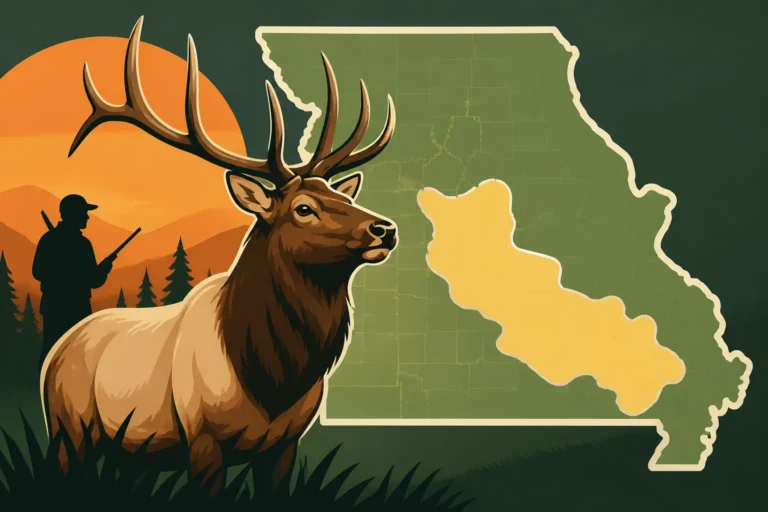
Elk are another incredible conservation success story in Missouri, reintroduced to the state's Ozarks after being absent for over 150 years. The sight of a majestic elk bugling in the Missouri wilderness is something dreams are made of for many. However, like black bears, hunting opportunities for elk are incredibly rare and limited.
Missouri does not have an open, general elk hunting season. Instead, the MDC runs a highly coveted, extremely limited lottery system for a very small number of permits each year. These permits are typically issued for specific zones in the Ozarks where the elk herd has been reestablished, like around Peck Ranch. The draw odds are incredibly low, making an elk permit one of the hardest tags to acquire in the state. This strict management ensures the herd continues to grow and thrive. So, while elk are indeed present in Missouri, for 99.9% of hunters, they are a species to be admired and not pursued with a weapon. For a deeper dive into how you might one day get a shot at this dream hunt, check out Missouri Elk Permit Lottery Rules.
When and Where Hunting is Restricted (Even for Game Species)
Even if an animal is a designated game species in Missouri, that doesn't mean you can hunt it anytime, anywhere, or with any method. Missouri has a detailed framework of regulations designed to ensure sustainable populations, fair chase, and public safety. Failing to understand these restrictions can lead to just as much trouble as targeting a fully protected species.
Closed Seasons for Game Animals
This might seem obvious, but it bears repeating: you can only hunt game animals during their designated open seasons. Outside of those dates, even a white-tailed deer or a wild turkey is off-limits. This is arguably the most fundamental rule in hunting and exists for crucial biological reasons, primarily to protect breeding populations and ensure young animals have a chance to mature.
Take, for example, deer. While Missouri boasts a generous Bowhunting Missouri's Four-Month Archery Season and a popular Missouri's Eleven-Day November Firearms Deer Season, there are long stretches of the year when deer hunting is closed. Attempting to hunt outside these seasons, even if you have a valid permit, is poaching. The same applies to turkeys; while we have vibrant Missouri spring turkey seasons, you can't hunt them in mid-summer or late winter. These closed periods are essential for the animals to breed, raise their young, and recover from hunting pressure. It's not just about what species you target, but when you target them. Always double-check the current hunting regulations before heading afield, perhaps with a quick look on a platform like GoHunt for season dates.
| Game Species | Typical Hunting Status in Missouri | Notes |
|---|---|---|
| White-tailed Deer | Generally huntable with proper permits and seasons | Specific seasons for archery, firearms, muzzleloader, antlerless |
| Wild Turkey | Generally huntable with proper permits and seasons | Spring (bearded birds) and Fall (any turkey) seasons |
| Northern Bobwhite Quail | Huntable with Small Game Permit during season | Declining populations, specific season dates |
| Eastern Cottontail Rabbit | Huntable with Small Game Permit during season | Long season, popular small game |
| Squirrels | Huntable with Small Game Permit during season | Long season, popular small game |
| Waterfowl | Huntable with proper permits, stamps, and seasons | Ducks, geese, etc., specific zone dates and limits |
| Doves | Huntable with Small Game Permit, HIP, and season | Early season migratory bird, requires HIP registration |
| Ruffed Grouse | No Open Season | Closed due to population decline, recovery efforts underway |
| Black Bear | Extremely Limited Lottery Season (if any) | Highly regulated, very few permits, population recovery |
| Elk | Extremely Limited Lottery Season | Highly regulated, very few permits, reintroduction success |
| Mountain Lion | No Open Season | Protected species, transient animals, no breeding population |
| Feral Hog | Illegal to Hunt | Active eradication efforts by MDC, hunting makes problem worse |
| Songbirds | Protected | Non-game species, illegal to hunt |
| Raptors (Hawks, Owls, Eagles) | Protected | Non-game species, federally protected, illegal to hunt |
| Most Amphibians/Reptiles | Protected (or fishing/trapping regulations) | Not hunted, some have gigging/trapping seasons |
Prohibited Areas and Refuges
Beyond species and season restrictions, where you hunt is just as critical. Missouri has a vast amount of public land, but not all of it is open to all types of hunting, and some areas are completely off-limits. Understanding land designations is crucial to staying legal and respectful of conservation efforts.
Conservation Areas (CAs) managed by the MDC often have specific regulations unique to that area, which can include closures to certain hunting methods or species. While many CAs are excellent places to hunt, others might have sections designated as refuges or wildlife sanctuaries where no hunting is allowed, or only very specific managed hunts take place. Similarly, you cannot hunt within Missouri Waterfowl Refuge Zones found on many of our managed wetlands, even during duck season. These zones are critical for resting waterfowl, and disturbing them is strictly prohibited. State parks, while beautiful, also generally prohibit hunting, though some may host specific managed hunts on a limited basis; always check Missouri State Parks Open to Hunting. National Wildlife Refuges and Mark Twain National Forest also have their own sets of regulations that differ from statewide rules, and some sections may be closed or have special permits required. Always consult area-specific maps and brochures, which are often available online or through an app like GoHunt, before entering any public land to hunt.
Even on private land, you cannot hunt without permission, and you certainly cannot hunt in safety zones around homes, churches, or schools, regardless of permission. Understanding property boundaries and knowing where hunting is explicitly forbidden or severely restricted is as important as knowing what you're allowed to hunt. Trespassing, even accidentally, can ruin a hunting trip and damage the reputation of all hunters.
Method Restrictions and Baiting Rules
Finally, even for legal game species, during open seasons, and in permissible areas, how you hunt is also heavily regulated. Missouri has strict rules about hunting methods to ensure fair chase, promote ethical behavior, and manage populations responsibly. For instance, while it’s legal to use Legal Firearms for Missouri Deer during the firearms portion, you can’t use certain fully automatic weapons, or hunt with a crossbow during the regular firearms portion without proper licensing.
Baiting is a huge one that trips up many hunters. In Missouri, it is illegal to hunt deer or turkeys with the aid of bait on both public and private land. Bait is defined as any substance that can be eaten, placed to attract game. This includes corn, salt blocks, mineral licks, and even certain types of food plots if they are not naturally occurring or planted for agricultural purposes. This rule exists to prevent unfair advantage and to reduce the spread of diseases like Chronic Wasting Disease (CWD) by preventing deer from congregating unnaturally. While you might see feeders in some states, that's not the case here in Missouri. Other method restrictions include limits on electronic calls for deer, specific shooting hours (generally 30 minutes before sunrise to 30 minutes after sunset), and rules against hunting from a motorized vehicle. These regulations are in place for good reasons, often to protect wildlife from unnatural pressure or to ensure the safety of hunters and the public. Always read the current regulations carefully, and if you have any doubt, err on the side of caution or contact the MDC directly. It's your responsibility to know the rules before you head out. Understanding these guidelines, alongside consistent Missouri Wildlife Disease Monitoring, helps us preserve our hunting heritage.
Disclaimer
This article is for general informational purposes only and does not constitute professional advice. Laws, prices and regulations vary by location and change over time. Consult a qualified professional for guidance on your specific situation.