Walking Missouri Quail Country
Walking Missouri's diverse landscapes in pursuit of quail can be one of the most rewarding, yet often frustrating, hunting experiences. Many hunters struggle to consistently locate coveys, feeling like they're endlessly trudging through empty cover. This comprehensive guide is designed to cut through that frustration, offering realistic strategies and detailed insights into understanding, finding, and effectively hunting bobwhite quail across the Show-Me State.
Understanding Missouri's Quail Landscape
Hunting bobwhite quail in Missouri today isn't like it was in our grandfathers' time. The landscape has changed dramatically, and understanding these shifts is key to finding success in the modern era. You can't just wander out anymore and expect to stumble into coveys around every corner; it takes deliberate effort and a keen eye for specific habitat features.
Historical Decline and Current Status
For decades, Missouri's bobwhite quail populations faced a steep decline, a frustrating reality for anyone who remembers the days of abundant birds. This wasn't a sudden drop but a gradual erosion of habitat that began after World War II. The push for more efficient, large-scale agriculture led to the removal of hedgerows, fence rows, and brushy cover that once served as crucial thermal and escape habitat for quail. Farmers also shifted to cool-season grasses like fescue for cattle forage, which creates a dense, monolithic sod that’s nearly impenetrable for quail chicks and offers little in the way of food or shelter. These changes, coupled with increased predator pressure on fragmented habitats and sometimes harsh weather events, have made it significantly tougher to find birds. If you've been out walking and wondering, "Where did all the quail go?", you're not alone in that sentiment. For a deeper dive into the numbers, it's worth understanding the current Missouri Bobwhite Population Trend and exploring Why Missouri Quail Numbers Fell.
Despite these challenges, there are still places in Missouri where quail thrive. The Missouri Department of Conservation (MDC) and private landowners have been working tirelessly on habitat restoration projects, creating pockets of prime quail country. These efforts focus on recreating the diverse, "weedy" landscapes that bobwhites need to survive and reproduce. While the overall numbers might not be what they once were across every acre of the state, dedicated hunters willing to put in the time to scout and understand modern quail habitat can still experience fantastic hunts. It’s about being smart, not just walking aimlessly.
What a Quail Restoration Landscape Looks Like
So, what exactly makes a piece of ground "quail country" in today's Missouri? It's all about habitat diversity and structure. Forget manicured lawns or dense, unbroken timber. Quail need a complex mosaic of cover types that provide food, nesting sites, escape cover, and roosting areas, all within a relatively small area. Think of it as a grocery store, a nursery, and a bomb shelter, all rolled into one. You'll typically find a blend of native warm-season grasses like big bluestem, switchgrass, and indiangrass, which grow in clumps, allowing quail to move freely at ground level while providing overhead cover. These grasses also support a rich variety of native forbs (broadleaf plants) like ragweed, partridge pea, and lespedeza, which produce the seeds and insects that make up the bulk of a quail's diet. To truly understand these vital areas, check out what constitutes What a Quail Restoration Landscape Is.
Crucially, these areas aren't just grass. They're intermixed with brushy cover, such as blackberry thickets, plum hedges, and young cedar trees. This dense, often thorny, cover is absolutely essential for escape from predators like hawks and coyotes. Quail also use these brushy areas for thermal cover during cold winter nights or scorching summer days. You'll often see these habitats bordering agricultural fields, open timber stands, or along creek bottoms, creating those critical "edge" environments. Without this diverse structure, quail simply can't make a living. Knowing where these specific features are being managed and concentrated is paramount; you can find maps and details on specific locations by looking into Where Missouri's Restoration Landscapes Are.
Scouting and Locating Quail Hotspots
Finding quail in Missouri is rarely a matter of luck anymore; it's a strategic endeavor that starts long before you ever step foot in the field with a shotgun. Effective scouting, both from your armchair and on the ground, is the foundation of a successful quail hunt. You need to become a detective, piecing together clues to reveal where these elusive birds might be hiding.
Utilizing Maps and Digital Tools
The first step in any modern Missouri hunting adventure, especially for a mobile species like quail, is to leverage mapping resources. The Missouri Department of Conservation's online atlas and maps are invaluable for identifying publicly accessible lands that might offer suitable habitat. These resources can show you where large tracts of conservation land exist, and often provide specific habitat management details for those areas. When you're looking at these maps, pay close attention to the patterns of vegetation. Look for interfaces between timber and open fields, areas marked as "early successional habitat," or places with irregular field edges. These aren't just random lines on a map; they are potential hotspots. For a practical guide on how to make the most of these, be sure to read up on Scouting With the Missouri Conservation Atlas.
Beyond the MDC's offerings, digital mapping applications like GoHunt have revolutionized how hunters approach scouting. With GoHunt, you can layer satellite imagery over property boundary maps, allowing you to identify habitat features like brushy draws, native grass fields, and fencerows with incredible precision, even on private ground you might be considering asking permission to hunt. These apps can highlight subtle transitions in vegetation that are invisible from the ground, helping you pinpoint potential covey locations from the comfort of your home. You can even save waypoints for areas that look promising, creating a virtual scouting report before you ever leave the couch. Utilizing these tools effectively is crucial for understanding onX Layers for Missouri Land Status and similar platforms, making your in-field time far more efficient. Look for areas where multiple cover types converge – that’s often the sweet spot.
Identifying Key Habitat Features on the Ground
Once you've done your digital homework and narrowed down some promising areas, it's time to put boots on the ground. When you're physically scouting for quail, you need to train your eye to recognize the subtle cues of quality habitat. A dense, uniform stand of fescue might look green, but it's a quail desert. Instead, you're searching for that messy, "edge" habitat where different plant communities meet. Think about the transition zones: the fringes of crop fields where ragweed and other forbs flourish, the tangled draws choked with plum thickets and multiflora rose, or the edges of timber where logging has created new growth and open canopy. These are the places where quail find both food and sanctuary. If you can focus on these crucial transition points, you're well on your way to Working Field Edges and Draws for Quail.
Don't overlook the importance of water sources, even if they're seasonal. A dry creek bed with brushy banks can still provide excellent travel corridors and cover. Similarly, old CRP (Conservation Reserve Program) fields that haven't been mowed or grazed in years can develop into fantastic native grass and forb habitat. Also, keep an eye out for scattered patches of young cedar trees, which offer crucial thermal protection during winter. The goal is to find areas that blend food sources, nesting cover, and predator protection within easy reach of each other. Identifying these specific features increases your odds dramatically of Finding Coveys on a Restoration Landscape.
Reading Sign and Listening for Coveys
Even without a dog, you can often detect the presence of quail if you know what to look for and listen for. While quail are small and masters of camouflage, they do leave clues behind. Look for small, crescent-shaped tracks in dusty areas, especially along field edges or bare patches under brush. Dusting bowls, which are small depressions in soft dirt where birds have rolled to clean their feathers, are another strong indicator. These are often found near good cover. You might also spot their droppings, which are small, white-capped, and typically found in concentrated areas where birds have roosted. Fresh sign is always the best sign.
Beyond visual cues, your ears are a critical scouting tool. Listen for the distinct "bob-white" call that gives the bird its name, especially during early mornings and late evenings. While less common outside of breeding season, hearing this call is an undeniable sign of quail presence. During the hunting season, you might hear the "covey up" whistle, a plaintive, drawn-out call that birds use to regroup after being scattered. Even if you don't hear a full covey call, listen for individual "scatter calls" – short, sharp whistles that tell you birds are nearby and likely trying to find their friends. Understanding these auditory cues is essential for interpreting Covey Counts and What They Show and other indications of quail presence.
Tactics for Walking Quail Cover with or Without a Dog
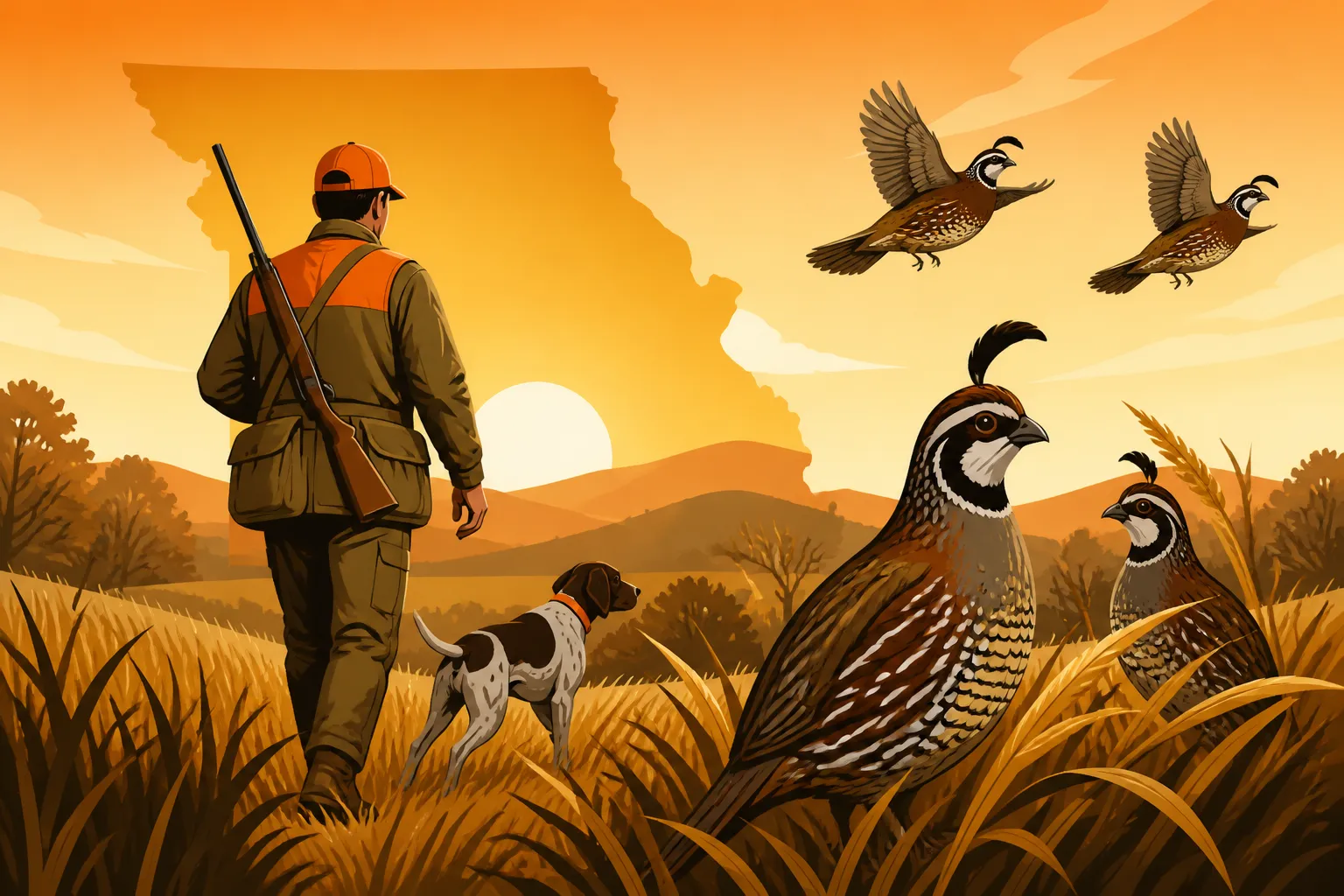
The act of walking for quail is an art form, a dance between hunter and habitat, often enhanced by the incredible instincts of a good bird dog. Whether you're accompanied by a canine partner or relying solely on your own senses, there are strategies that increase your chances of finding and flushing birds.
The Advantage of a Good Bird Dog
Let's be honest: quail hunting without a dog is an entirely different, and often far more challenging, endeavor. A well-trained bird dog is not just a companion; it's an indispensable hunting tool. Their superior sense of smell allows them to detect the faint scent of quail long before a human ever could, pinpointing covey locations and honoring points with unwavering focus. A dog can cover significantly more ground than a human, working through thick cover that would be impenetrable or too slow for a person. This efficiency is crucial in Missouri's diverse and often dense quail habitats.
Furthermore, a dog helps immensely with recovery. Once a covey flushes and you drop a bird, finding it in tall grass or brush without a dog can be nearly impossible, leading to wasted game. A good retriever will track and bring back downed birds, ensuring ethical hunting and a full game bag. Whether you prefer a pointer like an English Setter or German Shorthaired Pointer, or a flushing dog like a Springer Spaniel, their training and drive to find birds are truly remarkable. They also add a layer of joy and excitement to the hunt that simply can't be replicated. For anyone considering adding a four-legged partner to their hunts, understanding Bird Dog Gear for Missouri Heat is a great starting point, especially for early season conditions.
Effective Walking Strategies for Solo Hunters and Dog Handlers
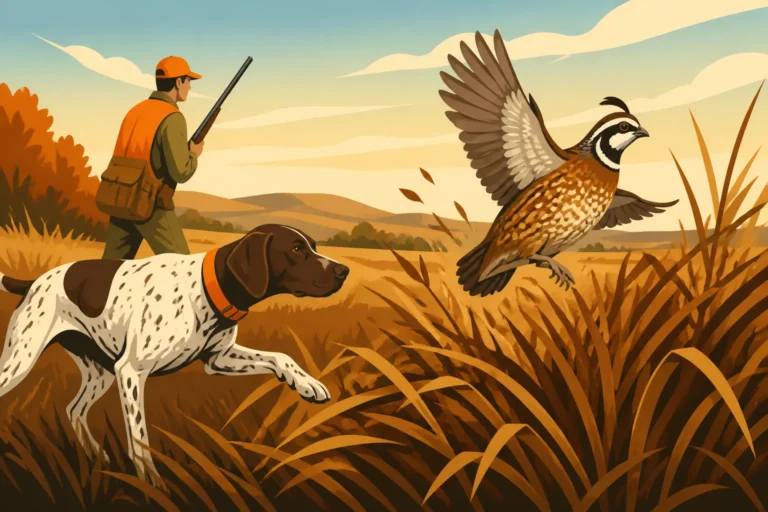
Regardless of whether you have a dog, your approach to walking cover is paramount. The biggest mistake many hunters make is walking too fast or in a straight line. Quail are masters of holding tight, especially in good cover, and a quick, linear march often means you'll walk right past birds that refuse to flush. Instead, adopt a slow, deliberate, zig-zagging pattern. This allows you to thoroughly work an area, pushing birds into an uncomfortable position where they feel compelled to flush. Vary your pace, pausing frequently for 5-10 seconds. These pauses often make nervous birds decide to flush, thinking you've stopped and are about to move directly onto them. This technique is particularly effective when you are Walking Missouri Quail Cover With a Dog, as it gives the dog time to process scent.
When hunting with a dog, pay close attention to their body language. A dog on point is the ultimate signal, but even subtle changes in behavior – a sudden head lift, a slowing pace, a focused sniff – can indicate scent. Be ready when your dog is working scent. If you're going it alone, without a dog, you’ll need to heighten your own senses. Focus on areas where you expect quail to be, like the densest parts of brushy draws, plum thickets, or the interface of grass and timber. Kicking through thicker cover, especially near a field edge or fencerow, can often get birds up. While it’s tough, it’s not impossible for Hunting Quail Without a Dog, but requires an even more meticulous approach and patience. Always work into the wind if possible, as it carries scent more effectively for both you and your dog, and helps quail hold their position if you're trying to walk them up.
Covey Rise Shooting Discipline
The covey rise is a moment of pure adrenaline, a chaotic explosion of feathers and whirring wings that can easily overwhelm even experienced hunters. When a covey flushes, especially if it's a large one, the natural instinct is to shoot wildly into the mass of birds. Resist this urge. Instead, pick a single bird, focus on it, and follow through with your shot. Attempting to get multiple birds in a single flush is extremely difficult and often leads to missed shots or, worse, "pricked" birds that fly off injured. Your goal should be one clean shot, one clean kill.
Safety is paramount during a covey rise. Always be aware of your hunting partners, your dog, and your surroundings. Never shoot at low-flying birds or birds that are flying towards or across another hunter's line of fire. Wait until birds are clear and flying upwards or away from your party. After the shot, mark where your bird falls. If you have a dog, they will be on it immediately, but if not, visually triangulate the spot. Even if you miss, stay alert; sometimes a second, smaller flush will occur a few moments later from stragglers who held tight. Mastering this focus and awareness is the core of good Covey Rise Shooting Discipline.
Gear and Equipment for Missouri Quail Hunting
Having the right gear won't guarantee a limit, but it will certainly make your hunt more comfortable, safer, and ultimately, more successful. Missouri quail hunting often involves walking miles through challenging terrain and variable weather, so your equipment needs to be up to the task.
Shotgun and Ammunition Choices
When it comes to shotguns for Missouri quail, you'll find hunters using everything from 12 gauges to .410s, but the 20 gauge often strikes the perfect balance. It's lighter to carry for miles, has less recoil than a 12 gauge, but still delivers plenty of punch for these fast-flying birds. For a detailed comparison, consider Best Shotgun Gauge for Missouri Quail. Many hunters prefer an over/under or side-by-side double barrel because it offers two immediate shots with different chokes, which can be advantageous on a covey rise. However, a reliable semi-automatic or pump-action shotgun works just as well.
Choke choice is crucial for quail. These birds flush close and fly away quickly, so you want a pattern that opens up reasonably fast. Improved Cylinder (IC) in the first barrel and Modified (Mod) in the second is a very popular and effective combination for a double barrel. For single barrel guns, a Modified choke is a good all-around choice. As for ammunition, standard game loads with 7 1/2 or 8 shot are the go-to for bobwhites. The smaller shot size provides a dense pattern, increasing the likelihood of connecting with these small, agile targets. If you want to dive deeper into specifics, check out the ideal Shot Size for Missouri Bobwhites and various Choke Choice for Covey Rises to optimize your spread.
Essential Clothing and Accessories
Missouri quail season often begins in early November when temperatures can still be mild, but can extend into January, bringing bitter cold, rain, or even snow. Layering is key, but some core items are indispensable. First and foremost, brush pants or chaps are an absolute must. You'll be walking through thorny thickets, multiflora rose, and dense briars, and regular pants simply won't cut it. Look for durable, briar-proof materials that will protect your legs from punctures and tears.
Next, a good upland vest is essential. It needs to have plenty of storage for shells, water, a GPS or phone, and a large, easily accessible game bag in the back. Many modern vests also incorporate blaze orange for safety, which brings us to the next critical item. Missouri hunting regulations require hunters to wear at least 400 square inches of hunter orange during certain firearm seasons, and while quail hunters often have different requirements, it's always wise to wear it for visibility and safety, especially on public land. A blaze orange cap and vest are non-negotiable. Finally, comfortable, broken-in boots with good ankle support are crucial for covering miles of uneven terrain. Wet feet can ruin a hunt quickly, so waterproof boots are a wise investment. Don't forget a basic first-aid kit, especially if you're hunting remote areas, and plenty of water for yourself and your dog if you have one. For specific gear considerations, explore Upland Vests With Water Capacity and the requirements for Blaze Orange Caps and Vests in Missouri.
Here's a quick comparison of common quail habitats and how to spot them:
| Habitat Feature | Description | How to Identify (Map/Field) | Importance to Quail |
|---|---|---|---|
| Native Grass/Forb Fields | Clumpy warm-season grasses (bluestem, indiangrass) with diverse wildflowers | Satellite: patchy, uneven texture, lighter green. Field: tall, bunchy grasses, varied plants. | Nesting cover, insect rich (chick food), seeds for adults. |
| Brushy Thickets | Dense patches of plum, blackberry, multiflora rose, young cedars. | Satellite: dark, irregular blobs. Field: impenetrable, thorny. | Critical escape cover from predators, thermal protection. |
| Timber Edges/Draws | Transition zones where woods meet fields, often with scattered brush. | Satellite: distinct boundary lines. Field: varied vegetation, travel corridors. | Food (timber mast, field edge seeds), travel routes, cover. |
| Fencerows/Hedgerows | Linear strips of trees, shrubs, and weeds between fields. | Satellite: thin, dark lines. Field: dense linear cover. | Travel corridors, secondary escape cover, food sources. |
| Old CRP/Idle Fields | Fields taken out of production, allowed to revert to native vegetation. | Satellite: uniform, often rectangular. Field: diverse grasses/forbs, can be thick. | Excellent nesting, brood-rearing, and foraging habitat. |
Disclaimer
Hunting is an inherently dangerous activity. This guide is for informational purposes only and does not substitute for proper training, safety practices, or adherence to all local, state, and federal hunting regulations. Always consult the Missouri Department of Conservation (MDC) regulations before heading into the field. Be aware of your surroundings, practice firearm safety, and ensure you have all necessary permits and licenses.